Cote Adrian, Negrut Roxana Loriana, Feder Bogdan, Antal Ioan Andrei, Horgos Maur Sebastian, Tomescu Emilia, Maghiar Adrian Marius
Department of Surgical Disciplines, Faculty of Medicine and Pharmacy, University of Oradea, 410073 Oradea, Romania.
County Clinical Emergency Hospital Bihor, 410087 Oradea, Romania.
J Clin Med. 2025 Jul 29;14(15):5361. doi: 10.3390/jcm14155361.
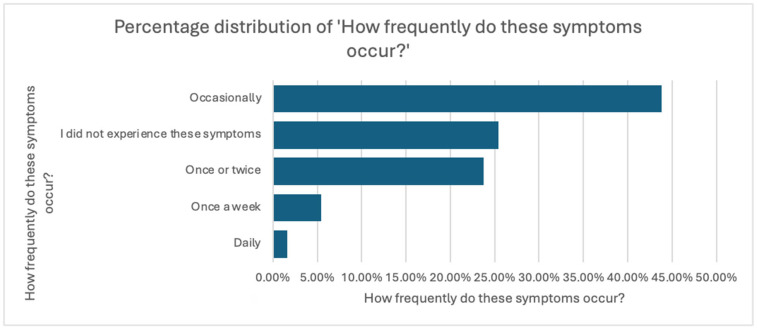
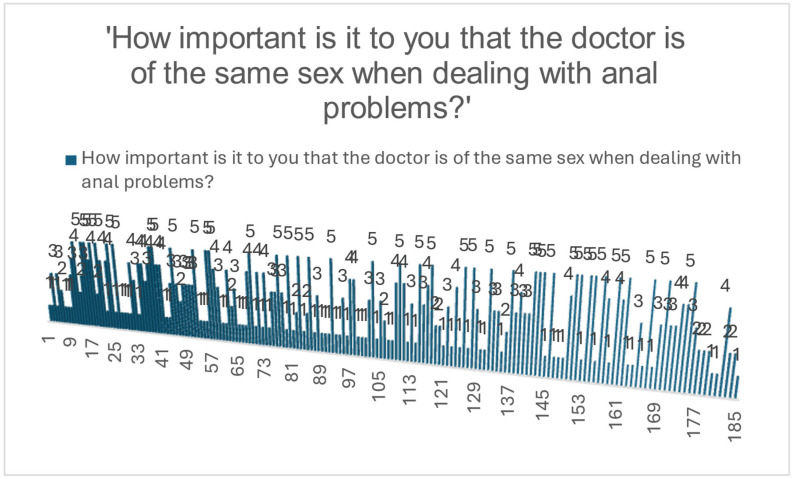
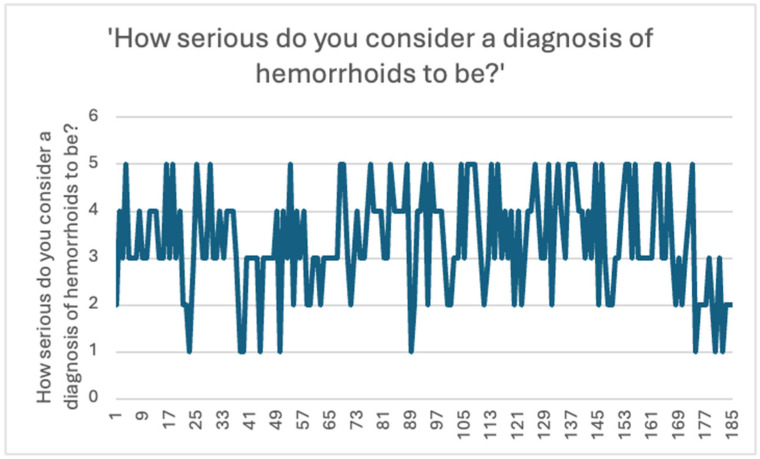
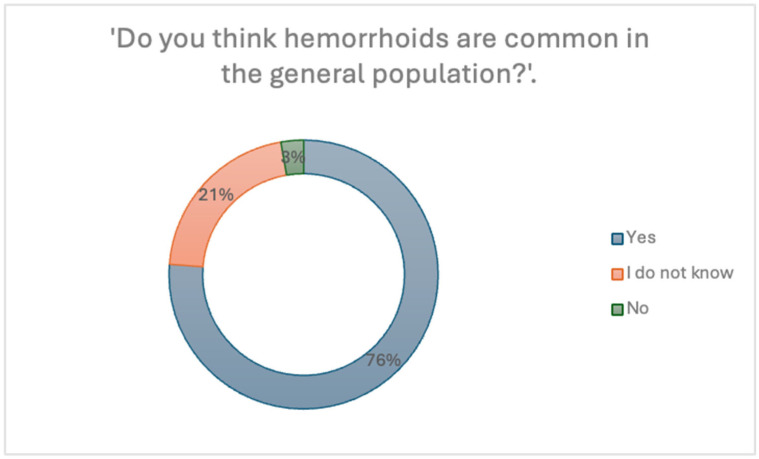
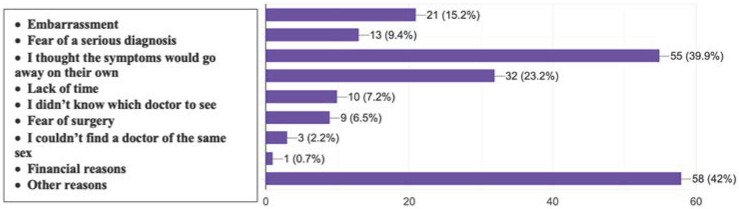
Despite their high prevalence and potential for significant morbidity, hemorrhoidal symptoms remain underreported and undertreated. Misconceptions and stigma may delay care-seeking behaviors and negatively influence patient outcomes. We conducted a cross-sectional, questionnaire-based study in Romania to assess public awareness, attitudes, and barriers related to hemorrhoidal disease. The survey included 185 participants and evaluated variables such as symptom severity, understanding of the condition, perceived stigma, and willingness to consult a physician. Only 30.8% of participants had sought medical advice for hemorrhoidal symptoms. Younger age ( < 0.001), male sex ( = 0.013), and lower levels of perceived severity were significantly associated with reluctance to seek medical care. The most frequently reported barriers were embarrassment and fear of invasive diagnostic procedures. Colonoscopy and digital rectal examination were identified as major deterrents by 39.5% and 38.9% of respondents, respectively. Educational level influenced both the perceived understanding of the disease ( = 0.001) and comfort in discussing anal symptoms ( = 0.002). Gender preference for physicians was significantly associated with respondent sex ( = 0.007) but not with education or age. Hemorrhoidal disease remains a stigmatized and underestimated condition. Public health efforts should prioritize educational interventions, destigmatization campaigns, and improved physician-patient communication to facilitate earlier diagnosis and better disease management.
尽管痔疮患病率高且有显著发病的可能性,但痔疮症状的报告率和治疗率仍然较低。误解和污名化可能会延迟就医行为,并对患者的治疗结果产生负面影响。我们在罗马尼亚开展了一项基于问卷调查的横断面研究,以评估公众对痔疮疾病的认知、态度和障碍。该调查包括185名参与者,并评估了症状严重程度、对病情的了解、感知到的污名以及咨询医生的意愿等变量。只有30.8%的参与者因痔疮症状寻求过医疗建议。年龄较小(<0.001)、男性(=0.013)以及较低的感知严重程度与不愿寻求医疗护理显著相关。最常报告的障碍是尴尬和对侵入性诊断程序的恐惧。分别有39.5%和38.9%的受访者认为结肠镜检查和直肠指检是主要阻碍因素。教育水平影响了对疾病的感知理解(=0.001)以及讨论肛门症状时的舒适度(=0.002)。对医生的性别偏好与受访者性别显著相关(=0.007),但与教育程度或年龄无关。痔疮疾病仍然是一种被污名化且被低估的病症。公共卫生工作应优先开展教育干预、消除污名化运动以及改善医患沟通,以促进早期诊断和更好的疾病管理。