Siegl Alexander, Auer David, Schweighofer Bernhard, Hochfellner Andre, Klösch Gerald, Wegleiter Hannes
Christian Doppler Laboratory for Measurement Systems for Harsh Operating Conditions, Graz University of Technology, Inffeldgasse 23/2, 8010 Graz, Austria.
voestalpine Stahl Donawitz GmbH, Kerpelystrasse 199, 8700 Leoben, Austria.
Sensors (Basel). 2025 Aug 1;25(15):4746. doi: 10.3390/s25154746.
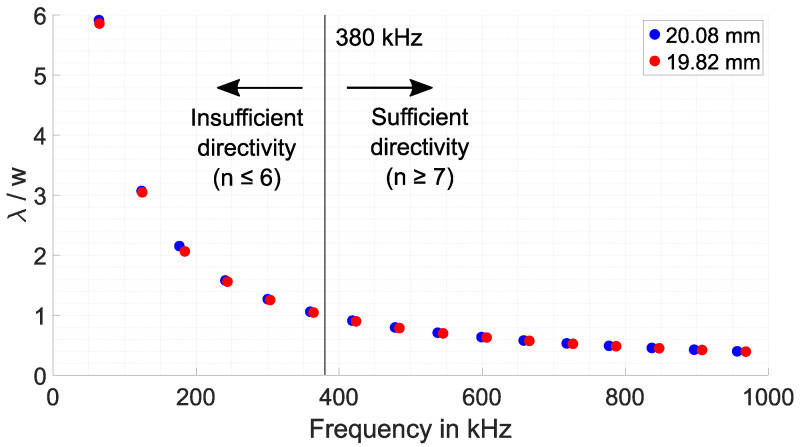
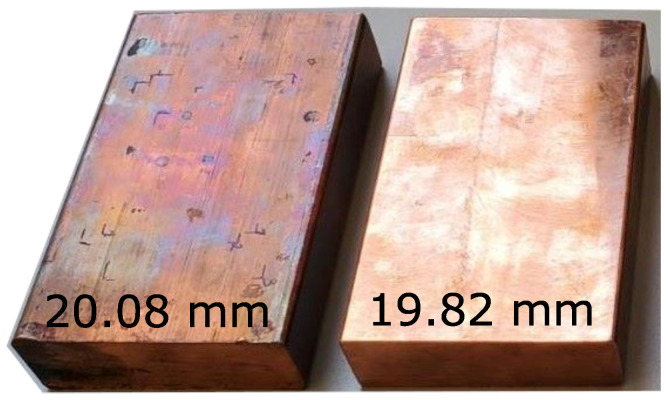
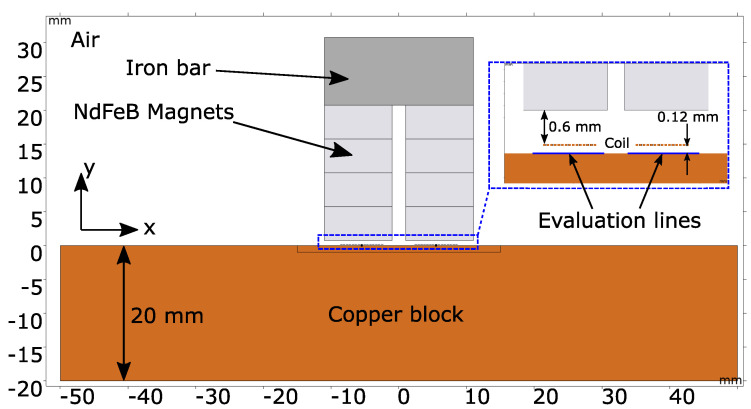
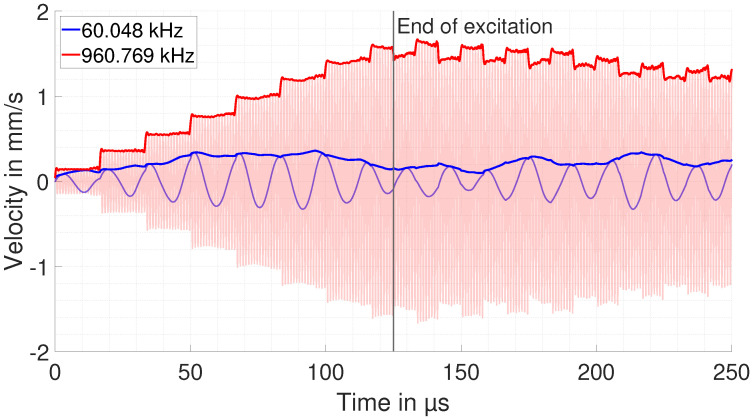
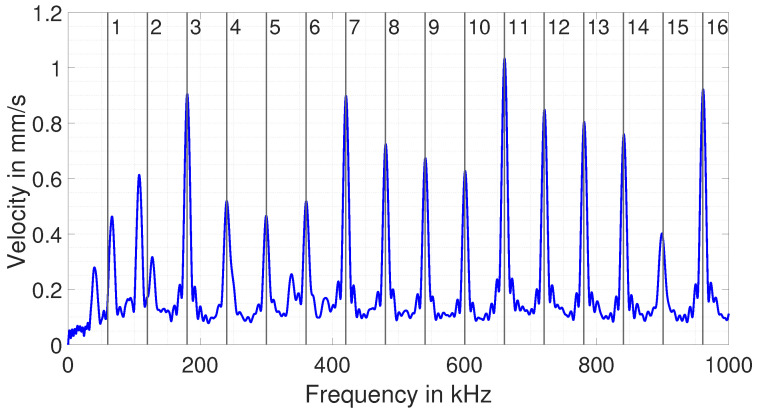
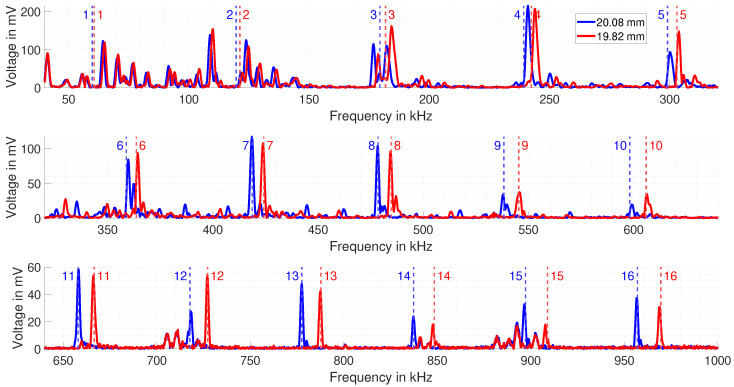
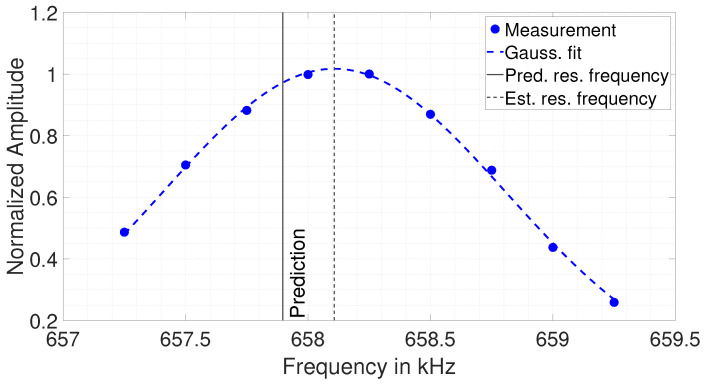
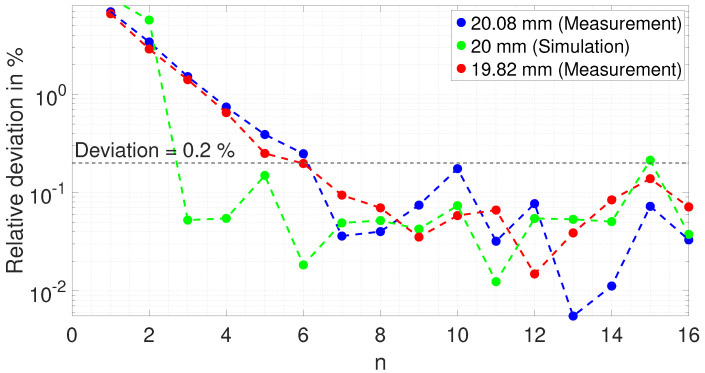
Electromagnetic acoustic resonance (EMAR) is a well-established non-contact method for ultrasonic thickness measurement, typically operated at frequencies above 1 MHz using an electromagnetic acoustic transducer (EMAT). This study successfully extends EMAR into the sub-MHz range, allowing supply voltages below 60 V and thus offering safer and more cost-effective operation. Experiments were conducted on copper blocks approximately 20 mm thick, where a relative thickness accuracy of better than 0.2% is obtained. Regarding this result, the research identifies a critical design principle: Stable thickness resonances and subsequently accurate thickness measurement are achieved when the ratio of ultrasonic wavelength to EMAT track width (λ/w) falls below 1. This minimizes the excitation and interactions with structural eigenmodes, ensuring consistent measurement reliability. To support this, the study introduces a system-based model to simulate the EMAR method. The model provides detailed insights into how wave propagation affects the accuracy of EMAR measurements. Experimental results align well with the simulation outcome and confirm the feasibility of EMAR in the sub-MHz regime without compromising precision. These findings highlight the potential of low-voltage EMAR as a safer, cost-effective, and highly accurate approach for industrial ultrasonic thickness measurements.
电磁声共振(EMAR)是一种成熟的非接触式超声厚度测量方法,通常使用电磁超声换能器(EMAT)在高于1 MHz的频率下运行。本研究成功地将EMAR扩展到亚兆赫兹范围,允许使用低于60 V的电源电压,从而提供更安全、更具成本效益的操作。在厚度约为20 mm的铜块上进行了实验,获得了优于0.2%的相对厚度精度。关于这一结果,该研究确定了一个关键的设计原则:当超声波长与EMAT轨道宽度之比(λ/w)低于1时,可实现稳定的厚度共振以及随后精确的厚度测量。这将激发并与结构本征模的相互作用降至最低,确保了一致的测量可靠性。为了支持这一点,该研究引入了一个基于系统的模型来模拟EMAR方法。该模型提供了关于波传播如何影响EMAR测量精度的详细见解。实验结果与模拟结果吻合良好,证实了EMAR在亚兆赫兹范围内不影响精度的可行性。这些发现凸显了低电压EMAR作为一种用于工业超声厚度测量的更安全、更具成本效益且高度精确的方法的潜力。