Van Lankveld Hannah, Mai Anh Q, Lim Lew, Hosseinkhah Nazanin, Cassano Paolo, Jean Chen J
Biomedical Engineering, University of Toronto, Toronto, ON, Canada.
Rotman Research Institute, Baycrest, Toronto, ON, Canada.
Biomed Opt Express. 2025 Jul 21;16(8):3295-3314. doi: 10.1364/BOE.567345. eCollection 2025 Aug 1.
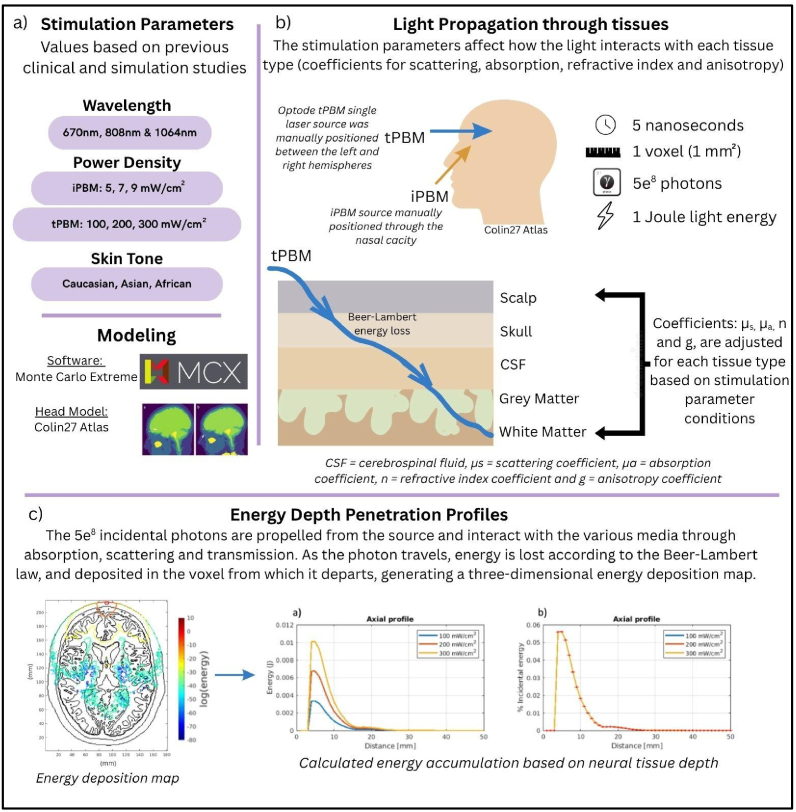
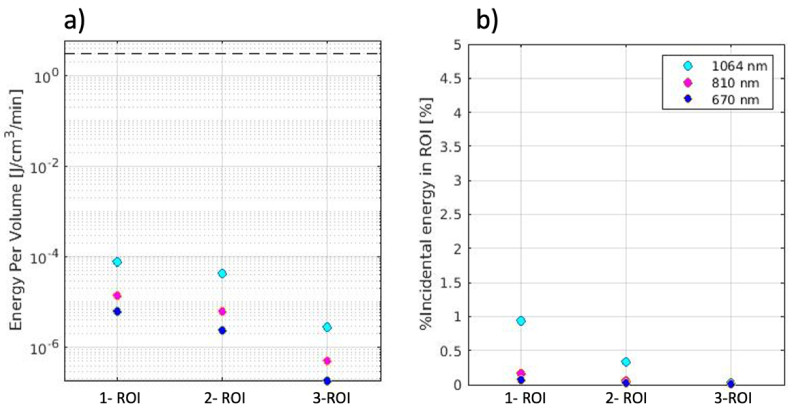
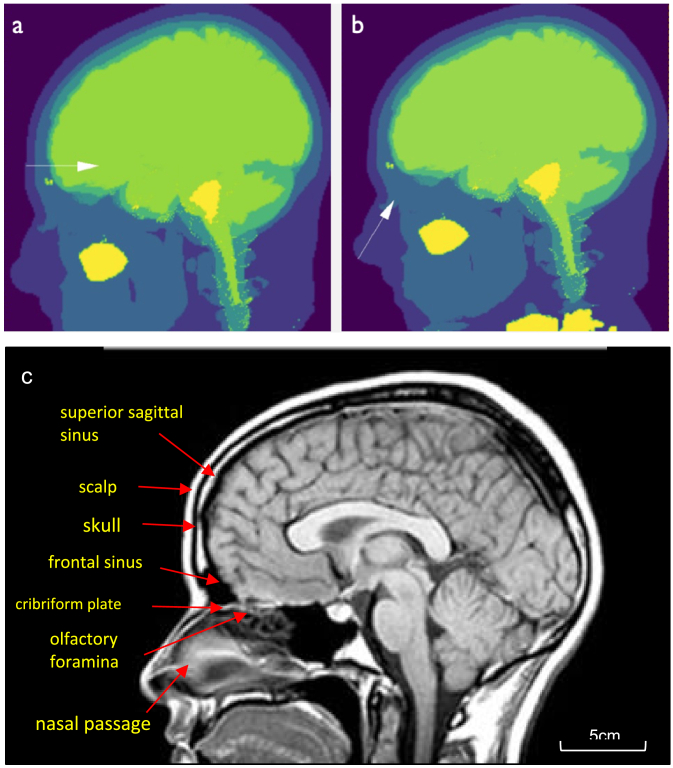
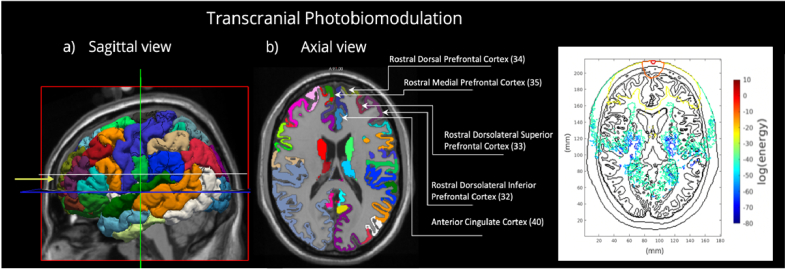
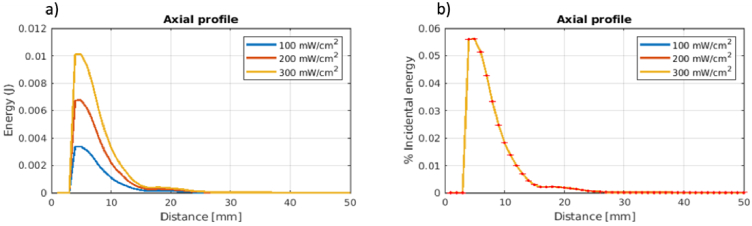
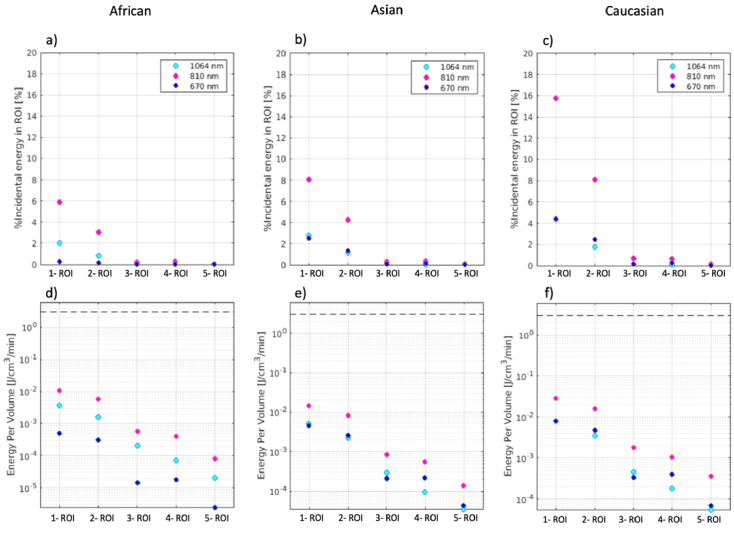
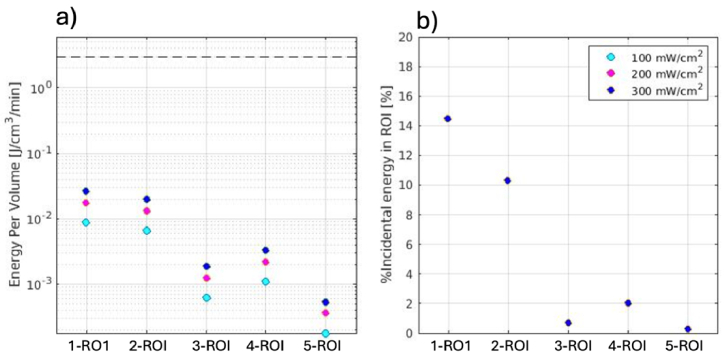
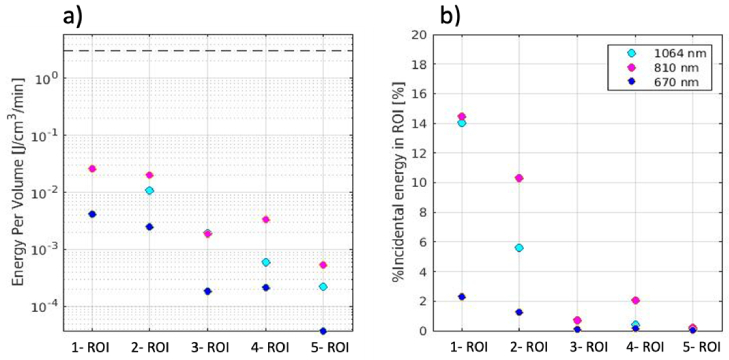
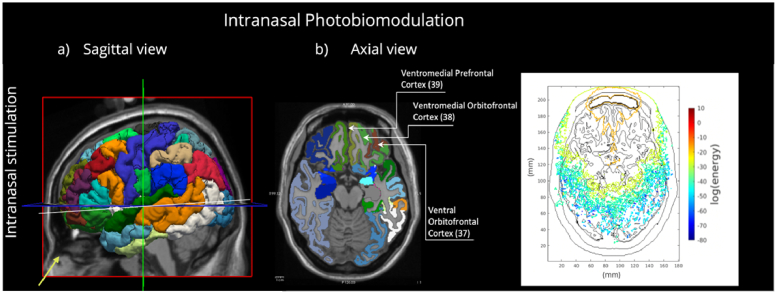
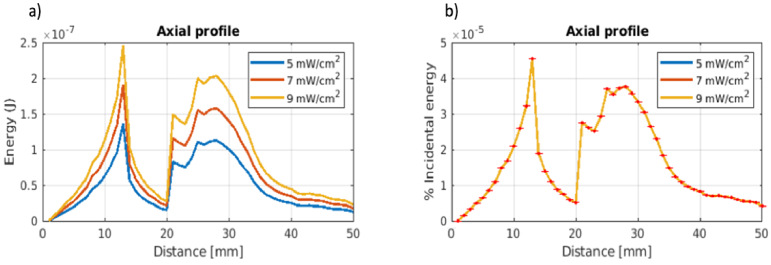
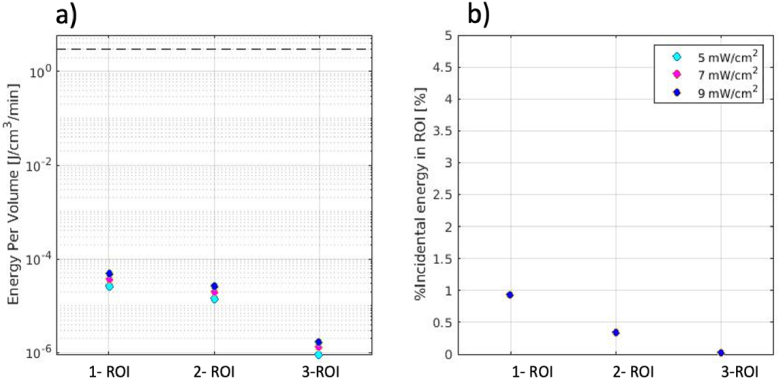
Photobiomodulation (PBM) using near-infrared (NIR) light is a novel neuromodulation technique. However, despite the many in vivo studies, the stimulation protocols for PBM vary across studies, and the current understanding of the physiological effects of PBM, as well as the dose dependence, is limited. Specifically, although NIR light can be absorbed by melanin in the skin, the understanding of how skin tones compare and how their influence interacts with other dose parameters remains limited. This study investigates the effect of melanin, optical power density, and wavelength on light penetration and energy accumulation via forehead and intranasal PBM. We use Monte Carlo simulations of a single laser source for transcranial (tPBM, forehead position) and intranasal (iPBM, nostril position) irradiation on a healthy human brain model. We investigate wavelengths of 670, 810, and 1064 nm at various power densities in combination with light ("Caucasian"), medium ("Asian"), and dark ("African") skin tone categories as defined in the literature. Our simulations show that a maximum of 15% of the incidental energy for tPBM and 1% for iPBM reaches the cortex from the light source. The rostral dorsal prefrontal cortex and the ventromedial prefrontal cortex accumulate the highest light energy in tPBM and iPBM, respectively, for both wavelengths. Notably, we show that nominally "Caucasian" skin allows the highest energy accumulation of all three skin tones. Moreover, the 810 nm wavelength for tPBM and the 1064 nm wavelength for iPBM produced the highest cortical energy accumulation, which was linearly correlated with optical power density, but these variations could be overridden by a difference in skin tone in the tPBM case.The simulations serve as a starting point for enabling hypothesis generation for in vivo PBM investigations. This study is the first to account for skin tone as a tPBM dosing consideration. For the future of PBM research, it is important to evaluate combinations of stimulation parameters (wavelength, optical power density, pulsation frequency, duration, light source) when working to determine an optimal dosage for PBM-based therapy.
使用近红外(NIR)光的光生物调节(PBM)是一种新型神经调节技术。然而,尽管有许多体内研究,但PBM的刺激方案在不同研究中各不相同,目前对PBM生理效应以及剂量依赖性的理解有限。具体而言,虽然近红外光可被皮肤中的黑色素吸收,但对不同肤色的比较以及它们的影响如何与其他剂量参数相互作用的理解仍然有限。本研究通过前额和鼻腔内PBM研究黑色素、光功率密度和波长对光穿透和能量积累的影响。我们使用单个激光源对健康人脑模型进行经颅(tPBM,前额位置)和鼻腔内(iPBM,鼻孔位置)照射的蒙特卡罗模拟。我们研究了文献中定义的670、810和1064 nm波长在各种功率密度下与浅色(“白种人”)、中等色(“亚洲人”)和深色(“非洲人”)肤色类别的组合情况。我们的模拟表明,tPBM的入射能量最多有15%、iPBM有1%从光源到达皮层。对于这两种波长,在tPBM中,前额背侧前额叶皮层积累的光能最高,在iPBM中,腹内侧前额叶皮层积累的光能最高。值得注意的是,我们表明,名义上的“白种人”皮肤在所有三种肤色中允许的能量积累最高。此外,tPBM的810 nm波长和iPBM的1064 nm波长产生的皮层能量积累最高,这与光功率密度呈线性相关,但在tPBM情况下,这些变化可能会被肤色差异所掩盖。这些模拟作为体内PBM研究假设生成的起点。本研究首次将肤色作为tPBM剂量考虑因素。对于PBM研究的未来,在确定基于PBM治疗的最佳剂量时,评估刺激参数(波长、光功率密度、脉动频率、持续时间、光源)的组合非常重要。