
利用智能计算技术计算不同流动方向光滑螺旋管内冷凝传热的可靠模型。
Reliable models for calculating the condensation heat transfer inside smooth helical tubes of different flow directions utilizing smart computational techniques.
作者信息
Hsu Chou-Yi, Rachchh Nikunj, Ramachandran T, Shankhyan Aman, Karthikeyan A, Alkhayyat Ahmad, Sahu Prabhat Kumar, Kumar Abhinav, Vats Satvik, Ranjbar F
机构信息
Thunderbird School of Global Management, Arizona State University Tempe Campus, Phoenix, AZ, 85004, USA.
Department of Mechanical Engineering, Faculty of Engineering & Technology, Marwadi University Research Center, Marwadi University, Rajkot, Gujarat, 60003, India.
出版信息
Sci Rep. 2025 Aug 19;15(1):30454. doi: 10.1038/s41598-025-15240-0.
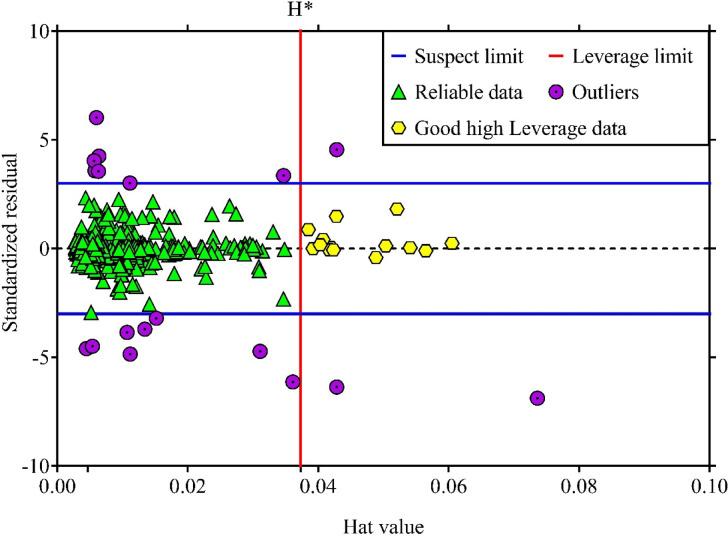
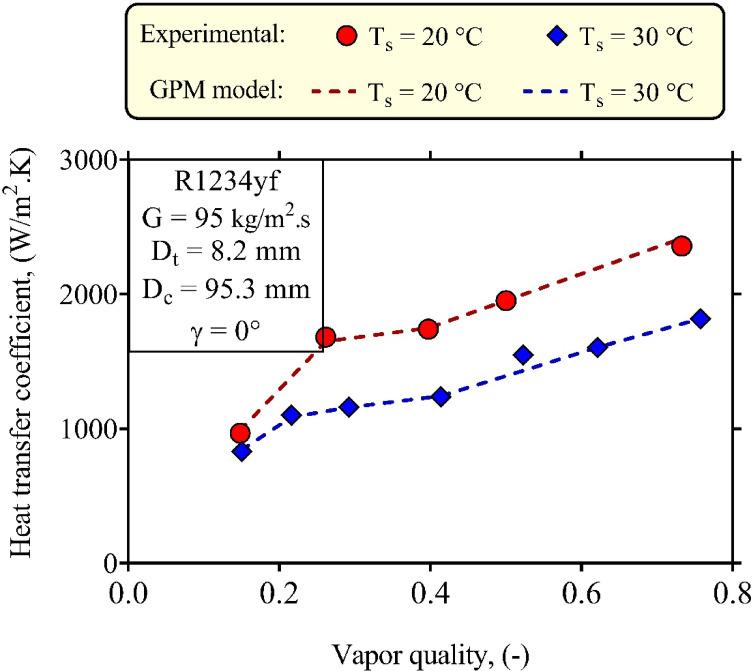
Condensers with helical tubes have received much attention in diverse industries. The optimal design of the mentioned equipment necessitates predictive tools for calculating the condensation heat transfer coefficient (HTC). However, literature models are applicable only to specific operational and geometrical conditions. The current study aims at developing reliable models for the condensation HTC within smooth helical tubes at all flow directions. Two machine learning (ML) techniques, namely Support Vector Machine (SVM) and Gaussian Process Method (GPM) were implemented to accomplish this target. To design and validate the models, 563 HTC data, encompassing a wide spectrum of conditions, were gathered from 10 experimental studies. While both SVM and GPM tools provided excellent predictions, the latter achieved the highest accuracy with mean absolute percentage error (MAPE) and R value of 3.36% and 99%, respectively, for the testing dataset. Also, more than 96% of the HTC values calculated by the GPM model were situated within a ± 5% error margin. The accuracy of the literature correlations was also analyzed based on the collected data, and it was found that all of them showed MAPE values exceeding 25% from the experimental data. Moreover, unlike the previous models, the novel ML tools allowed the prediction of HTC for all flow directions with adequate precision. Also, they were capable of describing the physical variations of the condensation HTC versus operational factors. Finally, the dominant dimensionless parameters governing the two-phase Nusselt number in helical tubes were identified based on a sensitivity analysis.
带有螺旋管的冷凝器在众多行业中备受关注。上述设备的优化设计需要用于计算冷凝传热系数(HTC)的预测工具。然而,文献中的模型仅适用于特定的运行和几何条件。当前的研究旨在开发适用于所有流动方向的光滑螺旋管内冷凝HTC的可靠模型。为此实施了两种机器学习(ML)技术,即支持向量机(SVM)和高斯过程方法(GPM)。为了设计和验证模型,从10项实验研究中收集了563个涵盖广泛条件的HTC数据。虽然SVM和GPM工具都提供了出色的预测,但后者在测试数据集上的平均绝对百分比误差(MAPE)和R值分别为3.36%和99%,达到了最高精度。此外,GPM模型计算的HTC值中有超过96%位于±5%的误差范围内。还根据收集的数据分析了文献关联式的准确性,发现它们的MAPE值均比实验数据高出25%以上。而且,与先前的模型不同,新颖的ML工具能够以足够的精度预测所有流动方向的HTC。此外,它们能够描述冷凝HTC相对于运行因素的物理变化。最后,基于敏感性分析确定了控制螺旋管内两相努塞尔数的主要无量纲参数。





 Zotero 插件