Kanei Saki, Torimura Airu, Shimizu Yumiko, Baba Takashi, Uotani Ryu, Sasaki Shin-Ichi, Nagase Daisuke, Inoue Yoshitsugu, Miyazaki Dai
Division of Ophthalmology and Visual Science, Faculty of Medicine, Tottori University, 36-1 Nishi-cho, Yonago Tottori, Tottori, 683-8504, Japan.
Sci Rep. 2025 Aug 20;15(1):30511. doi: 10.1038/s41598-025-15856-2.
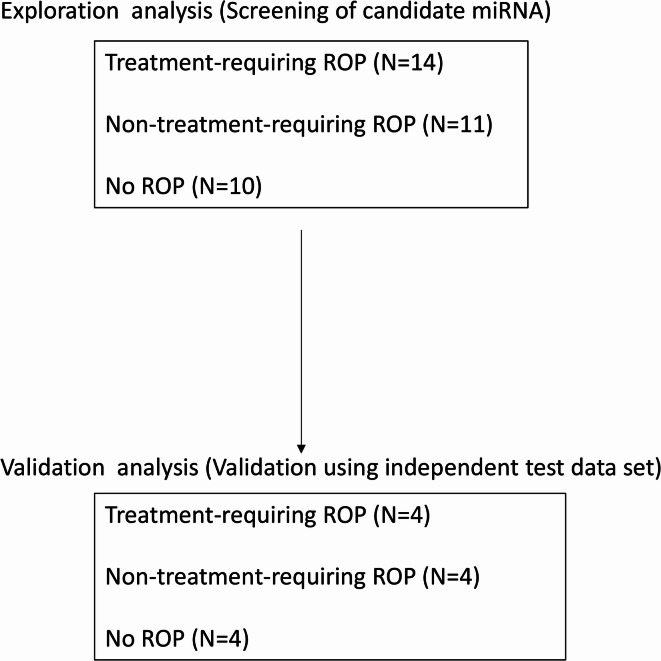
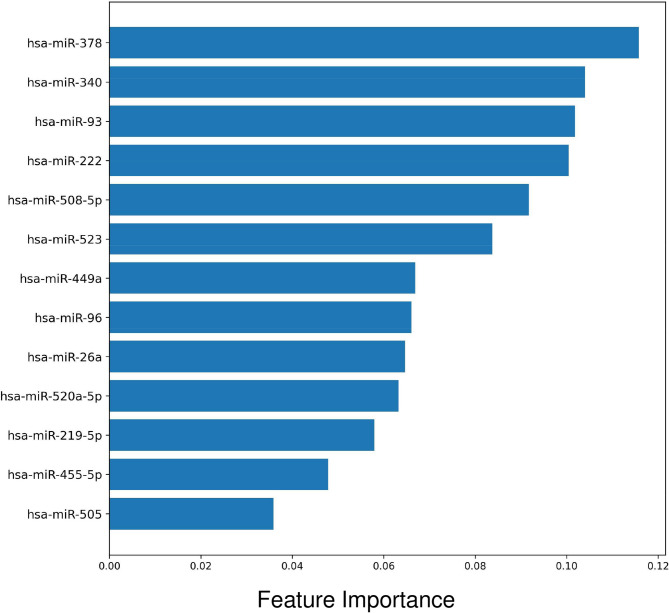
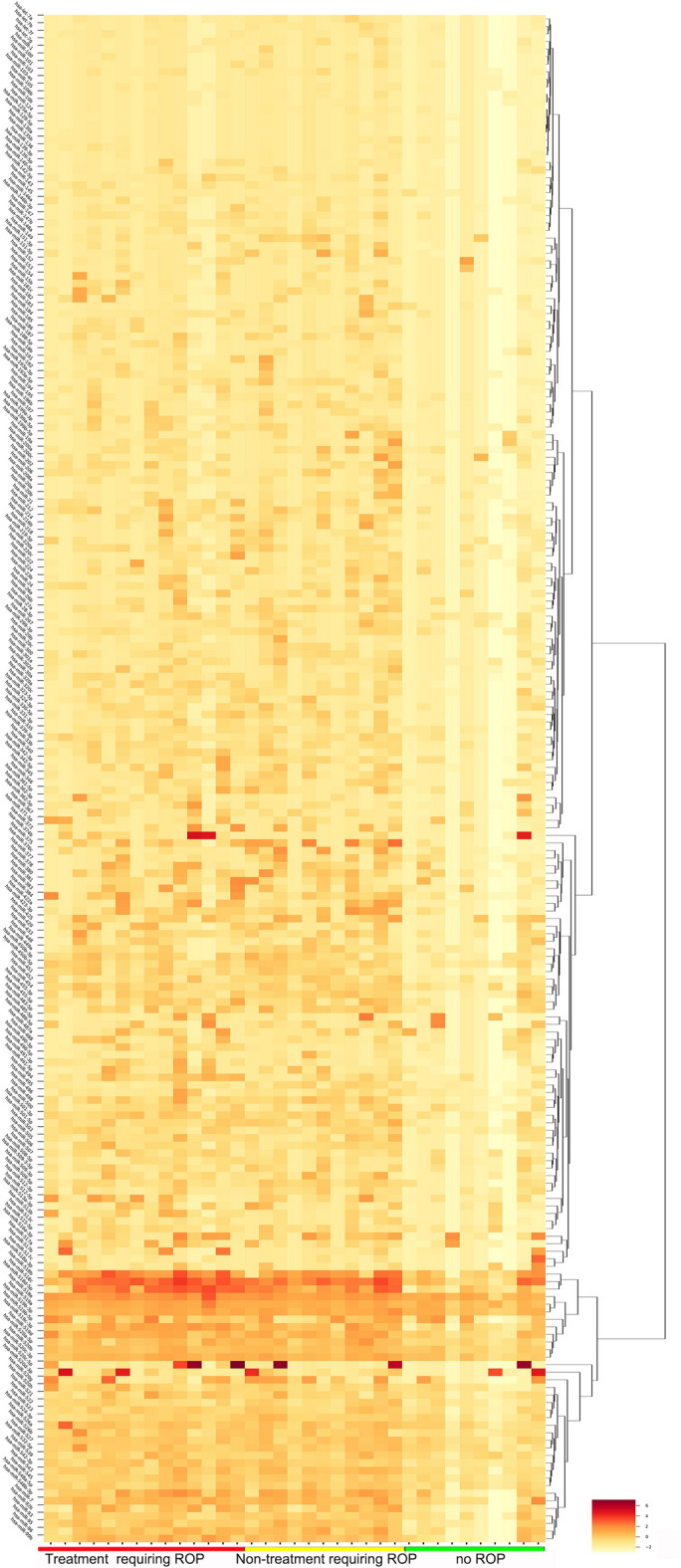
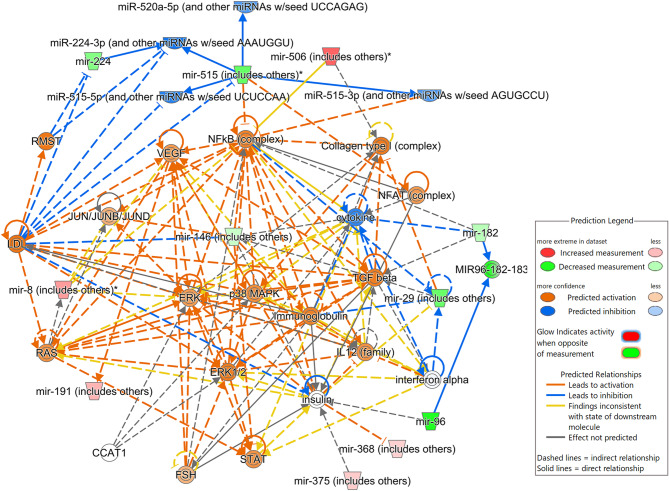
Retinopathy of prematurity (ROP) develops in some premature infants and may be characterized by permanent severe retinal damage necessitating early detection and prompt treatment. The purpose of this study was to investigate whether specific miRNAs in tear extracellular vesicles (EVs) are associated with the development of ROP requiring treatment. Tear samples were collected from 47 infants, including 33 with ROP and 14 without ROP; of the ROP group, 18 infants required treatment. The miRNAs expressed in EVs were profiled by real-time PCR array. An exploratory analysis of differential miRNA expression using tear EV samples from 35 infants was performed. Network analysis conducted for the miRNAs for ROP requiring treatment revealed critical networks of miRNAs linked to IGF1R and VEGF. A machine learning study utilizing the random forest model identified 13 miRNAs with high importance score for the treatment-requiring ROP eyes. After adjustments for birth weight, miR-520a-5p was identified as a candidate marker. Network analysis confirmed a significant association of miR-520a-5p with the VEGF-centered network. When the Gradient boosting decision tree was applied, miR-520a-5p discriminated treatment-requiring ROP with accuracy of 77.8% and an area under the curve (AUC) of 0.889. For the validation phase, 12 unanalyzed infants were examined for the diagnostic accuracy of miR-520a-5p, and the findings confirmed a high diagnostic accuracy of 91.7% and AUC of 0.875 for treatment-required ROP eyes. Notably, miR-520a-5p expression was strongly influenced by infant immaturity, as reflected by gestational age. These findings provide new insights into ROP pathophysiology and suggest that tear-derived miRNAs, particularly those in EVs, may serve as potential biomarkers and inform future therapeutic strategies.
早产儿视网膜病变(ROP)在一些早产儿中会发生,其特征可能是永久性严重视网膜损伤,需要早期检测和及时治疗。本研究的目的是调查泪液细胞外囊泡(EVs)中的特定微小RNA(miRNAs)是否与需要治疗的ROP的发生有关。从47名婴儿中收集泪液样本,其中包括33名患有ROP的婴儿和14名未患ROP的婴儿;在ROP组中,18名婴儿需要治疗。通过实时PCR阵列分析EVs中表达的miRNAs。对来自35名婴儿的泪液EV样本进行了差异miRNA表达的探索性分析。对需要治疗的ROP的miRNAs进行的网络分析揭示了与胰岛素样生长因子1受体(IGF1R)和血管内皮生长因子(VEGF)相关的关键miRNA网络。利用随机森林模型进行的机器学习研究确定了13个对需要治疗的ROP眼睛具有高重要性评分的miRNAs。在对出生体重进行调整后,miR-520a-5p被确定为候选标志物。网络分析证实miR-520a-5p与以VEGF为中心的网络有显著关联。当应用梯度提升决策树时,miR-520a-5p区分需要治疗的ROP的准确率为77.8%,曲线下面积(AUC)为0.889。在验证阶段,对12名未分析的婴儿进行了miR-520a-5p诊断准确性的检查,结果证实对需要治疗的ROP眼睛的诊断准确率高达91.7%,AUC为0.875。值得注意的是,miR-520a-5p的表达受婴儿不成熟的强烈影响,这通过胎龄得以体现。这些发现为ROP的病理生理学提供了新的见解,并表明泪液来源的miRNAs,特别是那些存在于EVs中的miRNAs,可能作为潜在的生物标志物,并为未来的治疗策略提供信息。