
一名心脏移植受者出现行为改变和功能性神经缺陷,诊断为巨细胞病毒性脑炎。
Cytomegalovirus Encephalitis in a Heart Transplant Recipient Presenting With Behavioral Changes and Functional Neurologic Deficits.
作者信息
Patel Rahi P, Seymour Ashley, Brady Steven, Kahwash Rami
机构信息
Department of Internal Medicine Residency, Beth Israel Deaconess Medical Center, Boston, Massachusetts, USA.
Department of Internal Medicine Residency, The Ohio State University Wexner Medical Center, Columbus, Ohio, USA.
出版信息
JACC Case Rep. 2025 Aug 20;30(24):104675. doi: 10.1016/j.jaccas.2025.104675.
BACKGROUND
Cytomegalovirus (CMV) encephalitis is a rare but serious complication in immunocompromised patients, particularly transplant recipients as they are heavily immunosuppressed.
CASE SUMMARY
We report the first documented case to our knowledge of CMV encephalitis in a 67-year-old male heart transplant recipient, confirmed by cerebrospinal fluid polymerase chain reaction. The patient presented with confusion and distinct behavioral changes, yet brain magnetic resonance imaging revealed no acute abnormalities.
DISCUSSION
This case highlights the potential for CMV encephalitis to present with significant neurologic symptoms without any radiologic abnormalities, emphasizing the importance of molecular diagnostics in immunocompromised patients with unexplained neurologic deterioration.
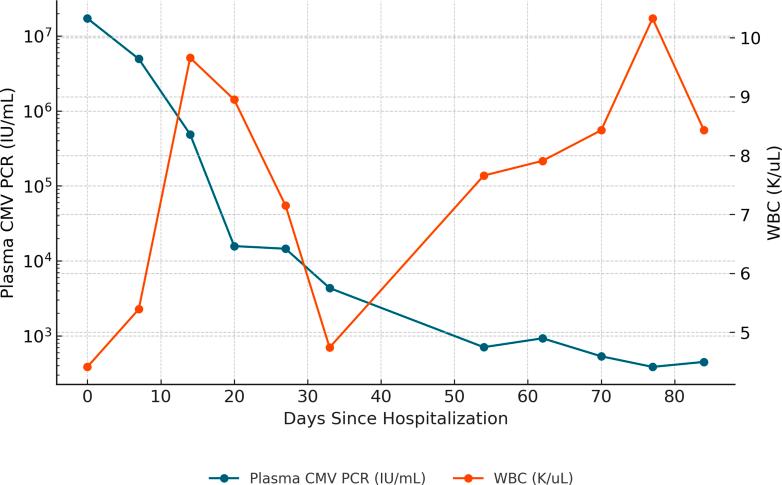
TAKE-HOME MESSAGES: CMV encephalitis in transplant recipients can present with significant neurologic symptoms despite normal brain magnetic resonance imaging, necessitating cerebrospinal fluid analysis for timely diagnosis and management. Close monitoring of CMV viremia and neurologic status is critical, as clinical improvement may lag behind virologic clearance, necessitating individualized treatment strategies.
背景
巨细胞病毒(CMV)脑炎是免疫功能低下患者中一种罕见但严重的并发症,尤其是移植受者,因为他们处于高度免疫抑制状态。
病例摘要
据我们所知,我们报告了首例经脑脊液聚合酶链反应确诊的67岁男性心脏移植受者发生CMV脑炎的病例。该患者出现意识模糊和明显的行为改变,但脑部磁共振成像未显示急性异常。
讨论
该病例突出了CMV脑炎可能在无任何放射学异常的情况下出现显著神经症状,强调了分子诊断在原因不明的神经功能恶化的免疫功能低下患者中的重要性。
要点
移植受者的CMV脑炎尽管脑部磁共振成像正常,但仍可能出现显著神经症状,因此需要进行脑脊液分析以实现及时诊断和管理。密切监测CMV病毒血症和神经状态至关重要,因为临床改善可能滞后于病毒学清除,需要个体化的治疗策略。


 Zotero 插件