
西班牙穆尔西亚浅海湾(Mar Menor)沿海干河与海洋沉积物中砷的人体健康风险及生物可利用性
Human Health Risk and Bioaccessibility of Arsenic in Wadis and Marine Sediments in a Coastal Lagoon (Mar Menor, Spain).
作者信息
Martínez López Salvadora, Pérez Sirvent Carmen, Martínez Sánchez María José, Esteban Abad María Ángeles
机构信息
Department of Agricultural Chemistry, Geology and Pedology, Faculty of Chemistry, International Campus Mare Nostrum, University of Murcia, 30100 Murcia, Spain.
Immunobiology for Aquaculture Group, Department of Cell Biology and Histology, Faculty of Biology, University of Murcia, 30100 Murcia, Spain.
出版信息
Toxics. 2025 Jul 30;13(8):647. doi: 10.3390/toxics13080647.
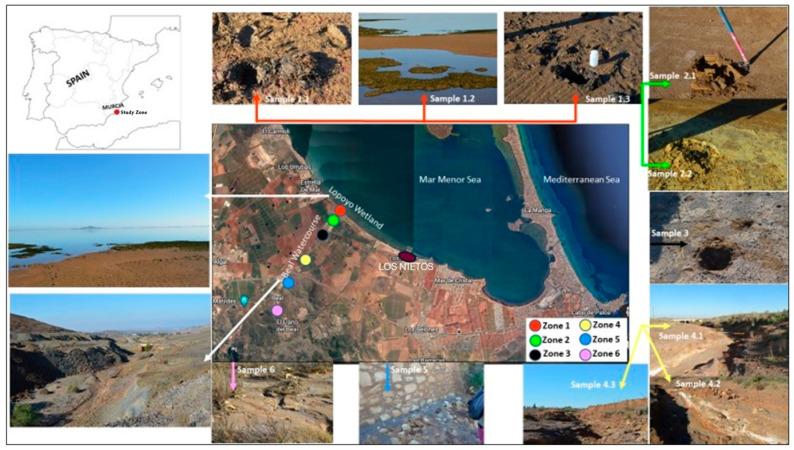
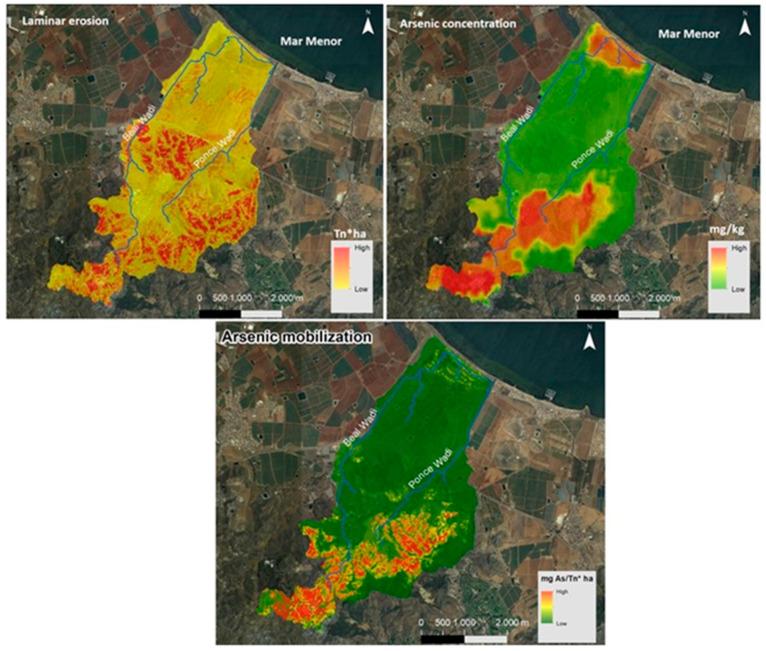
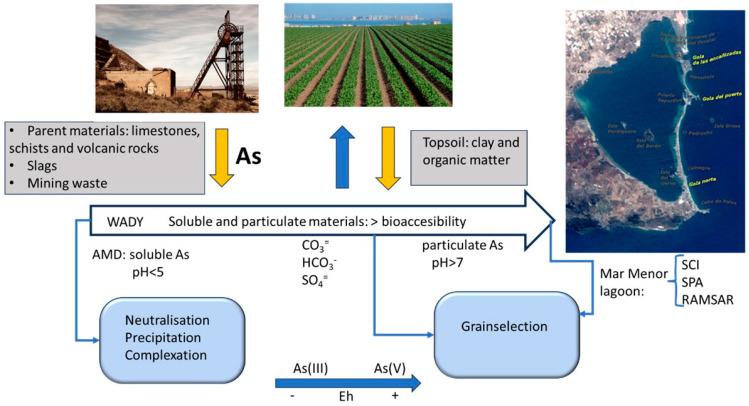
This study evaluates the potential health risks posed by geogenic arsenic in environments suitable for leisure activities, such as walking, bathing, and playing, for adults and children alike, as well as in neighbouring agricultural areas. The study includes an analysis of environmental characteristics and the main stream originating in the adjacent mining area, with water and sediment samples taken. The study area is representative of other areas in the vicinity of the Mar Menor Lagoon, which is one of the largest and most biodiverse coastal lagoons in the Mediterranean Sea. The general characteristics of the soil and water were determined for this study, as was the concentration of As in the soil and water samples. A granulometric separation was carried out into four different fractions (<2 mm, <250 µm, <100 µm, and <65 µm). The mineralogical composition, total As content, and bioaccessible As content are analysed in each of these fractions. This provides data with which to calculate the danger of arsenic (As) to human health by ingestion and to contribute to As bioaccessibility studies and the role played by the mineralogical composition and particle size of soil ingestion. The conclusions rule out residential use of this environment, although they allow for eventual tourist use and traditional agricultural use of the surrounding soils.
本研究评估了在适合成年人和儿童进行休闲活动(如散步、沐浴和玩耍)的环境以及邻近农业区域中,地质成因砷所带来的潜在健康风险。该研究包括对环境特征以及源自相邻矿区的主要溪流进行分析,并采集水和沉积物样本。研究区域代表了地中海最大且生物多样性最高的沿海泻湖之一——马尔梅诺尔泻湖附近的其他区域。本研究测定了土壤和水的一般特征,以及土壤和水样中砷的浓度。进行了粒度分离,分为四个不同部分(<2毫米、<250微米、<100微米和<65微米)。对这些部分中的每一部分都分析了矿物成分、总砷含量和生物可利用砷含量。这为通过摄入计算砷对人类健康的危害提供了数据,并有助于砷生物可利用性研究以及土壤摄入的矿物成分和粒径所起的作用。结论排除了将该环境用于居住的可能性,不过允许最终将其用于旅游以及对周边土壤进行传统农业利用。







 Zotero 插件