Barbu Laurențiu Augustus, Vasile Liviu, Cercelaru Liliana, Șurlin Valeriu, Mogoantă Stelian-Ștefaniță, Mogoș Gabriel Florin Răzvan, Țenea Cojan Tiberiu Stefăniță, Mărgăritescu Nicolae-Dragoș, Iordache Marius P, Buliman Anca
Department of Surgery, Railway Clinical Hospital Craiova, University of Medicine and Pharmacy of Craiova, 2 Petru Rares Street, 200349 Craiova, Romania.
Department of Surgery, Emergency County Hospital, University of Medicine and Pharmacy of Craiova, 2 Petru Rares Street, 200349 Craiova, Romania.
J Clin Med. 2025 Aug 18;14(16):5821. doi: 10.3390/jcm14165821.
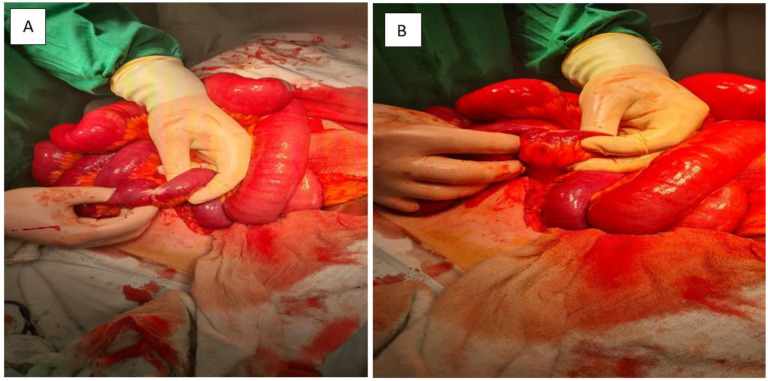
Small intestinal neuroendocrine tumors (SI-NETs) are the most common malignancies of the small bowel. Although typically well differentiated and slow-growing, they may exhibit aggressive behavior, especially when diagnosed at an advanced stage. To illustrate the diagnostic and therapeutic challenges of advanced SI-NETs through a rare case presentation and a narrative review of recent studies in the literature. A narrative literature review was conducted using the PubMed database to examine the incidence, risk factors, diagnostic modalities, and treatment strategies for advanced-stage SI-NETs. The search included studies published between January 2010 and June 2025 and focused on human subjects, using keywords such as "small intestinal neuroendocrine tumor", "metastasis", "tumor grade", and "treatment". We report the case of a 68-year-old man who presented with bowel obstruction. Imaging and surgical exploration revealed a jejunoileal SI-NET with extensive liver and peritoneal metastases, mesenteric fibrosis, and ascites. Histopathology confirmed a well-differentiated grade 2 tumor (Ki-67: 3%) positive for chromogranin A and CD56. Despite a low proliferative index, the tumor demonstrated aggressive clinical behavior. The patient underwent emergency enterectomy with ileostomy and was referred for further evaluation, including somatostatin receptor imaging and consideration for peptide receptor radionuclide therapy (PRRT). This case highlights the potential for aggressive progression in well-differentiated SI-NETs with low Ki-67 indices. Histological grade alone may not predict clinical behavior. Early diagnosis, comprehensive staging, and individualized multidisciplinary management-guided by functional imaging and receptor profiling-are critical to improving outcomes in advanced SI-NETs.
小肠神经内分泌肿瘤(SI-NETs)是小肠最常见的恶性肿瘤。尽管通常分化良好且生长缓慢,但它们可能表现出侵袭性,尤其是在晚期诊断时。通过一个罕见病例报告和对文献中近期研究的叙述性综述来说明晚期SI-NETs的诊断和治疗挑战。使用PubMed数据库进行了叙述性文献综述,以研究晚期SI-NETs的发病率、危险因素、诊断方法和治疗策略。搜索包括2010年1月至2025年6月发表的研究,重点是人类受试者,使用了“小肠神经内分泌肿瘤”、“转移”、“肿瘤分级”和“治疗”等关键词。我们报告了一例68岁男性患者,他因肠梗阻就诊。影像学和手术探查发现空回肠SI-NET伴广泛肝转移和腹膜转移、肠系膜纤维化及腹水。组织病理学证实为分化良好的2级肿瘤(Ki-67:3%),嗜铬粒蛋白A和CD56呈阳性。尽管增殖指数较低,但该肿瘤表现出侵袭性临床行为。患者接受了急诊肠切除术并进行了回肠造口术,随后被转诊进行进一步评估,包括生长抑素受体显像以及考虑肽受体放射性核素治疗(PRRT)。该病例强调了Ki-67指数低的分化良好的SI-NETs有侵袭性进展的可能性。仅组织学分级可能无法预测临床行为。早期诊断、全面分期以及由功能成像和受体分析指导的个体化多学科管理对于改善晚期SI-NETs的治疗结果至关重要。