Section "Endocrine Surgery", Division of General Surgery, Department of Surgery, Medical University, Währinger Gürtel 18-20, 1090, Vienna, Austria.
Department of Pathology, Medical University, Währinger Gürtel 18-20, 1090, Vienna, Austria.
Orphanet J Rare Dis. 2021 Jan 14;16(1):30. doi: 10.1186/s13023-021-01677-9.
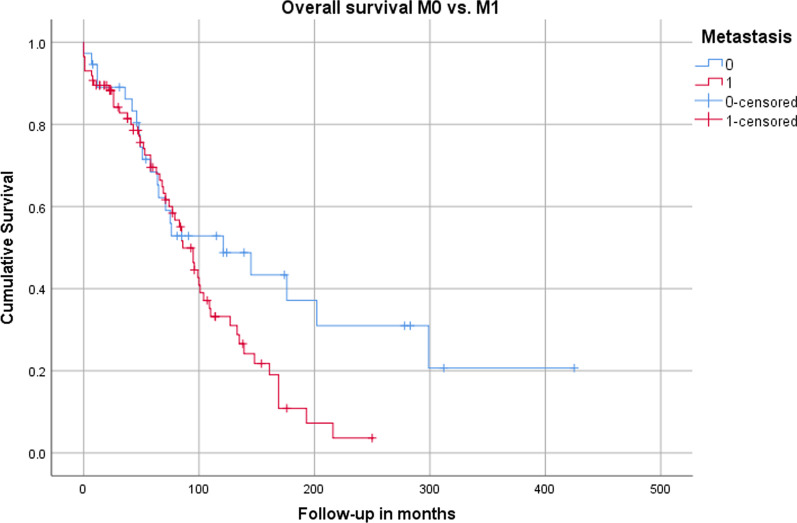
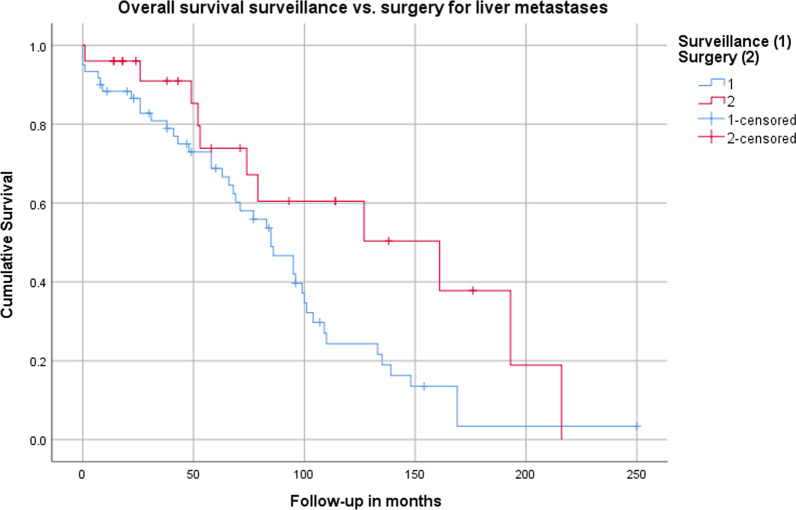
Neuroendocrine neoplasia of the small intestine (siNEN) are frequently diagnosed with liver metastases. The impact of the presence of liver metastases on overall survival and the necessity of surgery for liver metastasis is discussed controversially. The aim of this study is to evaluate and compare the overall long-term survival of patients with siNENs with and without liver metastasis at initial diagnosis and the possible benefit of surgical treatment as compared to active surveillance of metastases. 123 consecutive patients with siNENs were treated between 1965 and 2016. All clinical and histological records were reevaluated including analysis of the proliferation rates in all specimens. The 1-, 5-, 10- and 20-year overall survival was estimated by Kaplan-Meier analysis for patients with and without liver metastasis and according to the type of treatment (surgical vs. surveillance) of liver metastases if present.
The 1-, 5-, 10- and 20-year overall survival rate was 89.0%, 68.4%, 52.8% and 31.0% in patients without and 89.5%, 69.5%, 33.2% and 3.6% in those with liver metastases. No statistically significant differences were observed comparing the two groups. Within the group of patients with liver metastases, the type of treatment (surgical vs. surveillance) was in favor of patients undergoing surgery. Multivariate analysis showed that the presence of liver metastases upon diagnosis was an individual risk factor associated with worse survival.
The presence of liver metastasis at initial diagnosis does not have a statistically significant influence on survival. Surgery for hepatic metastasis seems to show a benefit for overall survival and may be indicated especially in patients symptomatic due to high tumor burden and serotonin hypersecretion to reduce hormone activity.
小肠神经内分泌肿瘤(siNEN)常伴有肝转移而被诊断。肝转移的存在对总生存的影响以及对肝转移进行手术的必要性存在争议。本研究旨在评估和比较初诊时伴有和不伴有肝转移的 siNEN 患者的总体长期生存,并比较手术治疗与转移灶主动监测的可能获益。
回顾性分析 1965 年至 2016 年间连续治疗的 123 例 siNEN 患者的临床和组织学资料,包括所有标本的增殖率分析。采用 Kaplan-Meier 分析无肝转移和有肝转移患者的 1、5、10 和 20 年总生存率,并根据肝转移灶的治疗方式(手术或监测)进行分层分析。
无肝转移患者的 1、5、10 和 20 年总生存率分别为 89.0%、68.4%、52.8%和 31.0%,有肝转移患者分别为 89.5%、69.5%、33.2%和 3.6%。两组之间无统计学差异。在伴有肝转移的患者中,手术治疗较主动监测更有优势。多因素分析显示,初诊时存在肝转移是影响生存的独立危险因素。
初诊时肝转移的存在对生存无统计学影响。手术治疗肝转移似乎可提高总体生存率,尤其是对于因肿瘤负荷高和血清素过度分泌导致激素活性高而出现症状的患者。