De Beukelaer Frederic, Wuyts Laura L, van Hedent Steven, Nikoubashman Omid, Kantzeli Iliana, Wiesmann Martin, Reich Arno, Pinho João, Ridwan Hani, Weyland Charlotte S
Department of Neuroradiology, University Hospital RWTH Aachen, Aachen, Germany.
Department of Radiology, AZ Sint-Lucas, Gent, Belgium.
Interv Neuroradiol. 2025 Sep 8:15910199251374274. doi: 10.1177/15910199251374274.
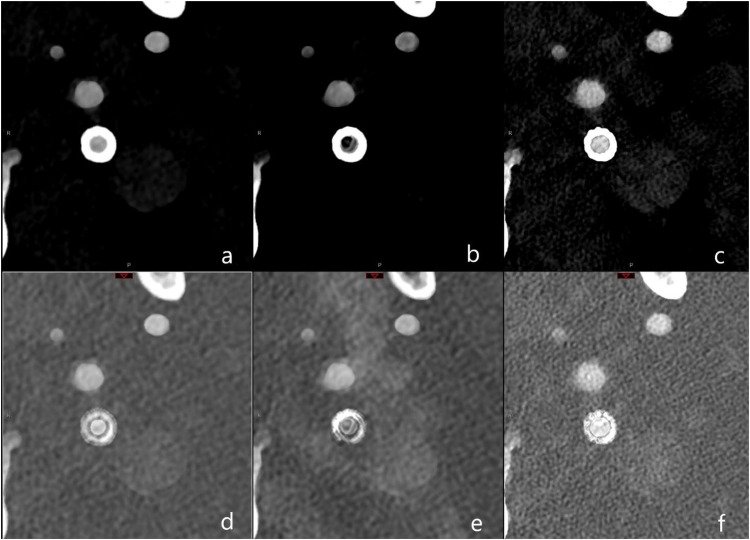
PurposeTo evaluate the potential of Photon-Counting Detector CT Angiography (PCD-CTA) for the assessment of carotid and subclavian artery stents compared to digital subtraction angiography (DSA) and Duplex ultrasound (DUS).MethodsThis study is a single-center, retrospective analysis of consecutive patients treated with a stent for high grade stenosis of the extra-cranial carotid and the subclavian artery between April 2023 and May 2024. Polyenergetic images (PE), iodine and virtual monoenergetic images were performed at different keV levels (40 and 80) and with two body vascular reconstruction kernels (Bv56 and 72) with and without iterative metal artifact reduction. Three independent readers assessed image quality using a 5-point Likert scale and region of interest analysis. A blinded, independent reading was performed to determine in-stent vessel stenosis.ResultsA total of 19 patients (64.3 ± 10.3 (mean patient age in years ± SD); 9 women) with carotid or subclavian artery stents and available DSA, DUS and PCD-CTA were analyzed. Virtual monoenergetic images (VMI) reconstructed with Bv56 at 40 keV, PE and IOD reconstructed with Bv56 scored higher and achieved higher SNRs and CNRs in the in-stent vessel lumen compared with Bv72 reconstructions (p < 0.001). In 2/19 cases with elevated flow velocities (>250 cm/s) in the in-stent vessel lumen, the subsequently performed PCD-CTA and DSA could rule out a high-grade stenosis.ConclusionPCD-CTA with spectral reconstructions allows a reliable non-invasive assessment of the in-stent vessel lumen in patients after carotid artery or subclavian artery stenting.
与数字减影血管造影(DSA)和双功超声(DUS)相比,评估光子计数探测器CT血管造影(PCD-CTA)在评估颈动脉和锁骨下动脉支架方面的潜力。
本研究是一项单中心回顾性分析,纳入了2023年4月至2024年5月期间因颅外颈动脉和锁骨下动脉重度狭窄接受支架治疗的连续患者。在不同keV水平(40和80)下,使用两种体部血管重建内核(Bv56和72),进行了多能图像(PE)、碘图像和虚拟单能图像的采集,并进行了有无迭代金属伪影减少处理。三名独立阅片者使用5分李克特量表和感兴趣区分析来评估图像质量。进行了盲法独立阅片以确定支架内血管狭窄情况。
共分析了19例患有颈动脉或锁骨下动脉支架且有可用DSA、DUS和PCD-CTA的患者(64.3±10.3(平均患者年龄,岁±标准差);9名女性)。与Bv72重建相比,使用Bv56在40keV重建的虚拟单能图像(VMI)、使用Bv56重建的PE和碘图像在支架内血管腔中得分更高,且获得了更高的信噪比(SNR)和对比噪声比(CNR)(p<0.001)。在19例中有2例支架内血管腔血流速度升高(>250cm/s)的病例中,随后进行的PCD-CTA和DSA能够排除重度狭窄。
具有光谱重建的PCD-CTA能够对颈动脉或锁骨下动脉支架置入术后患者的支架内血管腔进行可靠的无创评估。