
用于靶向细胞内药物递送的基于人血清白蛋白的纳米颗粒。
Human Serum Albumin-Based Nanoparticles for Targeted Intracellular Drug Delivery.
作者信息
Chilom Claudia Gabriela, Iftimie Sorina, Balan Adriana Elena, Oprea Daniela, Enculescu Monica, Enache Teodor Adrian
机构信息
Faculty of Physics, University of Bucharest Magurele, 077125 Magurele, Ilfov, Romania.
National Institute of Materials Physics, Str. Atomistilor, nr. 405A, 077125 Magurele, Ilfov, Romania.
出版信息
Int J Mol Sci. 2025 Aug 27;26(17):8297. doi: 10.3390/ijms26178297.
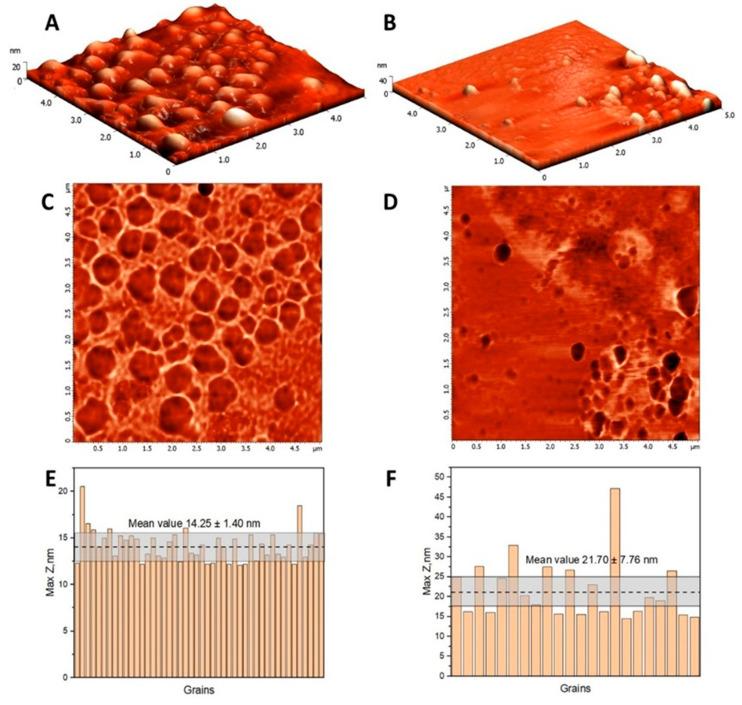
We report the synthesis and characterization of folic acid (FA)-conjugated human serum albumin nanoparticles, (HSA-FA):Ru NPs, as targeted carriers for rutin (Ru), a flavonoid with known anticancer activity. Nanoparticles were fabricated via a desolvation method, and their surface was functionalized with folic acid to promote selective uptake by cancer cells overexpressing folate receptors. Morphological and dimensional analyses performed by atomic force microscopy (AFM), scanning electron microscopy (SEM), and fluorescence microscopy confirmed that all nanoparticles were below 100 nm and exhibited good colloidal stability. Voltametric measurements confirmed the successful incorporation of both rutin and folic acid within the (HSA-FA):Ru nanoparticle formulation. Biological evaluation was conducted on healthy L929 fibroblasts and HT-29 colon adenocarcinoma cells. MTS colorimetric assays revealed that (HSA-FA):Ru NPs significantly reduced the viability of HT-29 cells, while maintaining higher compatibility with L929 cells. Fluorescence and electron microscopy further confirmed preferential nanoparticle uptake and surface accumulation in HT-29 cells, supporting the role of folic acid in enhancing targeted delivery. The study demonstrates that HSA-based nanoparticles functionalized with FA and loaded with Ru offer a biocompatible and efficient strategy for selective intracellular drug delivery in colorectal cancer. These findings support the use of albumin-based nanocarriers in the development of targeted therapeutic platforms for cancer treatment.
我们报道了叶酸(FA)偶联的人血清白蛋白纳米颗粒(HSA-FA):Ru NPs 的合成与表征,其作为具有已知抗癌活性的类黄酮芦丁(Ru)的靶向载体。纳米颗粒通过去溶剂化方法制备,其表面用叶酸功能化,以促进过表达叶酸受体的癌细胞选择性摄取。通过原子力显微镜(AFM)、扫描电子显微镜(SEM)和荧光显微镜进行的形态学和尺寸分析证实,所有纳米颗粒均小于100 nm,并表现出良好的胶体稳定性。伏安测量证实芦丁和叶酸均成功掺入(HSA-FA):Ru纳米颗粒制剂中。对健康的L929成纤维细胞和HT-29结肠腺癌细胞进行了生物学评估。MTS比色法显示,(HSA-FA):Ru NPs显著降低了HT-29细胞的活力,同时与L929细胞保持更高的相容性。荧光和电子显微镜进一步证实了纳米颗粒在HT-29细胞中的优先摄取和表面积累,支持了叶酸在增强靶向递送中的作用。该研究表明,用FA功能化并负载Ru的基于HSA的纳米颗粒为结直肠癌的选择性细胞内药物递送提供了一种生物相容性好且有效的策略。这些发现支持在开发癌症治疗靶向治疗平台中使用基于白蛋白的纳米载体。



 Zotero 插件