Movat H Z, Uriuhara T, Taichman N S, Rowsell H C, Mustard J F
Immunology. 1968 May;14(5):637-48.
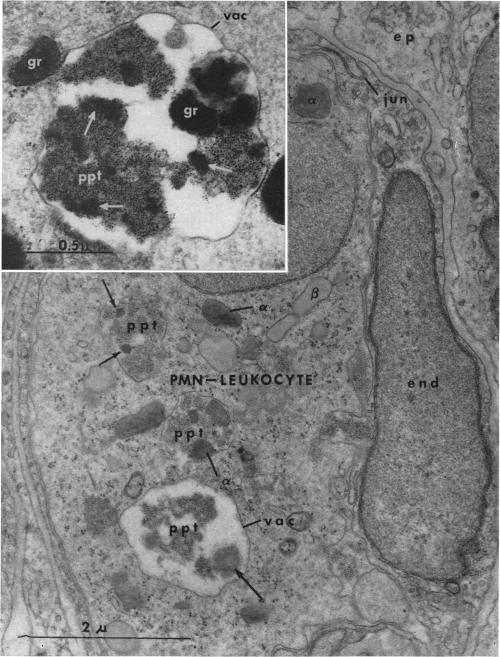
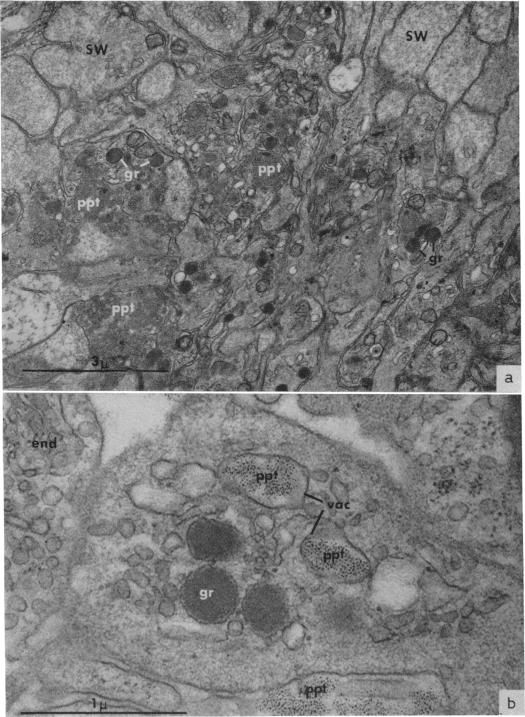
Anaphylaxis due to intravascular interaction of hyperimmune antibody with antigen was studied in rabbits, swine and rats. Obstruction of the pulmonary vessels by the immune precipitates was found to initiate the process. This is followed by aggregation of PMN-leucocytes and platelets in pulmonary vessels and phagocytosis of the precipitates by these blood elements. During this process degranulation of the cells takes place with release of lysosomal contents. As a concomitant a rise in plasma acid protease and other hydrolases was demonstrated, presumably derived from the degranulating PMN-leucocytes and platelets. Unlike leukopaenic animals, normal ones showed a more marked hypotension, a greater tendency to protracted shock and developed focal and confluent haemorrhagic pulmonary lesions. It is suggested that anaphylaxis due to intravascular antigen—antibody interaction or aggregate anaphylaxis is a systemic or pulmonary Arthus reaction, rather than a `true' anaphylaxis.
在兔、猪和大鼠中研究了高免疫抗体与抗原在血管内相互作用引起的过敏反应。发现免疫沉淀物阻塞肺血管引发了这一过程。随后肺血管中PMN白细胞和血小板聚集,这些血液成分吞噬沉淀物。在此过程中,细胞发生脱颗粒,释放溶酶体内容物。与此同时,血浆酸性蛋白酶和其他水解酶升高,推测来源于脱颗粒的PMN白细胞和血小板。与白细胞减少的动物不同,正常动物表现出更明显的低血压、更易发生持续性休克,并且出现局灶性和融合性出血性肺部病变。有人提出,血管内抗原 - 抗体相互作用引起的过敏反应或聚集性过敏反应是一种全身性或肺部的阿瑟斯反应,而不是“真正的”过敏反应。