McGee J O, Patrick R S
Br J Exp Pathol. 1969 Dec;50(6):521-6.
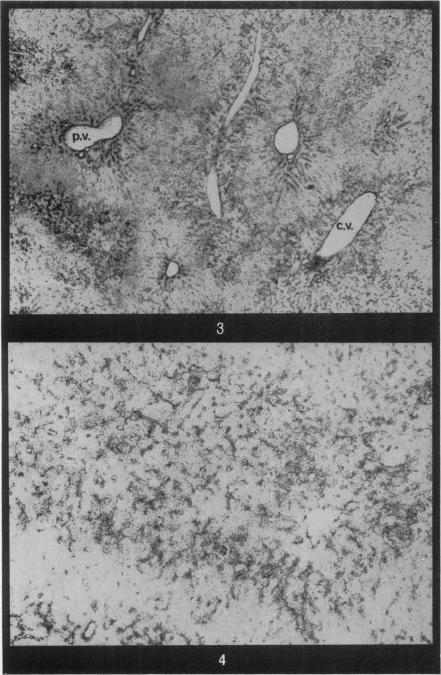
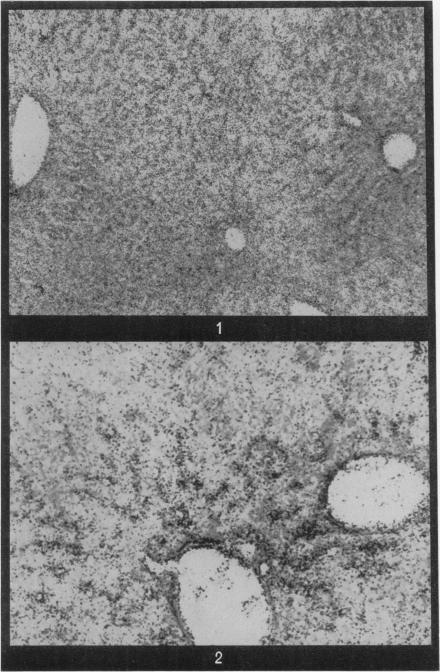
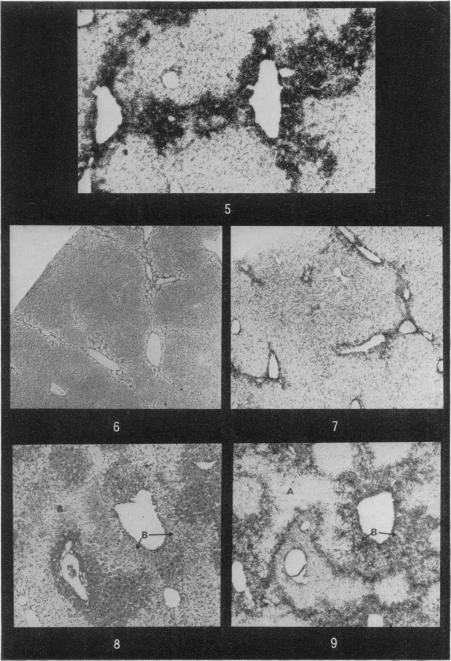
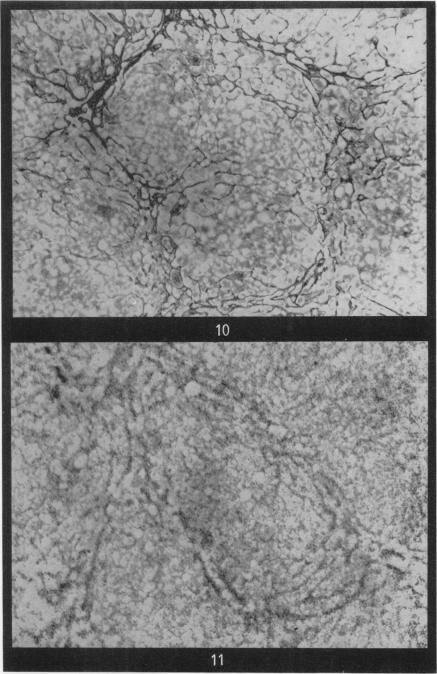
Autoradiography of mouse liver after the administration of S-sodium sulphate shows transient concentration of the isotope in sinusoidal walls. This phenomenon is markedly exaggerated in the acute stages of carbon tetrachloride (CCl) poisoning with radioactivity appearing over viable sinusoidal cells and extracellular necrotic spaces. This is maintained for several days and there is condensation of the isotope over prominent reticulin fibres in the centrilobular zones during the stage of recovery. Negative results are obtained if the sinusoidal cells are included in the necrotic process as induced by CCl or by the local application of cold to the surface of the liver. It is concluded that liver sinusoidal cells have a capacity for mucopolysaccharide synthesis which is exaggerated following the induction of hepatocyte injury. There is also evidence for continuing synthesis of sulphated mucopolysaccharide in the cirrhotic liver in relation to fibrous trabeculae and hepatocyte degeneration.
给予S-硫酸钠后小鼠肝脏的放射自显影显示,同位素在肝血窦壁有短暂的聚集。在四氯化碳(CCl)中毒的急性期,这种现象明显加剧,放射性出现在存活的肝血窦细胞和细胞外坏死间隙。这种情况持续数天,在恢复阶段,同位素在小叶中心区突出的网状纤维上浓缩。如果肝血窦细胞像CCl诱导或肝脏表面局部冷刺激诱导那样被纳入坏死过程,则会得到阴性结果。结论是,肝血窦细胞具有合成粘多糖的能力,在肝细胞损伤诱导后这种能力会增强。也有证据表明,在肝硬化肝脏中,与纤维小梁和肝细胞变性相关的硫酸化粘多糖持续合成。