Tildon J T, Cornblath M
J Clin Invest. 1972 Mar;51(3):493-8. doi: 10.1172/JCI106837.
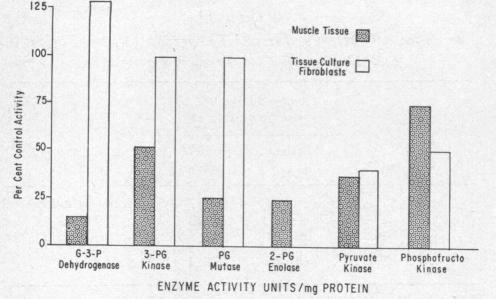
To explain the cause of a unique form of severe and intermittent ketoacidosis in an infant who expired after 6 months of life, tissue culture fibroblasts and post mortem tissue were examined for enzyme activities that catalyze glucose and ketoacid oxidation. No measurable succinyl-CoA: 3-ketoacid CoA-transferase (CoA-transferase) activity could be detected in homogenates of the post mortem brain, muscle and kidney tissue, or in the cultured skin fibroblasts. Since seven other enzyme activities involving both glycolysis and ketone body oxidation were present in these same tissues, it was reasonable to conclude that the observed absence of CoA-transferase activity was not an artifact of homogenate preparation. It was concluded that the absence of CoA-transferase activity resulted in a loss of intracellular homeostasis leading to ketoacidosis. In addition, the absence of this enzyme appears to be a reasonable explanation for the alteration in glucose metabolism that was previously reported in fibroblasts from this patient.
为解释一名6个月大时死亡的婴儿所患的一种独特形式的严重间歇性酮症酸中毒的病因,对组织培养的成纤维细胞和尸检组织进行了检测,以寻找催化葡萄糖和酮酸氧化的酶活性。在尸检的脑、肌肉和肾脏组织匀浆或培养的皮肤成纤维细胞中,均未检测到可测量的琥珀酰辅酶A:3-酮酸辅酶A转移酶(辅酶A转移酶)活性。由于在这些相同组织中存在其他七种涉及糖酵解和酮体氧化的酶活性,因此可以合理推断,观察到的辅酶A转移酶活性缺失并非匀浆制备过程中的人为因素所致。得出的结论是,辅酶A转移酶活性的缺失导致细胞内稳态失衡,进而引发酮症酸中毒。此外,这种酶的缺失似乎是此前报道的该患者成纤维细胞中葡萄糖代谢改变的合理原因。