Miller K, Harington J S
Br J Exp Pathol. 1972 Aug;53(4):397-405.
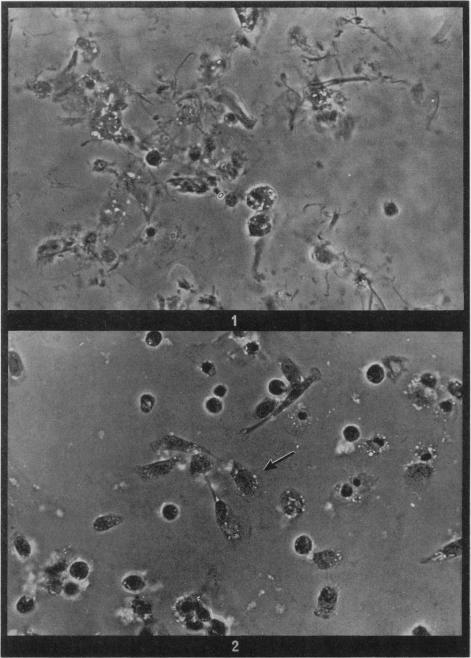
The effects of chrysotile, crocidolite and amosite asbestos, and silica and rutile dust, on hamster peritoneal macrophages were assessed by estimating the release of acid phosphatase into the culture medium and by changes in the composition of phospholipids in the cells. Chrysotile was as toxic as silica, while crocidolite, amosite and the control dust, rutile were inert. The toxicity of chrysotile and silica is evidently due to the surface interaction of the dusts with phagosomal membranes, leading to the release of lytic enzymes from the damaged phagosomes into the cytoplasm. Considerable amounts of acid phosphatase were released into the medium 28 hours after the phagocytosis of both dusts, whereas very little was found when crocidolite, amosite and rutile were used. Further evidence of cytopathic effects was seen by changes in lipid components of cells which had ingested silica and chrysotile. A decrease in total lipid content and an increase in lysolecithin apparently indicate specific, secondary and toxic effects following the release of lysosomal enzymes.
通过评估酸性磷酸酶释放到培养基中的情况以及细胞中磷脂组成的变化,来研究温石棉、青石棉、铁石棉以及二氧化硅和金红石粉尘对仓鼠腹膜巨噬细胞的影响。温石棉的毒性与二氧化硅相当,而青石棉、铁石棉以及作为对照的金红石粉尘则无活性。温石棉和二氧化硅的毒性显然是由于粉尘与吞噬体膜的表面相互作用,导致溶酶体酶从受损的吞噬体释放到细胞质中。吞噬这两种粉尘28小时后,大量酸性磷酸酶释放到培养基中,而使用青石棉、铁石棉和金红石时,发现释放的酸性磷酸酶很少。通过摄取二氧化硅和温石棉的细胞脂质成分的变化,可以进一步证明细胞病变效应。总脂质含量的减少和溶血卵磷脂的增加显然表明溶酶体酶释放后产生了特定的、继发性的毒性作用。