Hayes B P, Fisher R F
Br J Ophthalmol. 1979 Jul;63(7):457-64. doi: 10.1136/bjo.63.7.457.
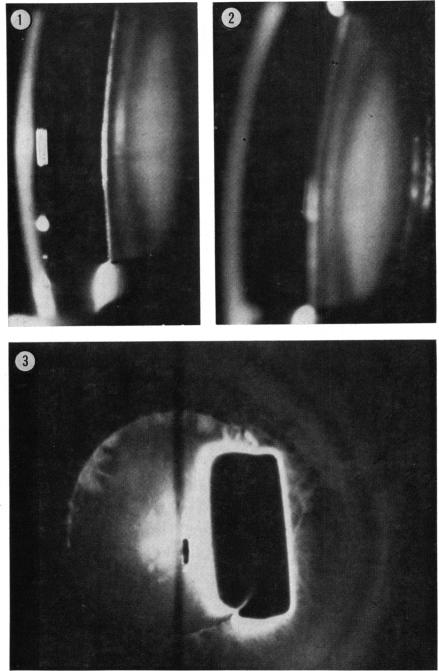
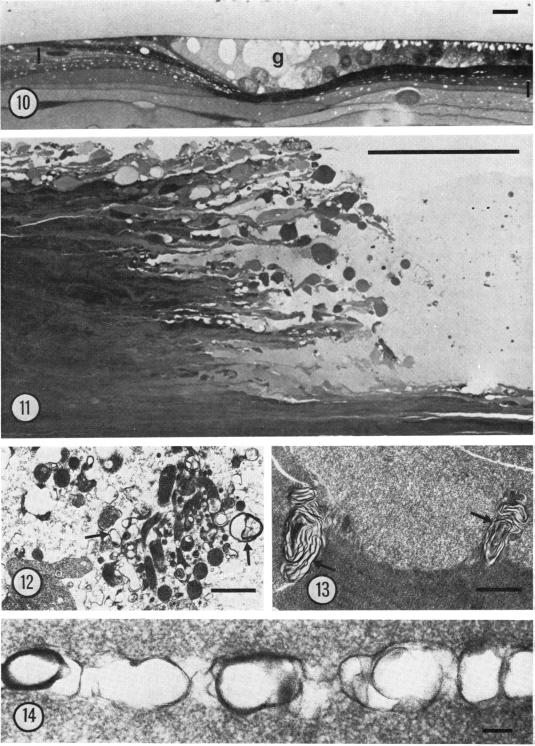
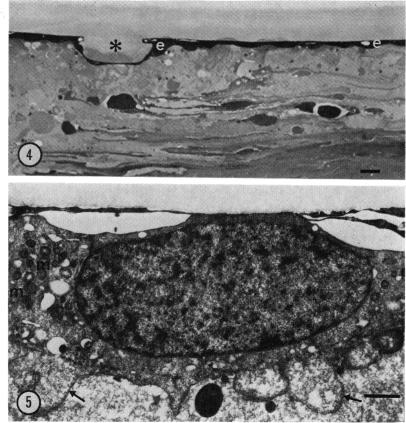
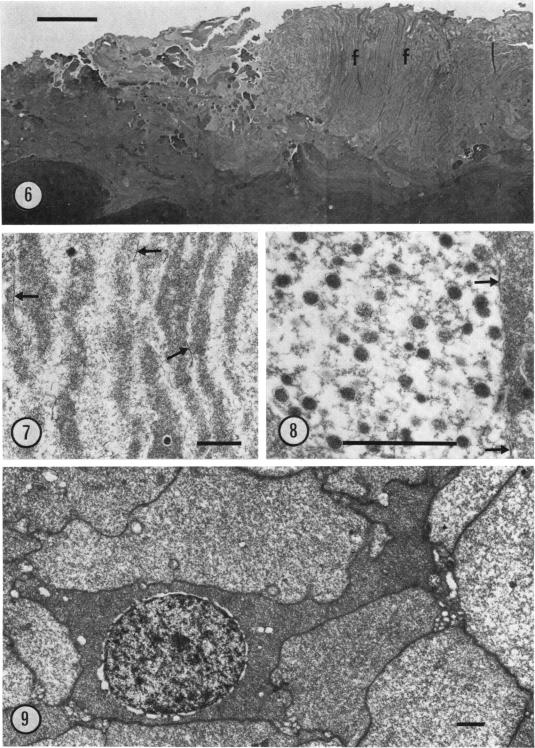
Human lenses extracted for cataract 26 years after long-term exposure to an imperfectly shielded radium source were examined by slit-lamp photography, thin-section light microscopy, and electron microscopy. Anterior epithelial cells were fibroblast-like, and germinal epithelium and vacuolated cortical fibres had accumulated at the equator. A zone of light scatter at the anterior pole corresponded to an area of breakdown of cortical lens fibres, where unusual feathery fibres were orientated perpendicular to the lens surface. Two zones of light scatter separated by a 250-microM clear interval were seen in the posterior cortex. The zone at the posterior pole corresponded to an area of fibre liquefaction and large rounded membrane whorls, while the deeper zone comprised small flattened membrane whorls. The characteristic plaques of swollen abnormal cells described in previous histological studies of x-ray cataract were not present. This and other differences probably reflect the extremely long time course and repeated subliminal doses to which the patient was exposed.
对长期暴露于防护不完善的镭源26年后因白内障而摘除的人晶状体进行了裂隙灯摄影、薄切片光学显微镜检查和电子显微镜检查。前上皮细胞呈成纤维细胞样,生发上皮和空泡化的皮质纤维在赤道处积聚。前极的光散射区对应于皮质晶状体纤维破裂的区域,此处异常的羽毛状纤维垂直于晶状体表面排列。在后皮质中可见两个由250微米透明间隔隔开的光散射区。后极的区域对应于纤维液化和大的圆形膜涡旋的区域,而较深的区域由小的扁平膜涡旋组成。先前关于X射线白内障的组织学研究中描述的肿胀异常细胞的特征性斑块不存在。这种差异以及其他差异可能反映了患者暴露于其中的极长时间过程和反复的阈下剂量。