Bradfield J W, Born G V
Br J Exp Pathol. 1973 Oct;54(5):509-17.
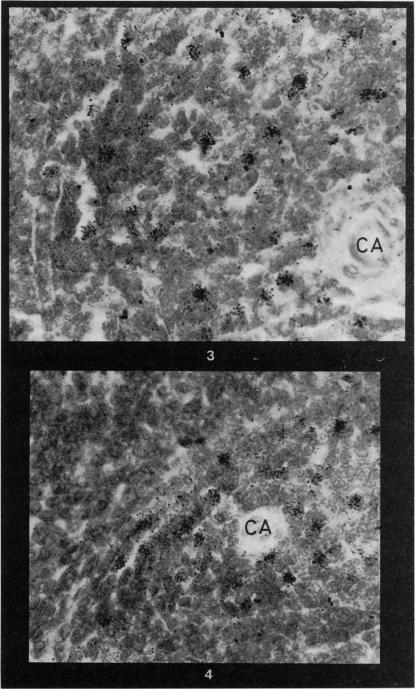
Rat thoracic duct lymphocytes have been labelled using [H]5-uridine. After injection intravenously into syngeneic recipients their fate has been followed by scintillation counting and autoradiography. During the first 24 hours the distribution of radioactivity between different organs changed greatly with time. Lungs and liver contained about 50% of the injected radioactivity within 0·5 hours and lost most of this within 4 hours. In the spleen the radioactivity increased for about 4-6 hours and then decreased, whereas that in mesenteric and peripheral lymph nodes increased almost linearly for 24 hours. Free [H]uridine and heat-killed cells failed to accumulate in lymphoid organs. When labelled lymphocytes were injected into splenectomized animals their lymph nodes accumulated more radioactivity earlier than the controls and remained more radioactive for at least 24 hours. It seems that one population of lymphocytes which accumulates in the rat spleen is released to accumulate subsequently in lymph nodes.
大鼠胸导管淋巴细胞已用[H]5 - 尿苷进行标记。静脉注射到同基因受体动物体内后,通过闪烁计数和放射自显影追踪其命运。在最初的24小时内,不同器官之间放射性的分布随时间变化很大。肺和肝脏在0.5小时内含有约50%注入的放射性,并在4小时内失去大部分。脾脏中的放射性在约4 - 6小时内增加,然后下降,而肠系膜和外周淋巴结中的放射性在24小时内几乎呈线性增加。游离的[H]尿苷和热杀死的细胞未能在淋巴器官中积聚。当将标记的淋巴细胞注射到脾切除的动物体内时,它们的淋巴结比对照组更早积聚更多的放射性,并且至少在24小时内保持更高的放射性。似乎在大鼠脾脏中积聚的一部分淋巴细胞随后被释放并在淋巴结中积聚。