Weir D G, Hourihane D O
Gut. 1974 Jun;15(6):450-7. doi: 10.1136/gut.15.6.450.
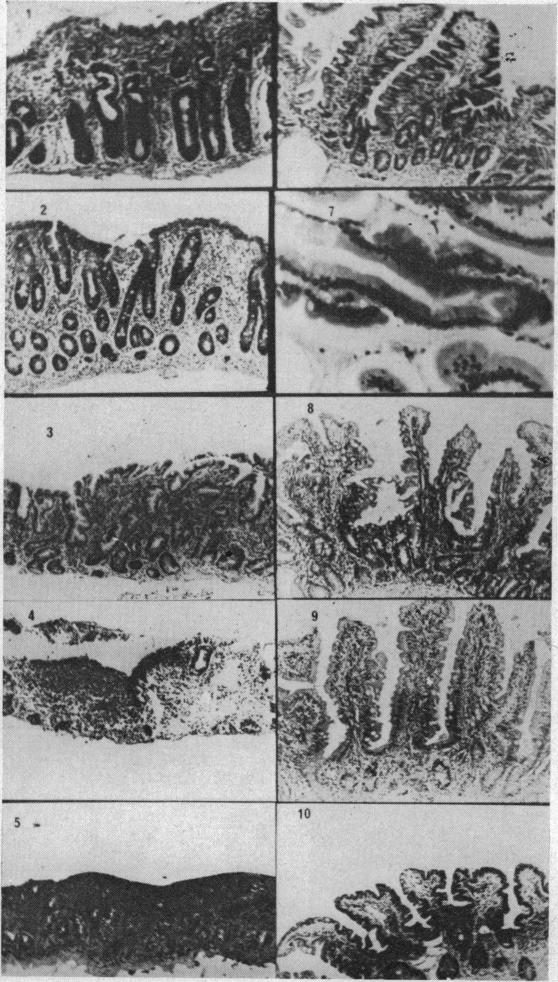
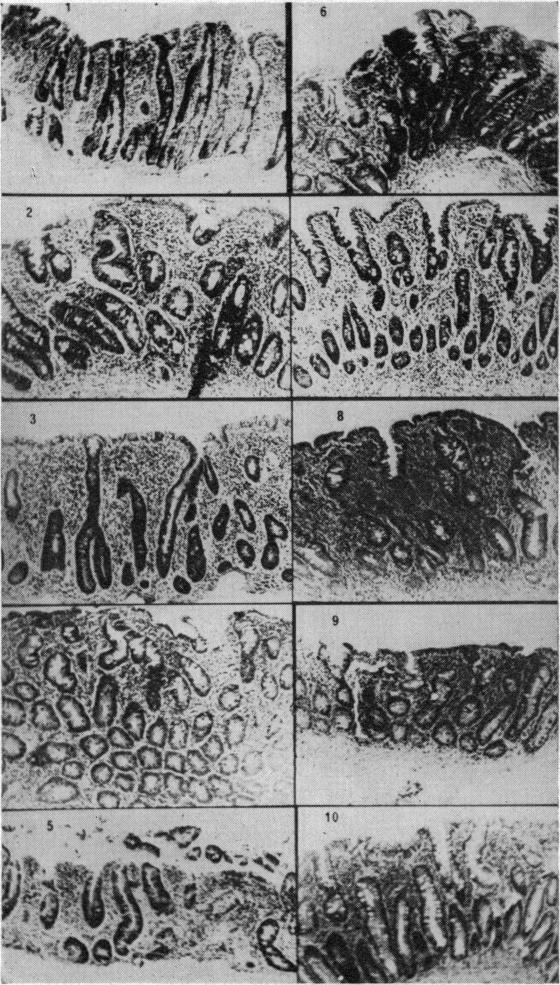
A group of teenage coeliac patients has been followed at three monthly intervals in the Outpatient Department to assess their progress and also to monitor their ability to maintain a gluten-free diet. After a follow-up period of four to six years a detailed reassessment was carried out in hospital on 10 patients, only five of whom had persevered with a gluten-free diet. The jejunal mucosal histology of those patients who did not persist with a gluten-free diet remained ;flat' although these patients appeared to have remitted clinically. Those subjects who did persist with a gluten-free regime had a normal or near normal mucosal histology. It was difficult on the basis of clinical, haematological, or biochemical criteria to separate the two groups. The best single assessment of whether these patients were maintaining a gluten-free diet was serial serum folate estimations. It is often extremely difficult to say whether teenage coeliac patients are keeping to their diet unless repeated jejunal biopsies are obtained, and this study suggests that serial serum folate estimations can act as a reasonable criterion of whether subjects are maintaining a gluten-free regime.
一组青少年乳糜泻患者在门诊部每三个月接受一次随访,以评估他们的病情进展,并监测他们维持无麸质饮食的能力。在四到六年的随访期后,对10名患者进行了详细的重新评估,其中只有5名患者坚持了无麸质饮食。未坚持无麸质饮食的患者空肠黏膜组织学检查结果仍为“扁平”,尽管这些患者在临床上似乎已经缓解。坚持无麸质饮食方案的患者黏膜组织学检查结果正常或接近正常。根据临床、血液学或生化标准很难区分这两组患者。对这些患者是否坚持无麸质饮食的最佳单一评估方法是连续测定血清叶酸水平。除非进行重复的空肠活检,否则很难判断青少年乳糜泻患者是否坚持饮食,而这项研究表明,连续测定血清叶酸水平可以作为判断受试者是否坚持无麸质饮食方案的合理标准。