Streips U N, Young F E
J Bacteriol. 1971 Jun;106(3):868-75. doi: 10.1128/jb.106.3.868-875.1971.
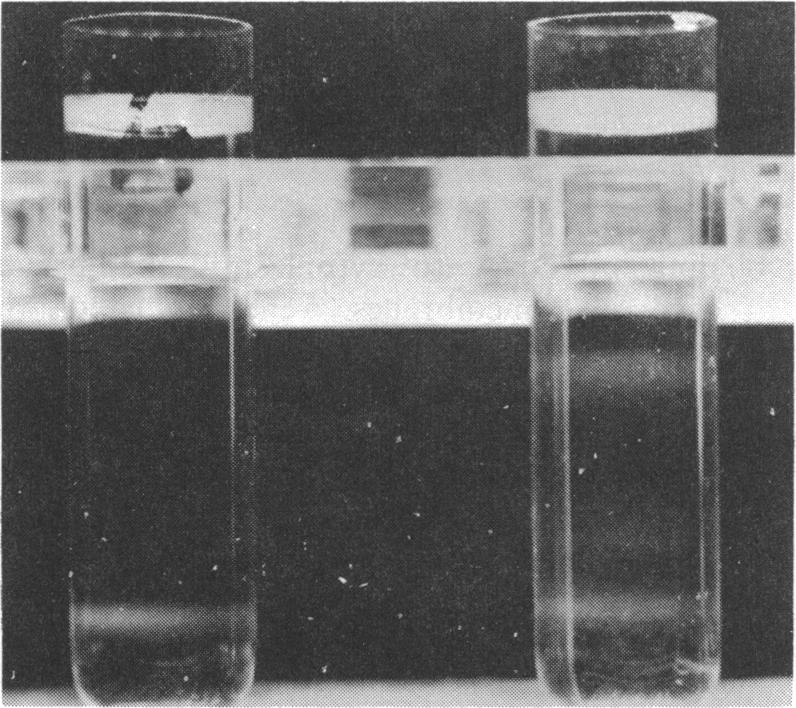
Development of competence in the noncompetent mutant of Bacillus stearothermophilus 4S requires a soluble competence-inducing factor (CF). This study describes several observations that define the mechanism of action of this factor. (i) CF interacts with cells, protoplasts, or cytoplasmic membranes in a temperature-dependent reaction; incubation of CF with cells alters the sedimentation properties of the cells. (ii) Association between CF and the cytoplasmic membrane appears to be the first and rate-limiting step in the process of transfection with deoxyribonucleic acid (DNA) from bacteriophage TP-IC. (iii) The membrane-CF complex is capable of removing infectious DNA from the supernatant fraction in vitro. (iv) Twenty phage-resistant mutants are unable to undergo the above reactions. A model is developed in which CF serves as a dynamic mediator of the reaction between the transfecting DNA and the cell surface.
嗜热脂肪芽孢杆菌4S非感受态突变体感受态的形成需要一种可溶性感受态诱导因子(CF)。本研究描述了几项确定该因子作用机制的观察结果。(i)CF在温度依赖性反应中与细胞、原生质体或细胞质膜相互作用;CF与细胞一起孵育会改变细胞的沉降特性。(ii)CF与细胞质膜之间的结合似乎是用噬菌体TP-IC的脱氧核糖核酸(DNA)进行转染过程中的第一步和限速步骤。(iii)膜-CF复合物能够在体外从上清液组分中去除感染性DNA。(iv)20个噬菌体抗性突变体无法进行上述反应。由此建立了一个模型,其中CF作为转染DNA与细胞表面之间反应的动态介质。