Maheswaran S K, Smith K L, Lindorfer R K
J Bacteriol. 1967 Aug;94(2):300-5. doi: 10.1128/jb.94.2.300-305.1967.
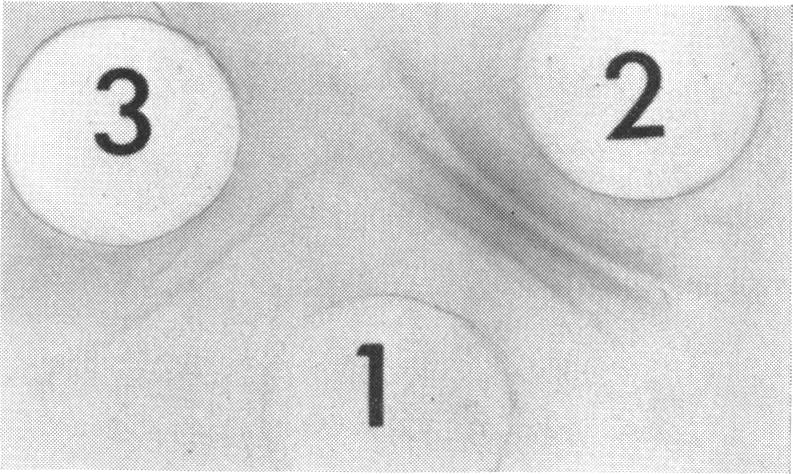
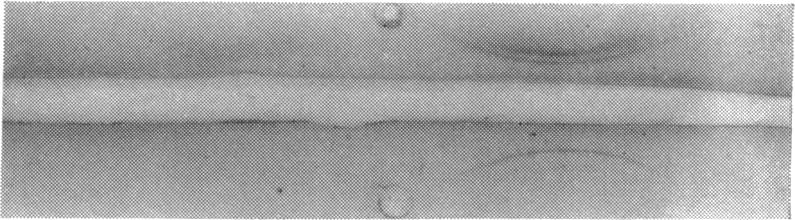
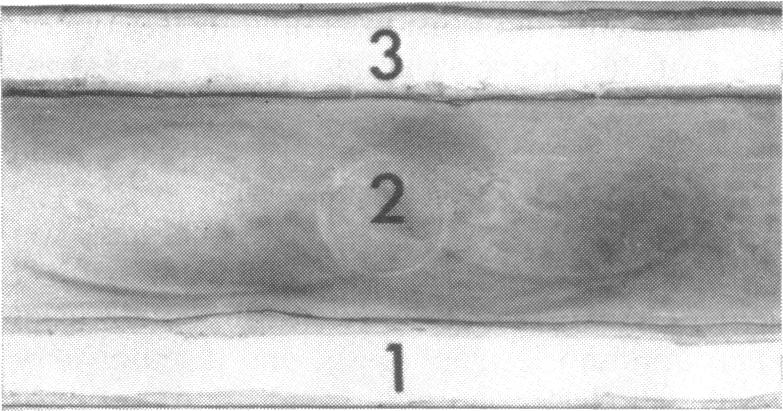
The purification of staphylococcal beta-hemolysin was accomplished by the successive use of three protein fractionation methods. The first method employed was a double precipitation with the use of ammonium sulfate at 65% saturation. The second phase of purification used Sephadex G-100 column fractionation. The third phase utilized either carboxymethyl cellulose or diethylaminoethyl cellulose fractionation. The last two fractionation methods both resulted in the separation of a relatively high concentration of cationic hot-cold lysin and a low concentration of anionic hot-cold lysin. Because of the low concentration of the anionic component, its purity could not be assessed. However, the purity of the cationic component was demonstrated by immunodiffusion, microimmunoelectrophoresis, and by disc polyacrylamide gel electrophoresis. In addition, antisera against purified cationic beta-hemolysin yielded one line of precipitate when tested against the original crude beta-hemolysin. The purified cationic beta-hemolysin was stable in the lyophilized state. Crude beta-hemolysin was dermonecrotic, whereas purified cationic beta-hemolysin was not dermonecrotic even after Mg(++) activation.
通过连续使用三种蛋白质分级分离方法实现了葡萄球菌β-溶血素的纯化。采用的第一种方法是用65%饱和度的硫酸铵进行两次沉淀。纯化的第二阶段使用葡聚糖G - 100柱分级分离。第三阶段采用羧甲基纤维素或二乙氨基乙基纤维素分级分离。最后两种分级分离方法均导致分离出相对高浓度的阳离子热冷溶血素和低浓度的阴离子热冷溶血素。由于阴离子成分浓度低,其纯度无法评估。然而,阳离子成分的纯度通过免疫扩散、微量免疫电泳和圆盘聚丙烯酰胺凝胶电泳得以证明。此外,针对纯化的阳离子β-溶血素的抗血清在与原始粗制β-溶血素进行检测时产生了一条沉淀线。纯化的阳离子β-溶血素在冻干状态下是稳定的。粗制β-溶血素具有皮肤坏死性,而纯化的阳离子β-溶血素即使在Mg(++)激活后也没有皮肤坏死性。