Cohen-Bazire G, Kunisawa R, Pfennig N
J Bacteriol. 1969 Nov;100(2):1049-61. doi: 10.1128/jb.100.2.1049-1061.1969.
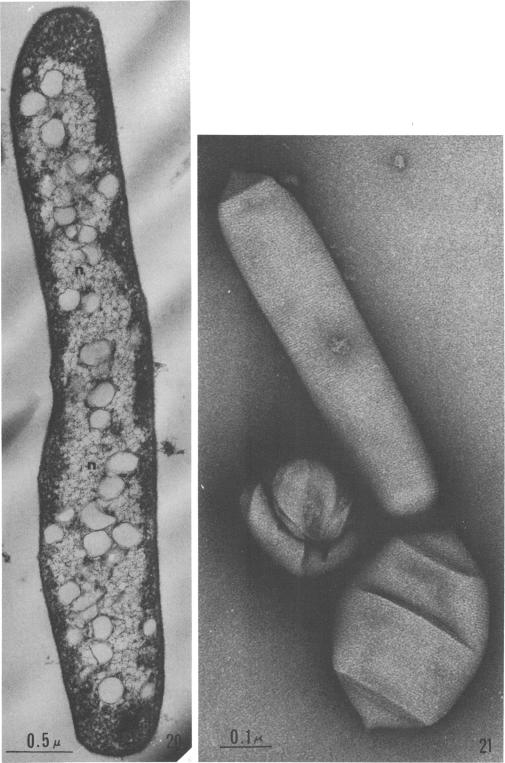
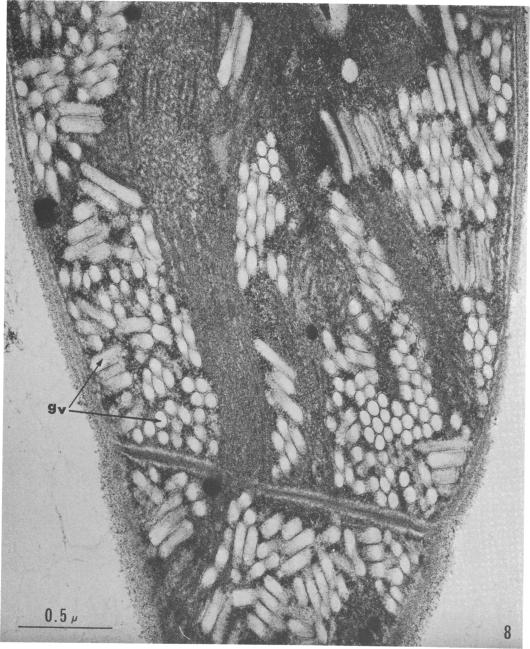
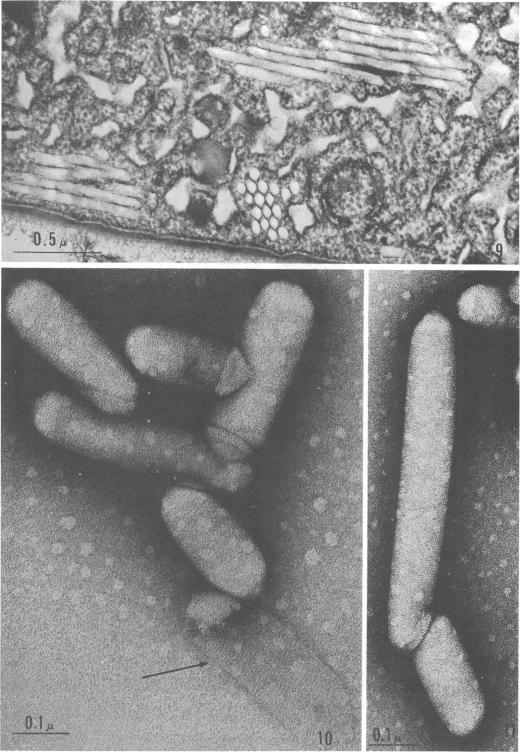
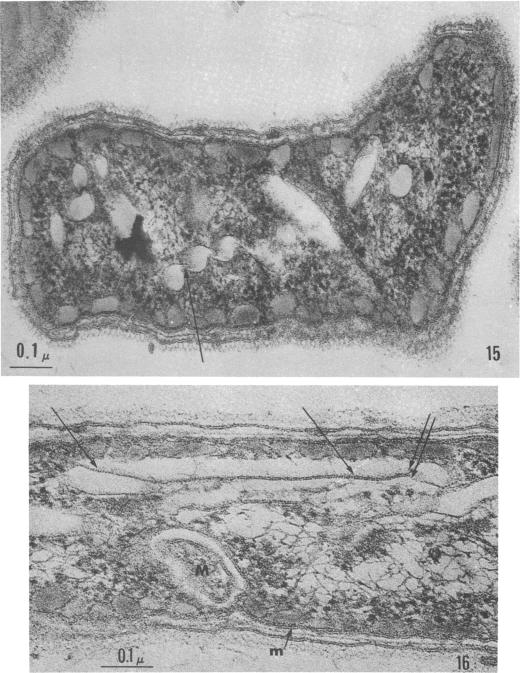
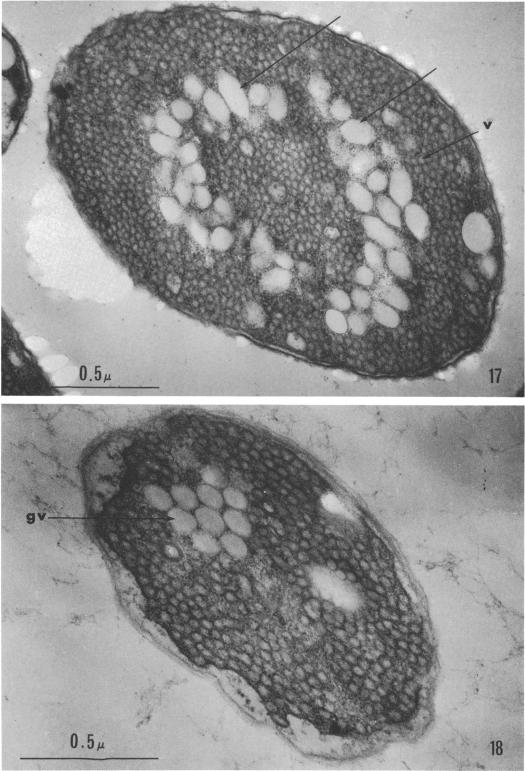
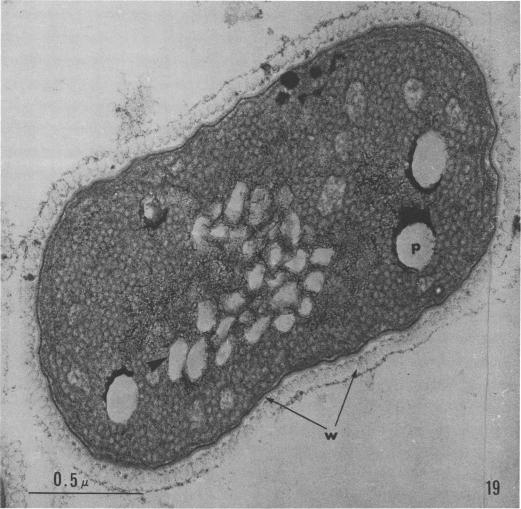
The fine structure of gas vacuoles was examined in two blue-green algae, two green bacteria, three purple sulfur bacteria, and two halobacteria. The gas vacuole is a compound organelle, composed of a variable number of gas vesicles. These are closed, cylindrical, gas-containing structures with conical ends, about 80 to 100 nm in width and of variable length, ranging from 0.2 to over 1.0 mum. The wall of the gas vesicle is a non-unit membrane 2 to 3 nm in thickness, bearing very regular striations with a periodicity of 4 nm, oriented more or less at right angles to the long axis of the cylinder. This fine structure could be clearly resolved in isolated gas vesicles prepared from a blue-green alga and from Halobacterium halobium, and its presence in the gas vesicles of the green bacterium Pelodictyon clathratiforme was inferred from thin sections. The gas vacuole thus appears to be a homologous organelle in all of these procaryotic groups. Minor differences with respect to the length and arrangement of the gas vesicles were observed. In blue-green algae and green bacteria, the vesicles are relatively long and tend to be arrayed in parallel bundles; in purple sulfur bacteria and Halobacterium, they are shorter and more irregularly distributed in the cell.
对两种蓝藻、两种绿菌、三种紫色硫细菌和两种嗜盐菌的气泡的精细结构进行了研究。气泡是一种复合细胞器,由数量可变的气体小泡组成。这些小泡是封闭的、圆柱形的、含气结构,两端呈锥形,宽度约为80至100纳米,长度可变,范围从0.2到超过1.0微米。气体小泡的壁是一层厚度为2至3纳米的非单位膜,带有非常规则的条纹,周期为4纳米,条纹方向或多或少与圆柱体的长轴成直角。这种精细结构在从蓝藻和嗜盐菌制备的分离气体小泡中可以清楚地分辨出来,并且从薄片中推断出它存在于网格绿菌的气体小泡中。因此,气泡在所有这些原核生物类群中似乎是一种同源细胞器。观察到气体小泡在长度和排列方面存在一些细微差异。在蓝藻和绿菌中,小泡相对较长,倾向于排列成平行束;在紫色硫细菌和嗜盐菌中,它们较短,在细胞中分布更不规则。