Dudman W F
Appl Microbiol. 1971 Jun;21(6):973-85. doi: 10.1128/am.21.6.973-985.1971.
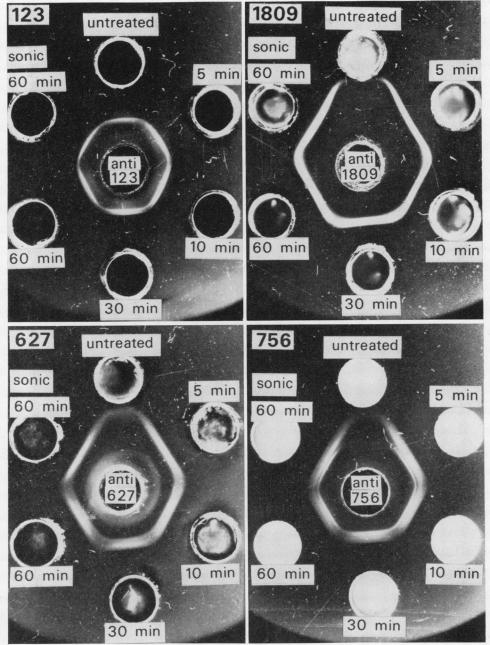
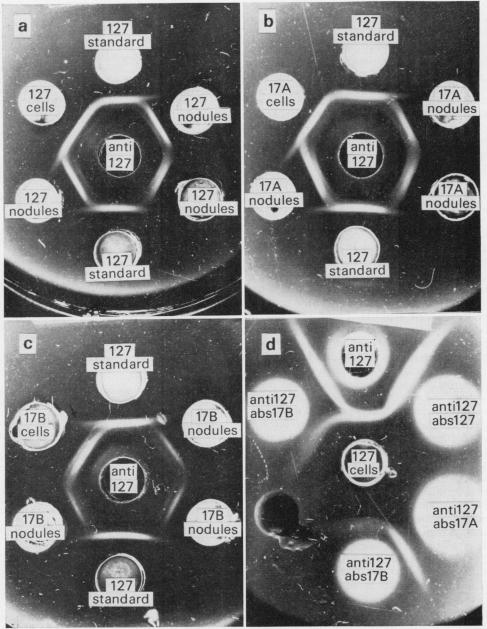
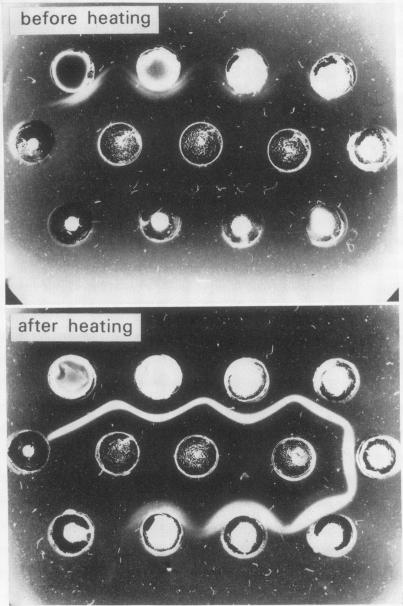
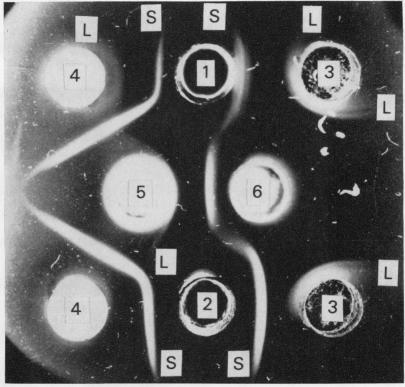
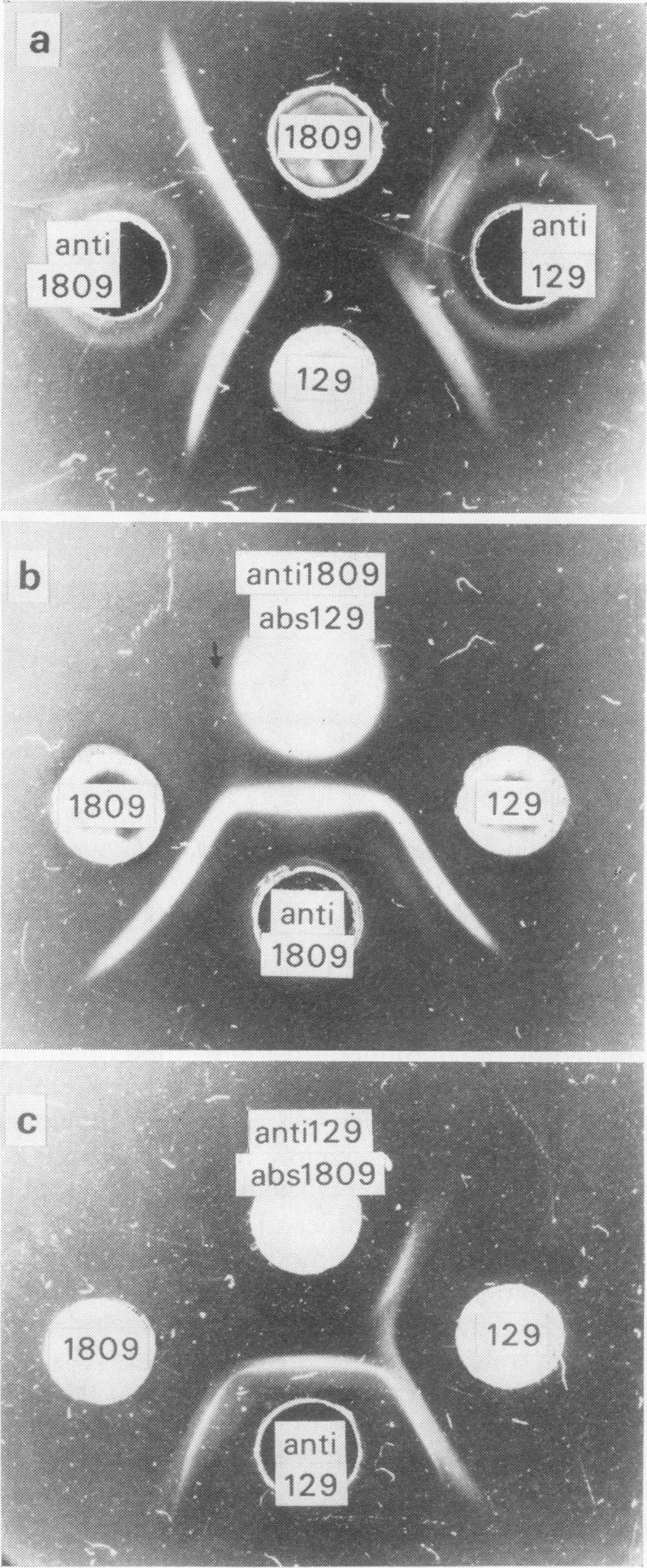
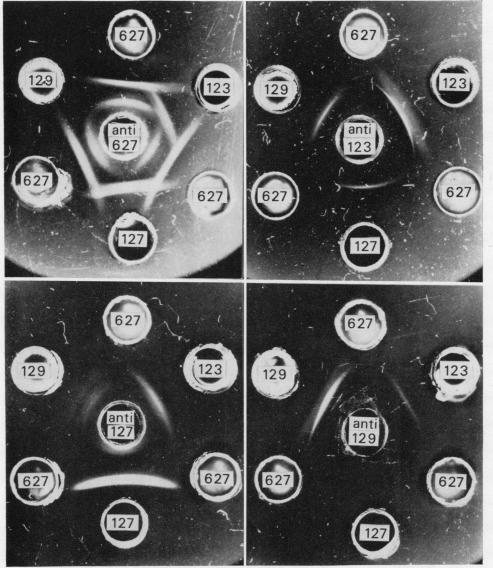
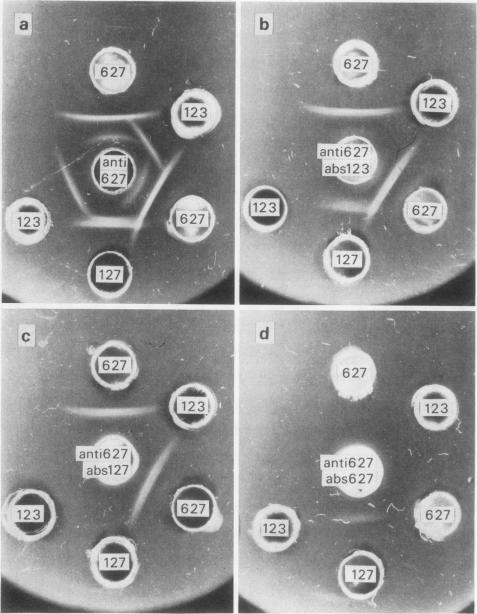
Immunodiffusion reactions were studied with seven strains of Rhizobium japonicum and three strains of the cowpea miscellany by using antisera against eight of the strains. Most strains yielded only weak precipitin bands when untreated cell suspensions were used as antigens in the diffusions. Ultrasonic disruption or heat treatment of the cells led to stronger bands, and immersion in boiling water for 20 min was used as the standard procedure for preparing these bacteria for immunodiffusion analysis. Heat-labile antigens were detected in only a few strains; the major antigens of all of the strains appeared to be heat-stable. Many of the strains cross-reacted, sometimes in a nonreciprocal manner; unheated cell suspensions cross-reacted more widely but more weakly than the heated suspensions. Heat-treated crushed nodule preparations reacted well in immunodiffusions. The antigens of cultured cell and nodule extract (bacteroid) forms of three strains were compared. In one of these strains, an antigen present in the cultured cells was absent from the bacteroids. Unknown strains present in soybean root nodules were readily identified by immunodiffusion.
利用针对其中8个菌株的抗血清,对7株日本根瘤菌和3株豇豆混种菌株进行了免疫扩散反应研究。当使用未经处理的细胞悬液作为扩散反应中的抗原时,大多数菌株仅产生微弱的沉淀带。对细胞进行超声破碎或热处理会产生更强的条带,将细胞浸入沸水中20分钟被用作制备用于免疫扩散分析的这些细菌的标准程序。仅在少数菌株中检测到热不稳定抗原;所有菌株的主要抗原似乎都是热稳定的。许多菌株会发生交叉反应,有时是非相互性的;未加热的细胞悬液比加热后的悬液交叉反应更广泛但更弱。热处理后的破碎根瘤制剂在免疫扩散中反应良好。比较了3个菌株的培养细胞和根瘤提取物(类菌体)形式的抗原。在其中一个菌株中,类菌体中不存在培养细胞中存在的一种抗原。通过免疫扩散可以很容易地鉴定出大豆根瘤中存在的未知菌株。