Hurlimann J, Zuber C
Clin Exp Immunol. 1969 Jan;4(1):125-40.
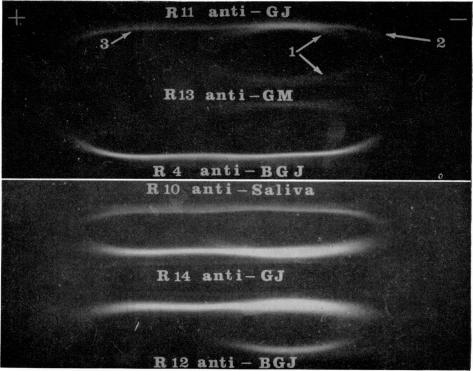
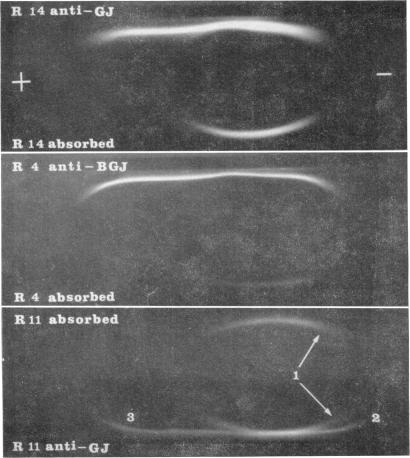
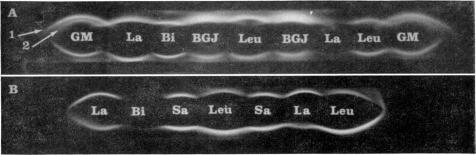
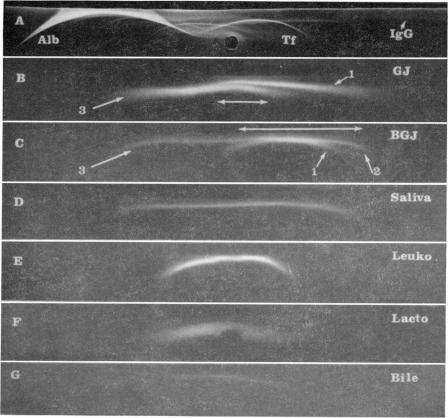
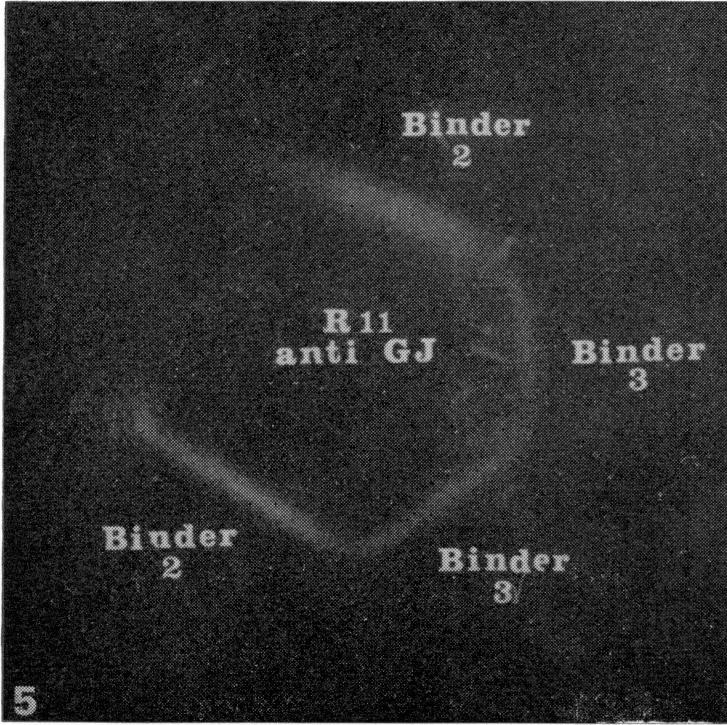
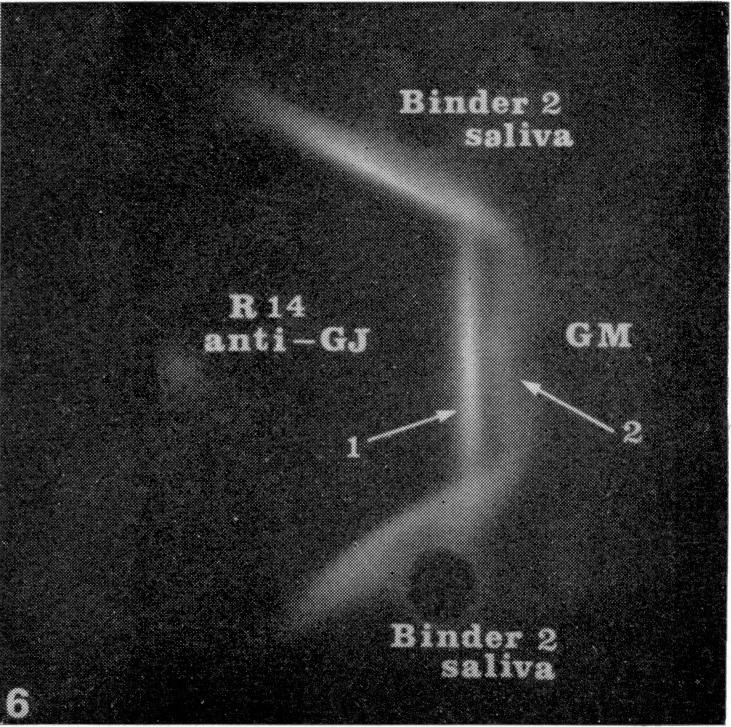
Three factors binding vitamin B are detected in human gastric juice by autoradiographs of immunoelectrophoresis. Binder 1 is present only in gastric juice and gastric mucosa extract and corresponds to intrinsic factor. Binder 2 is present also in other excretions such as bile, lactoserum, saliva, in serum and leucocyte extracts. Binder 3 present in saliva and gastric juice in lower quantity than binder 2, seems derived from this last one by attachment of sialic acid molecules. There is no immunological identity between intrinsic factor and the other binders without intrinsic factor activity. Binder 3 is resistant to proteolysis and . Binder 2 is modified by peptic digestion but not . Binder 1 is insensitive to proteolysis if saturated by vitamin B, but loses its binding capacity and/or immunological properties if the digestion takes place before fixation of vitamin B. The three binders seem to have the same affinity for vitamin B as judged by dialysis experiments, and the same molecular weight of 60,000 as judged by volume exclusion on Sephadex G-200.
通过免疫电泳放射自显影片在人胃液中检测到三种结合维生素B的因子。结合因子1仅存在于胃液和胃黏膜提取物中,相当于内因子。结合因子2也存在于其他分泌物中,如胆汁、乳清、唾液、血清和白细胞提取物中。结合因子3在唾液和胃液中的含量低于结合因子2,似乎是由结合因子2通过唾液酸分子附着衍生而来。内因子与其他无内因子活性的结合因子之间不存在免疫同一性。结合因子3对蛋白水解有抗性。结合因子2经胃蛋白酶消化后会发生改变,但未经胃蛋白酶消化时不会。如果结合因子1被维生素B饱和,则对蛋白水解不敏感,但如果在维生素B固定之前进行消化,则会失去其结合能力和/或免疫特性。通过透析实验判断,这三种结合因子对维生素B的亲和力似乎相同,通过在Sephadex G - 200上的体积排阻法判断,它们的分子量均为60,000。