Rieder R F, Oski F A, Clegg J B
J Clin Invest. 1969 Sep;48(9):1627-42. doi: 10.1172/JCI106128.
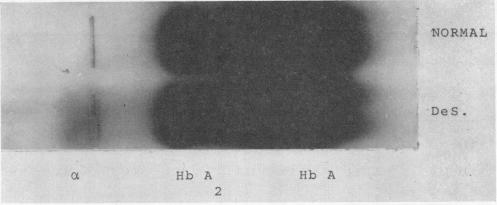
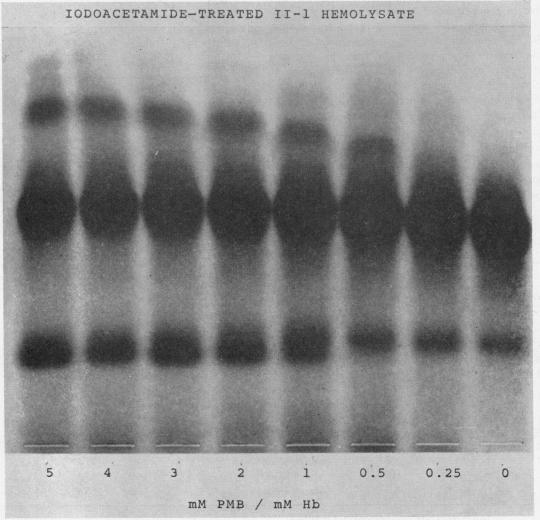
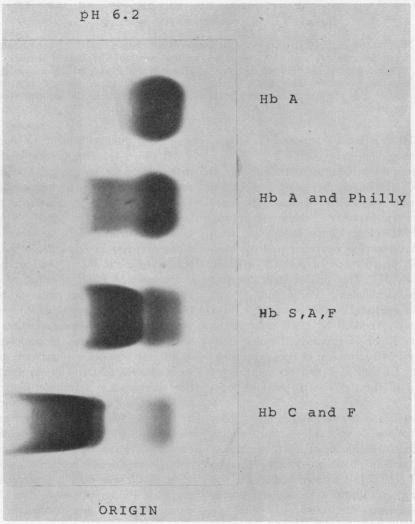
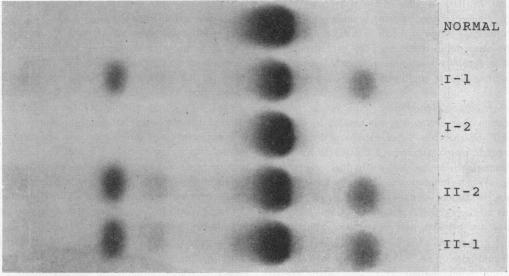
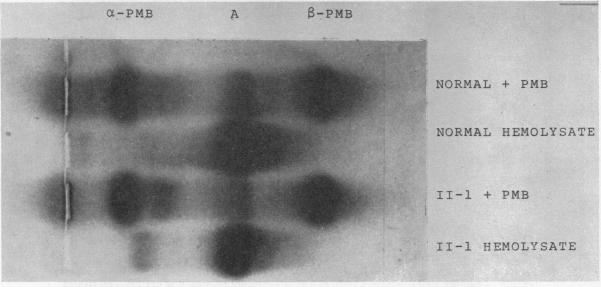
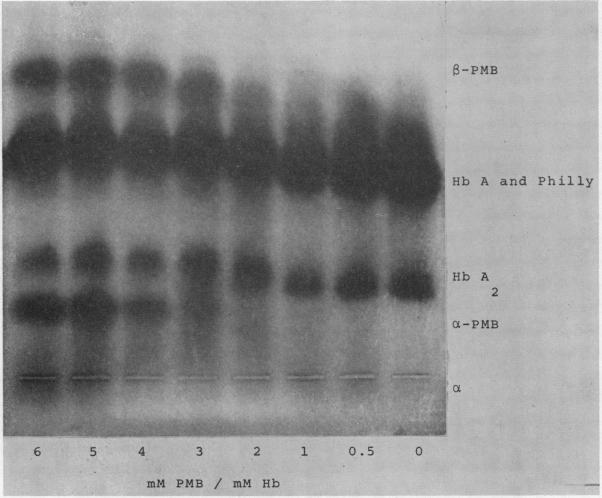
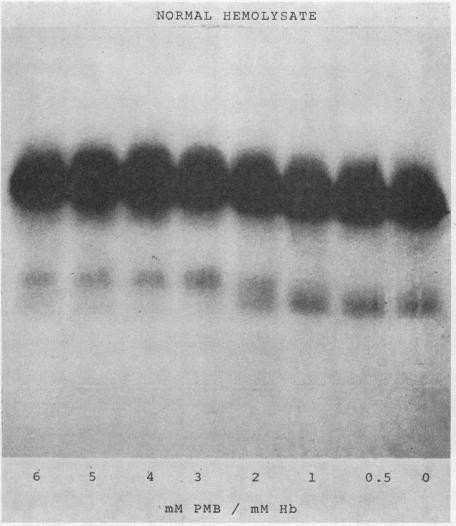
An abnormal unstable hemoglobin, hemoglobin Philly, was found in three members of a family, each of whom had evidence of a chronic hemolytic state. The presence of the mutant protein was suggested by the rapid appearance of inclusion bodies upon incubation of erythrocytes with brilliant cresyl blue and by the increased heat precipitability of the hemoglobin. However, no abnormal hemoglobin could be demonstrated by electrophoresis or column chromatography. Sulfhydryl titration of the hemolysates with p-mercuribenzoate indicated that there was an average of four reactive sulfhydryl groups per hemoglobin molecule instead of the usual two. The total number of hemoglobin sulfhydryl groups was normal; six groups were measured when denatured globin was reacted with 5,5'-dithiobis[2-nitrobenzoic acid]. This indicated that the increased sulfhydryl reactivity was due to an increased availability to p-mercuribenzoate of the usually unreactive hemoglobin cysteines at beta112 and alpha104. After treatment for (1/2) hr with 4-5 moles of p-mercuribenzoate per mole of hemoglobin, electrophoresis revealed that 30-35% of the hemoglobin had been dissociated into alpha- and beta-chains. Normal hemolysates revealed negligible splitting after 72 hr of similar treatment. The alpha- and beta-chains of hemoglobin Philly were separated from the unsplit hemoglobin A by carboxymethyl cellulose chromatography. Fingerprint and amino acid analyses revealed that tyrosine beta35 was replaced by phenylalanine. In hemoglobin Philly there is loss of the normal hydrogen bond between the tyrosine hydroxyl group and the carboxyl group of aspartic acid alpha126 at the alpha(1)beta(1) contact. This shifts the equilibrium from hemoglobin tetramers toward monomers, exposing the beta112 and alpha104 cysteines. In the cell, precipitation of the unstable monomers may contribute to erythrocyte destruction.
在一个家族的三名成员中发现了一种异常不稳定的血红蛋白——费城血红蛋白,他们每个人都有慢性溶血状态的证据。红细胞与煌焦油蓝孵育后包涵体迅速出现,以及血红蛋白热沉淀性增加,提示存在突变蛋白。然而,电泳或柱色谱法均未显示出异常血红蛋白。用对汞苯甲酸对溶血产物进行巯基滴定表明,每个血红蛋白分子平均有四个反应性巯基,而不是通常的两个。血红蛋白巯基的总数正常;当变性球蛋白与5,5'-二硫代双[2-硝基苯甲酸]反应时,测得有六个基团。这表明巯基反应性增加是由于β112和α104处通常无反应性的血红蛋白半胱氨酸对汞苯甲酸的可及性增加。每摩尔血红蛋白用4 - 5摩尔对汞苯甲酸处理半小时后,电泳显示30 - 35%的血红蛋白已解离为α链和β链。正常溶血产物在类似处理72小时后显示出可忽略不计的裂解。通过羧甲基纤维素色谱法将费城血红蛋白的α链和β链与未裂解的血红蛋白A分离。指纹图谱和氨基酸分析表明,β35位的酪氨酸被苯丙氨酸取代。在费城血红蛋白中,α(1)β(1)接触处酪氨酸羟基与天冬氨酸α126羧基之间的正常氢键丧失。这使平衡从血红蛋白四聚体向单体转移,暴露了β112和α104半胱氨酸。在细胞中,不稳定单体的沉淀可能导致红细胞破坏。