Reynolds E H, Hallpike J F, Phillips B M, Matthews D M
J Clin Pathol. 1965 Sep;18(5):593-8. doi: 10.1136/jcp.18.5.593.
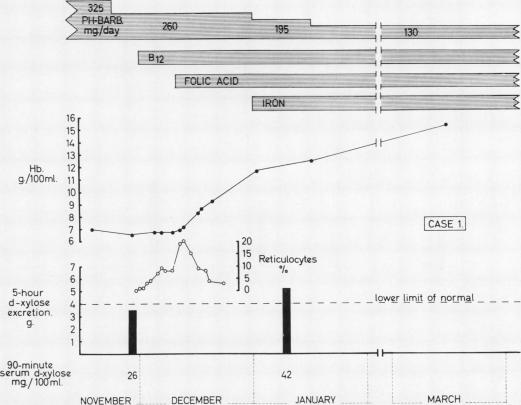
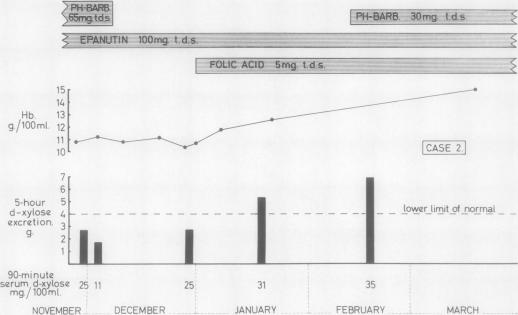
Two cases of anticonvulsant megaloblastic anaemia are described, showing features of unusual interest. Though both cases were apparently deficient in folic acid, the Figlu tests were negative. One patient had an extremely low serum B(12) concentration apparently associated with defective B(12) absorption due to deficiency of intrinsic factor, and both showed impaired intestinal absorption of D-xylose. There was, however, no evidence of permanent gastro-intestinal dysfunction, and the absorptive defects disappeared completely after treatment with folic acid. Possible reasons for the findings are discussed. It is suggested that absorptive defects produced by the drugs may play some part in initiating anticonvulsant megaloblastic anaemia, and that once deficiencies of haemopoietic factors are established, a vicious circle may be set up owing to the effects of these deficiencies on the gastro-intestinal tract.
本文描述了两例抗惊厥药所致巨幼细胞贫血病例,展现出一些不同寻常的有趣特征。尽管两例患者显然都缺乏叶酸,但亚胺甲基谷氨酸(Figlu)试验均为阴性。其中一名患者血清维生素B₁₂浓度极低,显然是由于内因子缺乏导致维生素B₁₂吸收不良所致,且两人均表现出D-木糖肠道吸收受损。然而,没有证据表明存在永久性胃肠功能障碍,且在接受叶酸治疗后吸收缺陷完全消失。文中讨论了这些发现的可能原因。有人认为,药物引起的吸收缺陷可能在引发抗惊厥药所致巨幼细胞贫血中起了一定作用,而且一旦造血因子缺乏形成,由于这些缺乏对胃肠道的影响,可能会形成恶性循环。