Garzelli C, Taub F E, Scharff J E, Prabhakar B S, Ginsberg-Fellner F, Notkins A L
J Virol. 1984 Nov;52(2):722-5. doi: 10.1128/JVI.52.2.722-725.1984.
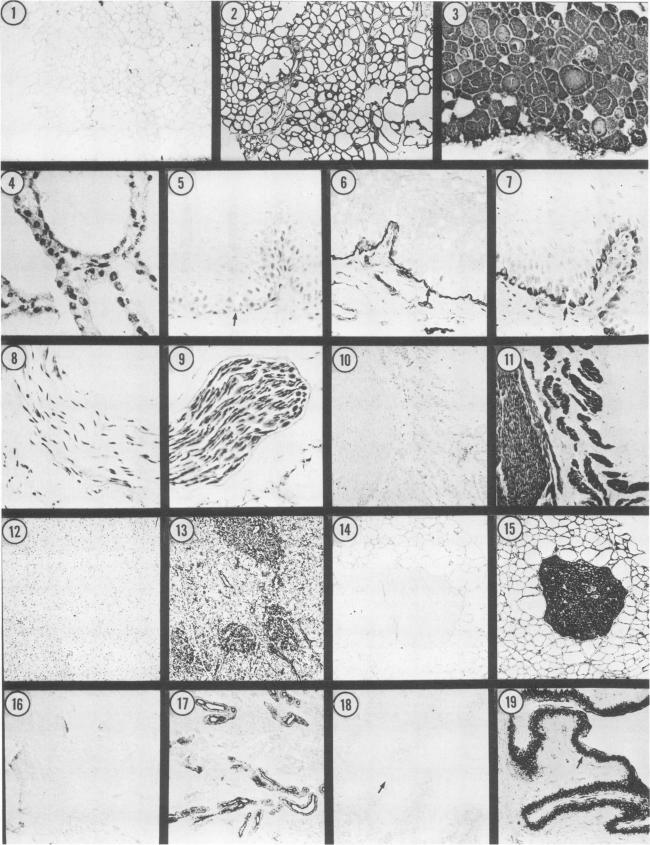
Peripheral blood lymphocytes from normal individuals and patients with autoimmune abnormalities such as insulin-dependent diabetes mellitus and thyroiditis were infected with Epstein-Barr virus, and the culture supernatants were tested for autoantibodies that reacted with normal tissues. Between 58 and 86% of Epstein-Barr virus-transformed cultures produced immunoglobulin M antibodies, and between 9 and 24% of the transformed cultures produced immunoglobulin G antibodies that reacted with normal tissues. Ten Epstein-Barr virus-transformed clones secreting human immunoglobulin M monoclonal autoantibodies were isolated. Four of these monoclonal autoantibodies were studied in depth and found to react with antigens in multiple organs, including thyroid, pancreas, stomach, smooth muscle, and nerves. It is concluded that Epstein-Barr virus can trigger the production of autoantibodies without infecting the target cells to which the autoantibodies are directed.
将来自正常个体以及患有自身免疫异常疾病(如胰岛素依赖型糖尿病和甲状腺炎)患者的外周血淋巴细胞用爱泼斯坦 - 巴尔病毒感染,然后检测培养上清液中与正常组织发生反应的自身抗体。在58%至86%的经爱泼斯坦 - 巴尔病毒转化的培养物中产生了免疫球蛋白M抗体,在9%至24%的转化培养物中产生了与正常组织发生反应的免疫球蛋白G抗体。分离出了10个分泌人免疫球蛋白M单克隆自身抗体的经爱泼斯坦 - 巴尔病毒转化的克隆。对其中4种单克隆自身抗体进行了深入研究,发现它们与包括甲状腺、胰腺、胃、平滑肌和神经在内的多个器官中的抗原发生反应。得出的结论是,爱泼斯坦 - 巴尔病毒可触发自身抗体的产生,而无需感染自身抗体所针对的靶细胞。