
大鼠卵巢和输卵管中Thy-1.1、MRC OX 2和Ia抗原的定位。
The localization of Thy-1.1, MRC OX 2 and Ia antigens in the rat ovary and fallopian tube.
作者信息
Bukovský A, Presl J, Zidovský J, Mancal P
出版信息
Immunology. 1983 Mar;48(3):587-96.
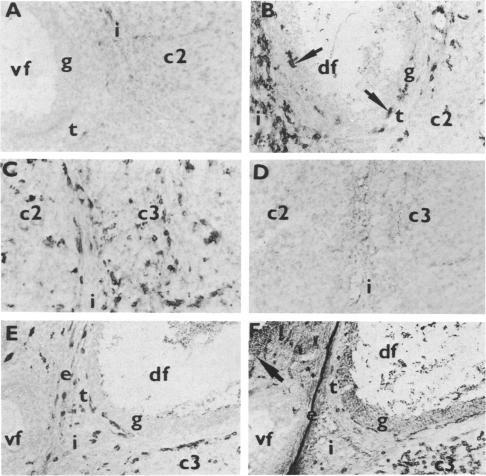
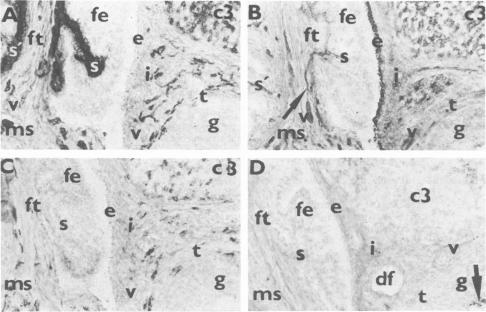
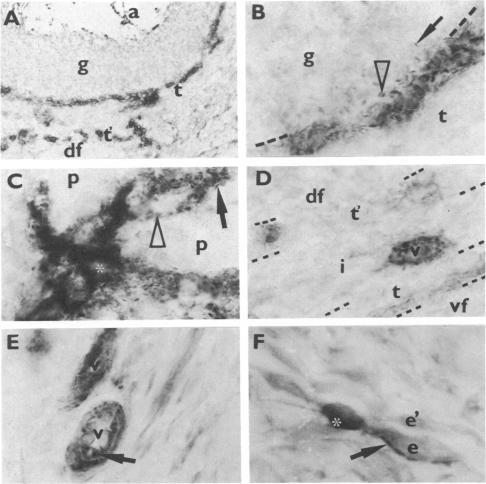
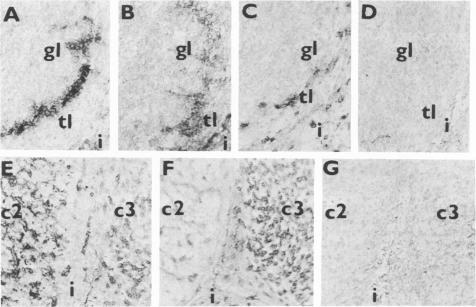
The localization of Thy-1, MRC OX 2 and Ia antigens as defined by monoclonal antibodies MRC OX 7, MRC OX 2 and MRC OX 6 was determined by an indirect immunoperoxidase technique on cryostat sections of rat ovaries. Thy-1 antigen was present significantly in the theca interna of growing antral follicles. Developing corpora lutea exhibited an increasing presence of Thy-1 antigen and it was still present in degenerating ones. Thy-1 antigen was constantly present in fallopian tube tunica propria. The MRC OX 2 antigen was expressed most on ovarian structures that do not develop further, i.e. granulosa of degenerating antral follicles and third generation of corpora lutea. MRC OX 2 antibody stained the capillaries of the fallopian tube; the most heavily MRC OX 2+ were the cells of ovarian germinal epithelium. The Ia+ cells were occasionally found within the growing ovarian structures but they were more frequent in degenerating ones. Rare or no la+ cells within the ovary and heavily Ia-depleted thymus medulla and Ia areas in the spleen were, however, observed in some rats. The role of these antigens with respect to the structures they label is discussed.
采用间接免疫过氧化物酶技术,在大鼠卵巢冰冻切片上,确定了由单克隆抗体MRC OX 7、MRC OX 2和MRC OX 6所界定的Thy-1、MRC OX 2和Ia抗原的定位。Thy-1抗原在生长中的窦状卵泡的内膜中显著存在。发育中的黄体中Thy-1抗原的含量不断增加,在退化的黄体中也依然存在。Thy-1抗原始终存在于输卵管固有层中。MRC OX 2抗原在不再进一步发育的卵巢结构上表达最多,即退化的窦状卵泡的颗粒细胞和第三代黄体。MRC OX 2抗体可使输卵管的毛细血管染色;MRC OX 2阳性程度最高的是卵巢生发上皮细胞。Ia阳性细胞偶尔见于生长中的卵巢结构内,但在退化结构中更为常见。然而,在一些大鼠中,卵巢内罕见或无Ia阳性细胞,胸腺髓质Ia严重缺失,脾脏中Ia区域也存在这种情况。文中讨论了这些抗原与其所标记结构的相关作用。
 Zotero 插件