Cooper E
J Physiol. 1984 Jun;351:263-74. doi: 10.1113/jphysiol.1984.sp015244.
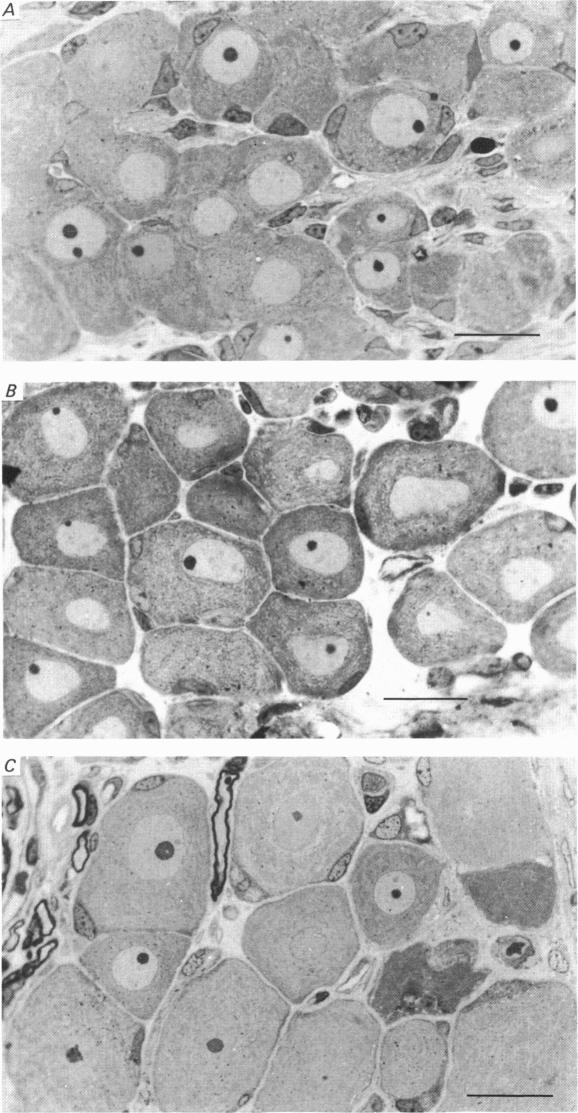
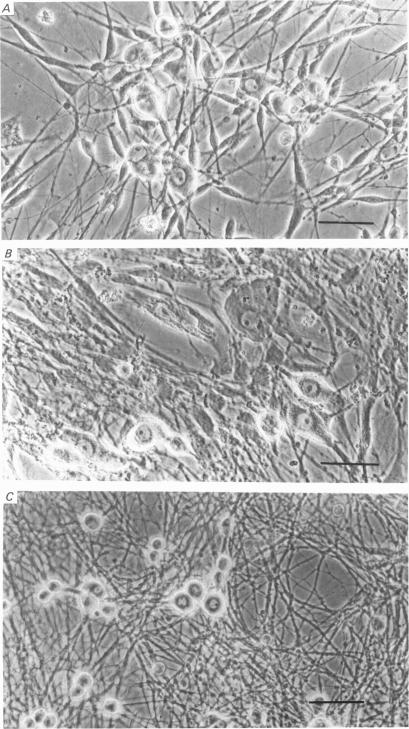
Sensory neurones from new-born rat nodose ganglia were grown in tissue culture, either with or without the ganglionic satellite cells, in order to investigate influences of satellite cells on sensory neurone development. To learn more about the post-natal development of nodose ganglia in rats neuronal counts of the ganglion were made at three different developmental stages. There were no significant differences of neuronal number in nodose ganglia in new-born rats, rats 3 weeks of age, and adult rats. Up to 60% of the neurones formed synapses with each other when they developed in culture without ganglion satellite cells. Pharmacological experiments indicated that the transmitter at these synapses was ACh and the post-synaptic receptors were nicotinic. Neurones co-cultured with satellite cells rarely formed functional synapses and most (85%) were not sensitive to ACh: 75% of neurones cultured without satellite cells were ACh sensitive. These results provide evidence that mammalian sensory neurones form synapses among each other in culture. The results also suggest that ganglionic satellite cells prevent functional synapses among these neurones from occurring, in part because the neurones do not express ACh sensitivity when co-cultured with satellite cells.
为了研究卫星细胞对感觉神经元发育的影响,将新生大鼠结节神经节的感觉神经元在组织培养中培养,分为有或没有神经节卫星细胞两种情况。为了更多地了解大鼠结节神经节的出生后发育情况,在三个不同的发育阶段对神经节进行了神经元计数。新生大鼠、3周龄大鼠和成年大鼠的结节神经节中的神经元数量没有显著差异。当在没有神经节卫星细胞的培养物中发育时,高达60%的神经元相互形成突触。药理学实验表明,这些突触处的递质是乙酰胆碱,突触后受体是烟碱型的。与卫星细胞共培养的神经元很少形成功能性突触,大多数(85%)对乙酰胆碱不敏感:在没有卫星细胞的情况下培养的神经元中有75%对乙酰胆碱敏感。这些结果证明哺乳动物感觉神经元在培养中相互形成突触。结果还表明,神经节卫星细胞阻止这些神经元之间形成功能性突触,部分原因是与卫星细胞共培养时神经元不表达对乙酰胆碱的敏感性。