Wigdahl B L, Isom H C, Rapp F
Proc Natl Acad Sci U S A. 1981 Oct;78(10):6522-6. doi: 10.1073/pnas.78.10.6522.
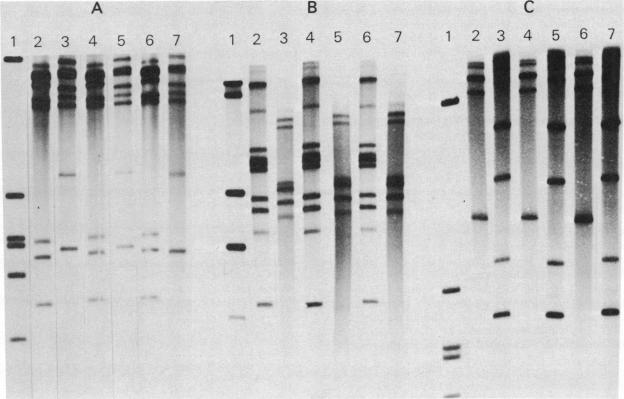
We have described previously a cell culture system in which the herpes simplex virus (HSV) type 2 (HSV-2) genome is maintained in a repressed form after treatment of infected cells with 1-beta-D-arabinofuranosylcytosine and increase of incubation temperature from 37 degrees C to 39.5 degrees C. Infectious HSV-2 production was activated by altering incubation temperature or by superinfecting with human cytomegalovirus. We now report the establishment of an analogous system utilizing HSV type 1 (HSV-1). Human embryo lung cells were infected with HSV-1 and treated with 1-beta-D-arabinofuranosylcytosine (25 micrograms/ml) for 7 days to minimize both synthesis of virus DNA and infectious virus while allowing expression of early virus genes. HSV-1 was maintained in an undetectable form for at least 72 days when the incubation temperature was raised from 37 degrees C to 40.5 degrees C after removal of the inhibitor. HSV-1 gene expression was then predictably turned on by superinfection with human cytomegalovirus or by reducing the incubation temperature. Virus replicated after activation was compared with the respective parental virus with regard to inhibition by the HSV-1-specific antiviral (E)-5-(2-bromovinyl)-2'-deoxyuridine and EcoRI, HindIII, and Xba I restriction endonuclease cleavage patterns. The results show activation of HSV gene expression in human cells by a human cytomegalovirus early gene function(s), followed by synthesis of parental-like HSV.
我们之前描述过一种细胞培养系统,在该系统中,用1-β-D-阿拉伯呋喃糖基胞嘧啶处理感染细胞并将孵育温度从37℃提高到39.5℃后,单纯疱疹病毒2型(HSV-2)基因组以抑制形式维持。通过改变孵育温度或用人巨细胞病毒进行超感染可激活有传染性的HSV-2产生。我们现在报告利用单纯疱疹病毒1型(HSV-1)建立了一个类似的系统。用人胚肺细胞感染HSV-1,并用1-β-D-阿拉伯呋喃糖基胞嘧啶(25微克/毫升)处理7天,以尽量减少病毒DNA的合成和有传染性病毒的产生,同时允许早期病毒基因表达。去除抑制剂后,将孵育温度从37℃提高到40.5℃时,HSV-1以不可检测的形式维持至少72天。然后,通过用人巨细胞病毒进行超感染或降低孵育温度可预测性地开启HSV-1基因表达。将激活后复制的病毒与相应的亲代病毒在HSV-1特异性抗病毒药物(E)-5-(2-溴乙烯基)-2'-脱氧尿苷的抑制作用以及EcoRI、HindIII和Xba I限制性内切酶切割模式方面进行比较。结果显示,人巨细胞病毒早期基因功能可激活人细胞中的HSV基因表达,随后合成类似亲代的HSV。