Doten R C, Mortlock R P
J Bacteriol. 1984 Aug;159(2):730-5. doi: 10.1128/jb.159.2.730-735.1984.
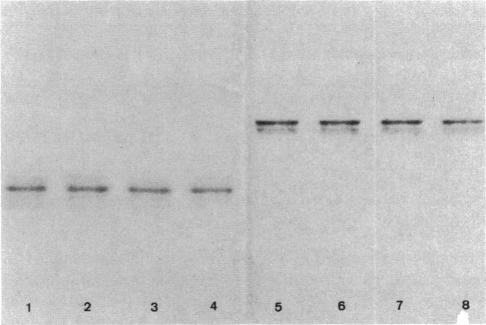
Klebsiella pneumoniae PRL-R3 has inducible catabolic pathways for the degradation of ribitol and D-arabitol but cannot utilize xylitol as a growth substrate. A mutation in the rbtB regulatory gene of the ribitol operon permits the constitutive synthesis of the ribitol catabolic enzymes and allows growth on xylitol. The evolved xylitol catabolic pathway consists of an induced D-arabitol permease system that also transports xylitol, a constitutively synthesized ribitol dehydrogenase that oxidizes xylitol at the C-2 position to produce D-xylulose, and an induced D-xylulokinase from either the D-arabitol or D-xylose catabolic pathway. To investigate the potential of K. pneumoniae to evolve a different xylitol catabolic pathway, strains were constructed which were unable to synthesize ribitol dehydrogenase or either type of D-xylulokinase but constitutively synthesized the D-arabitol permease system. These strains had an inducible L-xylulokinase; therefore, the evolution of an enzyme which oxidized xylitol at the C-4 position to L-xylulose would establish a new xylitol catabolic pathway. Four independent xylitol-utilizing mutants were isolated, each of which had evolved a xylitol-4-dehydrogenase activity. The four dehydrogenases appeared to be identical because they comigrated during nondenaturing polyacrylamide gel electrophoresis. This novel xylitol dehydrogenase was constitutively synthesized, whereas L-xylulokinase remained inducible. Transductional analysis showed that the evolved dehydrogenase was not an altered ribitol or D-arabitol dehydrogenase and that the evolved dehydrogenase structural gene was not linked to the pentitol gene cluster. This evolved dehydrogenase had the highest activity with xylitol as a substrate, a Km for xylitol of 1.4 M, and a molecular weight of 43,000.
肺炎克雷伯菌PRL - R3具有用于降解核糖醇和D - 阿拉伯糖醇的诱导型分解代谢途径,但不能利用木糖醇作为生长底物。核糖醇操纵子的rbtB调节基因中的突变允许核糖醇分解代谢酶的组成型合成,并允许在木糖醇上生长。进化出的木糖醇分解代谢途径包括一个诱导型D - 阿拉伯糖醇通透酶系统,该系统也运输木糖醇;一个组成型合成的核糖醇脱氢酶,其在C - 2位置氧化木糖醇以产生D - 木酮糖;以及一个来自D - 阿拉伯糖醇或D - 木糖分解代谢途径的诱导型D - 木酮糖激酶。为了研究肺炎克雷伯菌进化出不同木糖醇分解代谢途径的潜力,构建了一些菌株,这些菌株不能合成核糖醇脱氢酶或任何一种类型的D - 木酮糖激酶,但组成型合成D - 阿拉伯糖醇通透酶系统。这些菌株具有诱导型L - 木酮糖激酶;因此,一种在C - 4位置将木糖醇氧化为L - 木酮糖的酶的进化将建立一条新的木糖醇分解代谢途径。分离出了四个独立的利用木糖醇的突变体,每个突变体都进化出了木糖醇 - 4 - 脱氢酶活性。这四种脱氢酶似乎是相同的,因为它们在非变性聚丙烯酰胺凝胶电泳中迁移率相同。这种新型木糖醇脱氢酶是组成型合成的,而L - 木酮糖激酶仍然是诱导型的。转导分析表明,进化出的脱氢酶不是改变的核糖醇或D - 阿拉伯糖醇脱氢酶,并且进化出的脱氢酶结构基因与戊糖醇基因簇不连锁。这种进化出的脱氢酶以木糖醇为底物时活性最高,木糖醇的Km为1.4 M,分子量为43,000。