Williams J M, Brandt K D
J Anat. 1984 May;138 ( Pt 3)(Pt 3):435-46.
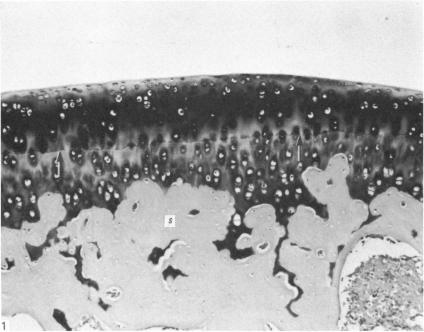
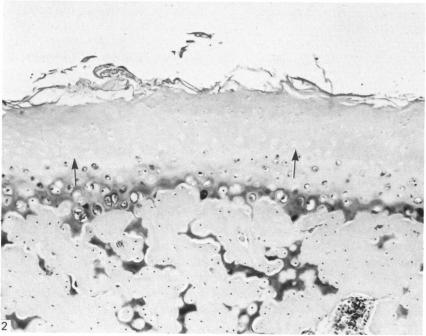
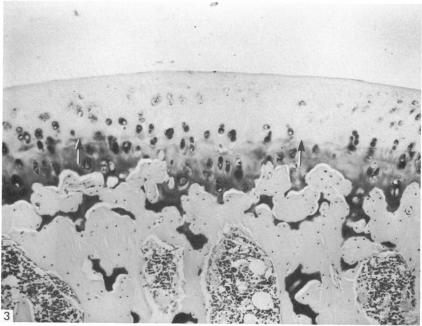
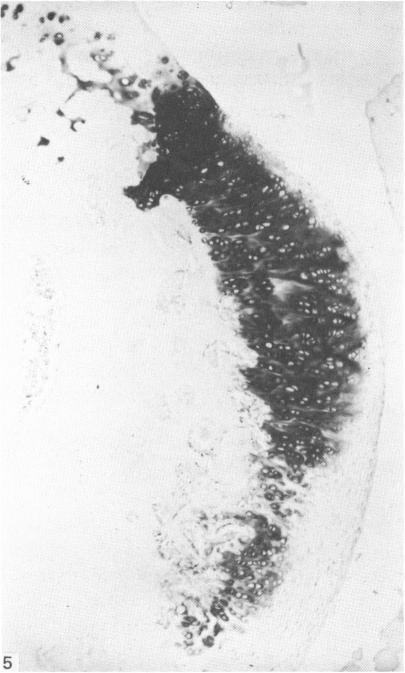
Recent studies have indicated that immobilisation of the lower limb may prevent surface fibrillation and osteophyte formation, and reduce cell depletion, following injection of iodoacetate into the ipsilateral knee of the guinea-pig. The present study shows that temporary immobilisation also facilitates repair of the damaged cartilage during a subsequent period of remobilisation in which the animal is permitted to move 'on all fours'. Thus, in animals killed six weeks after a single intra-articular injection of iodoacetate (0.3 mg in 0.1 ml saline), and in which the injected knee had been immobilised for three weeks, Safranin-O staining of the articular cartilage was more intense, chondrocyte density greater, and osteophytosis much less marked than in animals injected with iodoacetate but killed immediately after the three weeks immobilisation period. By contrast, immobilisation for only one week failed to protect against degenerative changes and osteophytes caused by iodoacetate injection. Immobilisation alone produced no apparent pathological changes in animals which did not receive iodoacetate.
最近的研究表明,在豚鼠同侧膝关节注射碘乙酸后,下肢固定可防止表面纤维性颤动和骨赘形成,并减少细胞耗竭。本研究表明,在随后允许动物“四肢着地”活动的重新活动期,临时固定也有助于受损软骨的修复。因此,在单次关节内注射碘乙酸(0.3毫克溶于0.1毫升盐水中)六周后处死的动物中,注射侧膝关节固定三周,与注射碘乙酸但在三周固定期后立即处死的动物相比,关节软骨的番红O染色更强烈,软骨细胞密度更大,骨赘形成也不那么明显。相比之下,仅固定一周未能预防碘乙酸注射引起的退行性变化和骨赘。单独固定在未接受碘乙酸的动物中未产生明显的病理变化。