Trevenen C L, Pagtakhan R D
Can Med Assoc J. 1982 Sep 15;127(6):502-4.
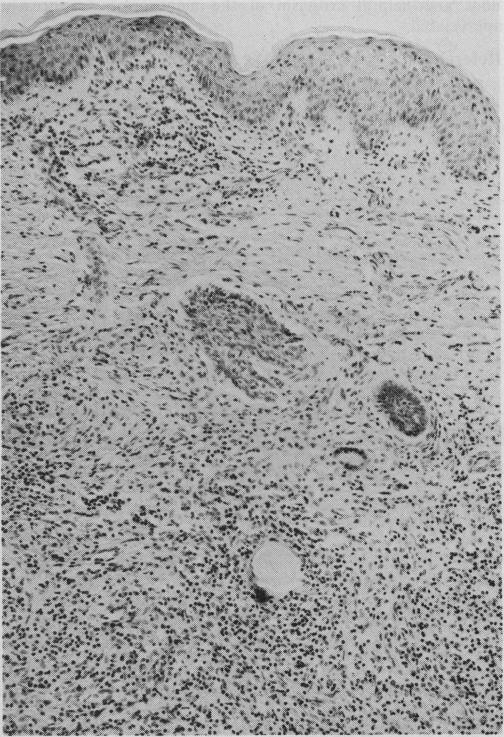
The records of 830 consecutive autopsies at Children's Hospital, Winnipeg revealed that 26 of the 36 infants (34 Canadian Indian, 1 Inuit and 1 Caucasian) given BCG vaccine shortly after birth had tuberculoid granulomas in various sites, including the vaccination site, regional lymph nodes, liver, spleen, lung, bone marrow and salivary gland. Mycobacterium bovis, BCG type, was identified in three of the four cases in which isolation was attempted. The principal causes of death had been sudden infant death syndrome and respiratory tract infections. None of the infants had histologic evidence of an immune deficiency. However, it is possible that in two cases the dissemination of BCG was enhanced by a temporary immunologic defect induced by malnutrition.
温尼伯儿童医院对830例连续尸检记录的研究发现,36名出生后不久接种卡介苗的婴儿(34名加拿大印第安人、1名因纽特人和1名白种人)中有26例在不同部位出现结核样肉芽肿,包括接种部位、局部淋巴结、肝脏、脾脏、肺、骨髓和唾液腺。在4例尝试分离的病例中,有3例鉴定出牛型结核杆菌(卡介苗株)。主要死亡原因是婴儿猝死综合征和呼吸道感染。这些婴儿均无免疫缺陷的组织学证据。然而,在2例病例中,营养不良引起的暂时免疫缺陷可能增强了卡介苗的播散。