Leeson C R, Forman D E
J Anat. 1981 Jun;132(Pt 4):491-511.
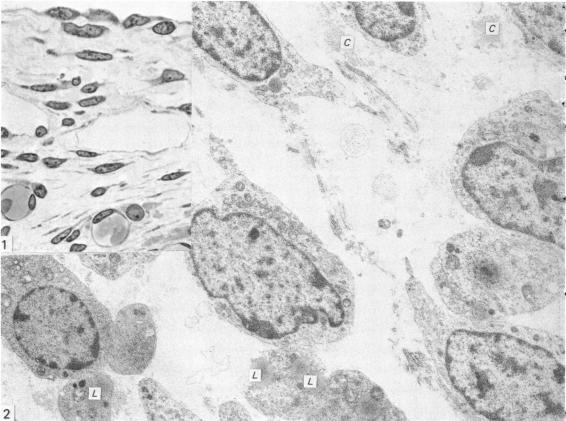
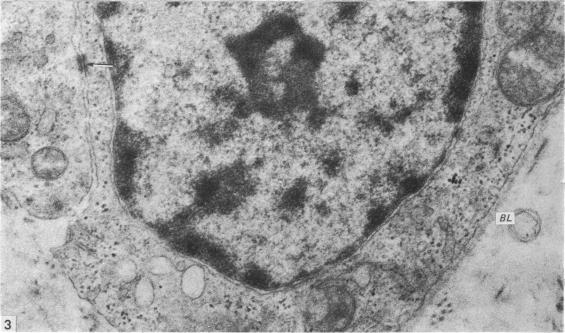
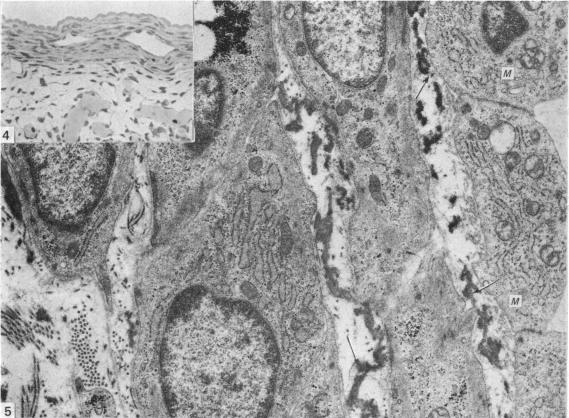
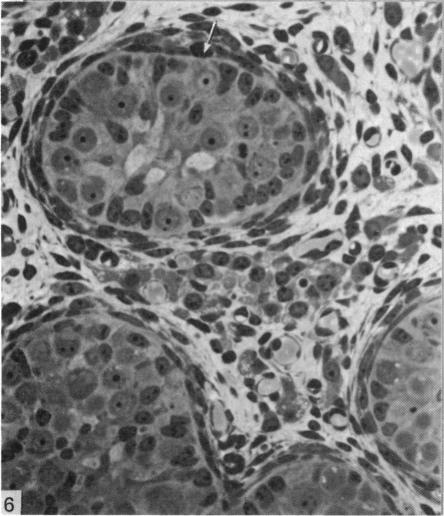
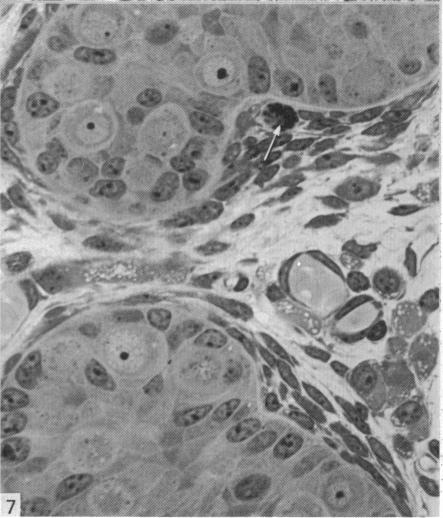
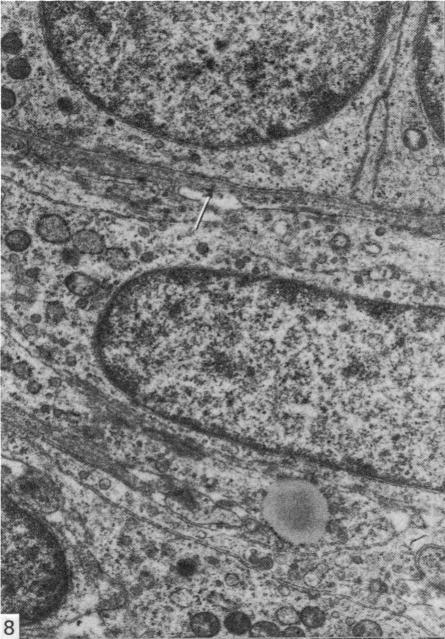
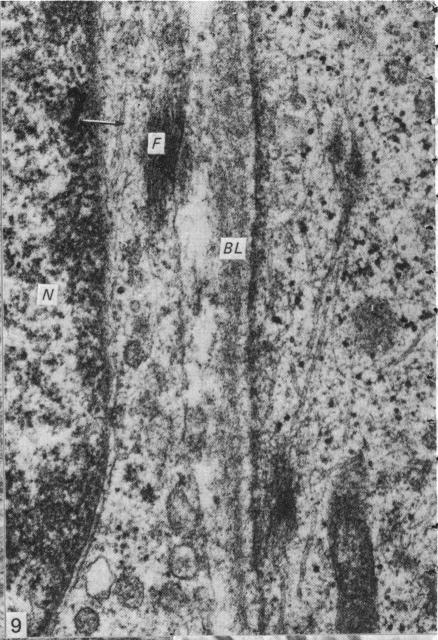
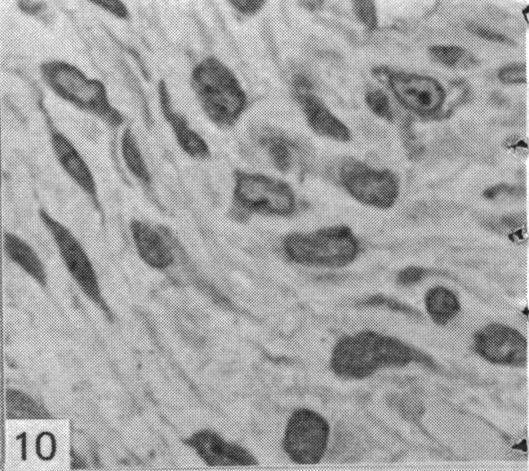
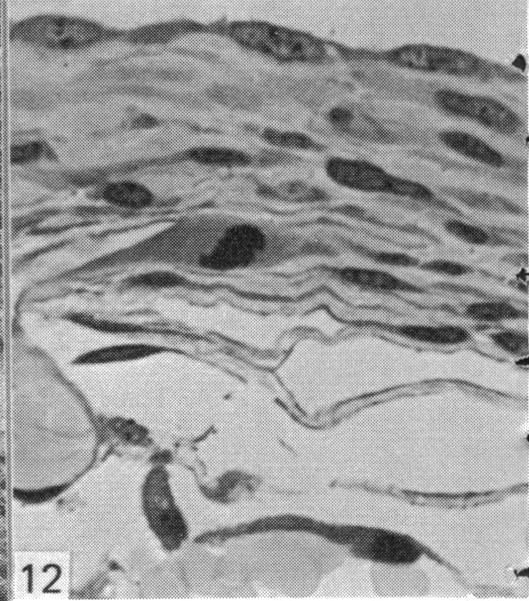
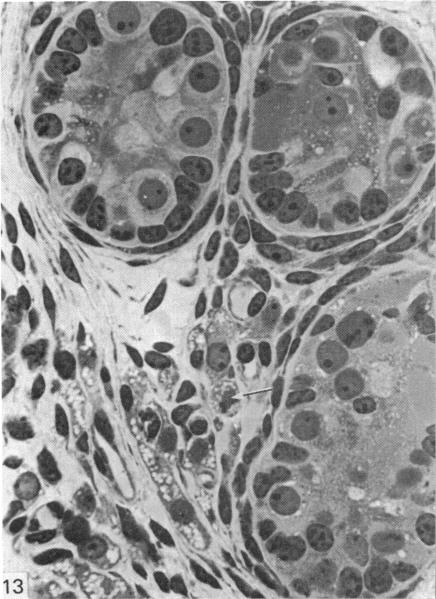
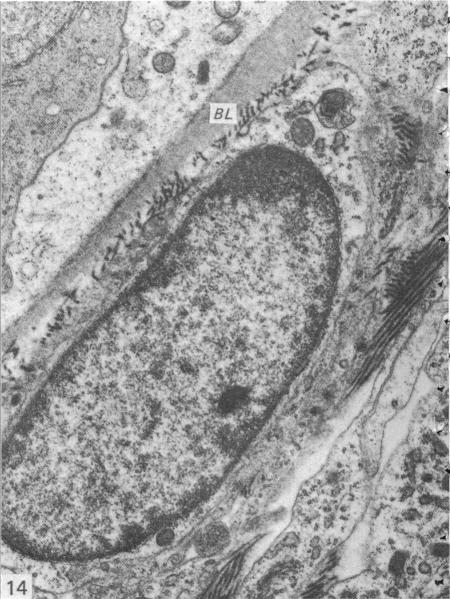
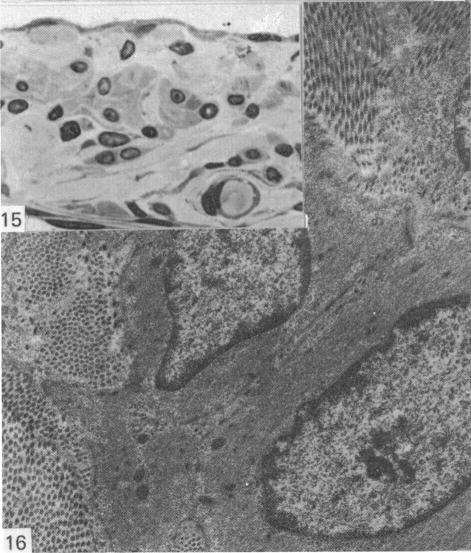
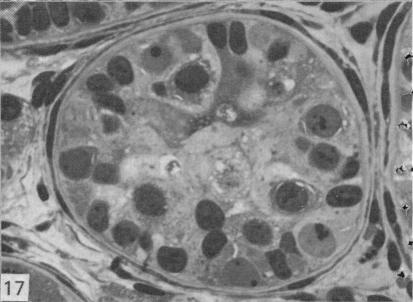
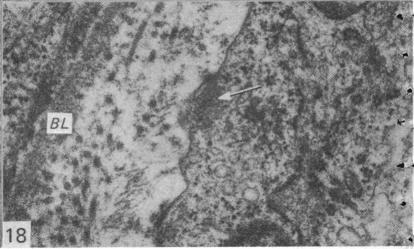
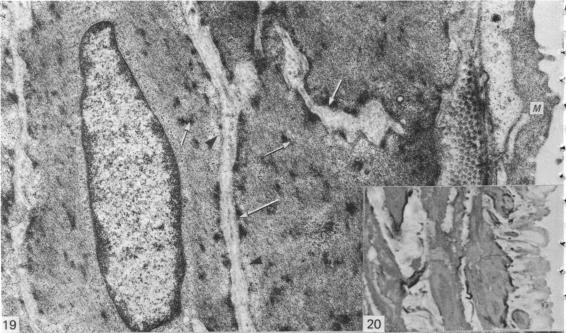
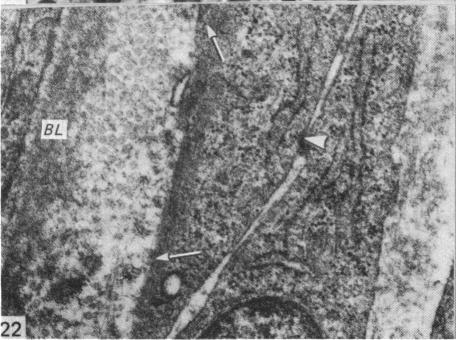
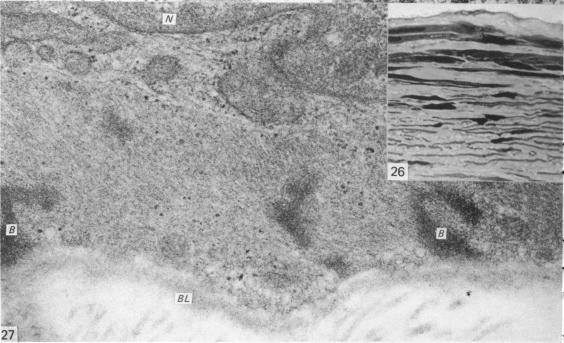
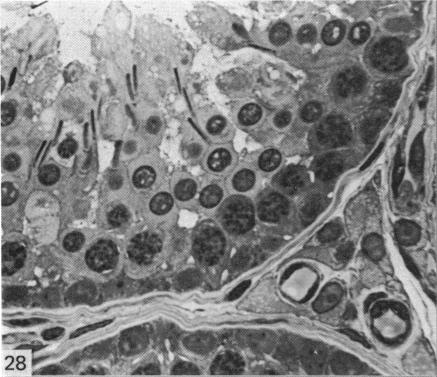
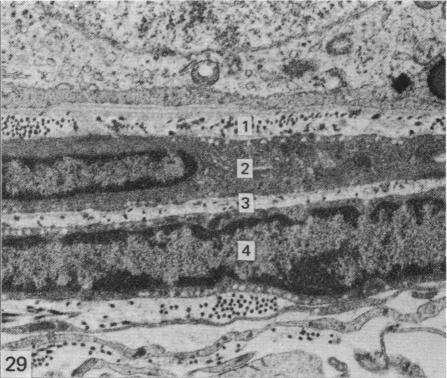
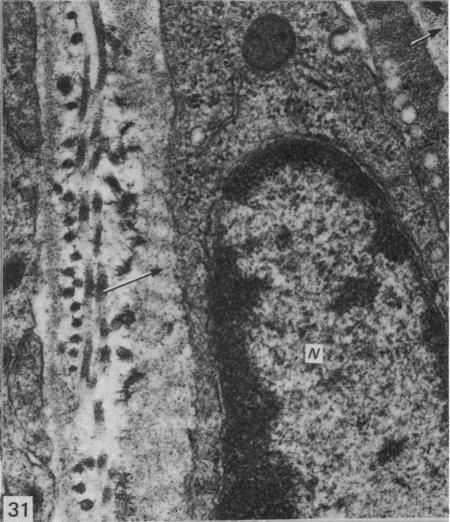
This study has been determined the postnatal development and differentiation of smooth muscle cells within the rabbit testicular capsule and within the peritubular tissue surrounding seminiferous tubules. Smooth muscle cells within the tunica albuginea are not identifiable at birth by light microscopy but by electron microscopy myocytes in early stages of development may be shown to be present. It is not until 42 to 49 days postnatum that smooth muscle cells can be identified by light microscopy. Differentiation of smooth muscle cells within the capsule is completed by 128 days postnatum. At this time, the muscle is arranged in two organized layers, a superficial layer of longitudinally oriented cells and a deeper layer of circularly arranged cells. At birth, the peritubular tissue consists of two to four layers of undifferentiated cells and, during the first postnatal week, the tissue becomes more condensed and generally is arranged in two cellular layers. Cells of the inner layer contain small bundles of microfibrils whereas cells of the outer layer are fibroblast in nature. Differentiation of the peritubular tissue is completed by 112 days postnatum. At this stage, it consists of four layers, two acellular and two cellular. The inner cellular layer, composed of attentuated myoid cells, possesses a basal lamina on both surfaces and is surrounded by two delicate connective tissue lamellae. The myoid cells of the peritubular tissue thus achieve structural maturity at approximately the same time postnatally as do those within the testicular capsule, which corresponds to the time when spermatogenesis becomes established. The relative contributions of the myoid cells in the peritubular tissue and within the testicular capsule to the movement of non-motile spermatozoa out of the testis and the possible significance of the peritubular tissue as a component of the permeability barrier are discussed in relation to the present findings.
本研究已确定家兔睾丸白膜及生精小管周围的管周组织中平滑肌细胞的出生后发育和分化情况。出生时,光镜下无法识别白膜内的平滑肌细胞,但电镜下可显示发育早期的肌细胞。直到出生后42至49天,光镜下才能识别平滑肌细胞。白膜内平滑肌细胞的分化在出生后128天完成。此时,肌肉排列成两个有组织的层,浅层为纵向排列的细胞,深层为环形排列的细胞。出生时,管周组织由两到四层未分化细胞组成,在出生后的第一周,组织变得更加致密,通常排列成两层细胞。内层细胞含有小束微原纤维,而外层细胞本质上是成纤维细胞。管周组织的分化在出生后112天完成。在这个阶段,它由四层组成,两层无细胞层和两层细胞层。内层细胞层由细长的类肌细胞组成,两面都有基膜,并被两层纤细的结缔组织薄片包围。因此,管周组织的类肌细胞在出生后达到结构成熟的时间与睾丸白膜内的类肌细胞大致相同,这与精子发生开始的时间相对应。结合目前的研究结果,讨论了管周组织和睾丸白膜内的类肌细胞对无运动能力精子从睾丸排出的相对贡献,以及管周组织作为渗透屏障组成部分的可能意义。