Dickson R A, Stamper P, Sharp A M, Harker P
Br Med J. 1980 Jul 26;281(6235):265-7. doi: 10.1136/bmj.281.6235.265.
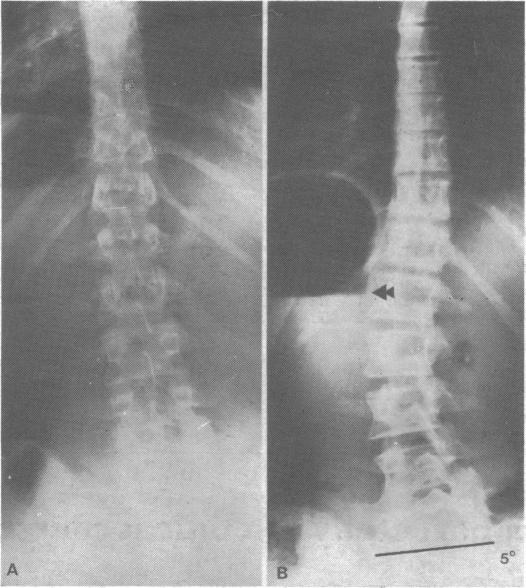
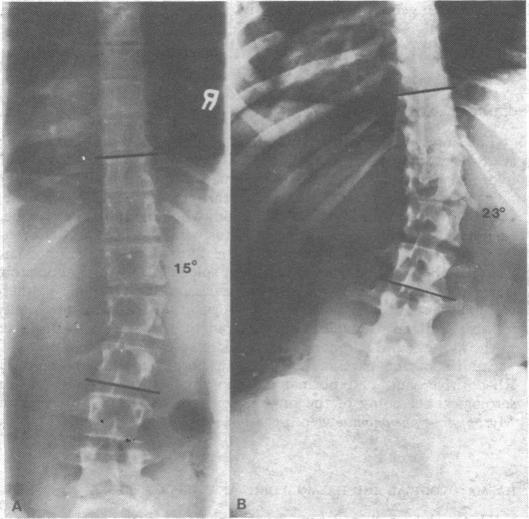
A visual examination of 1764 Oxford schoolchildren for scoliosis was followed by low-dose radiography of the spine in those who showed evidence of asymmetric body topography; radiography was repeated a year later to assess progression. Forty-four children had curves of 10 degrees or more. Two had a congenital abnormality and the remaining 42 were classified according to the type of curve: sacral tilt (compensatory), spinal (idiopathic), or combined (sacral tilt and spinal). Progression occurred in 6 (14%) children, none of whom had only a sacral tilt. These results suggest that only by measuring sacral tilt can benign compensatory curves be differentiated from true idiopathic scoliosis.
对1764名牛津学童进行了脊柱侧弯的目视检查,对那些显示出身体形态不对称迹象的学童进行了脊柱低剂量X光检查;一年后重复进行X光检查以评估病情进展。44名儿童的脊柱侧弯角度达到或超过10度。其中2名有先天性异常,其余42名根据侧弯类型分类:骶骨倾斜(代偿性)、脊柱(特发性)或混合型(骶骨倾斜和脊柱型)。6名(14%)儿童病情出现进展,其中没有仅为骶骨倾斜的情况。这些结果表明,只有通过测量骶骨倾斜度,才能将良性代偿性侧弯与真正的特发性脊柱侧弯区分开来。