Lam E, Lam Y K
AgBiotech Center, New Brunswick, NJ, USA.
Nucleic Acids Res. 1995 Sep 25;23(18):3778-85. doi: 10.1093/nar/23.18.3778.
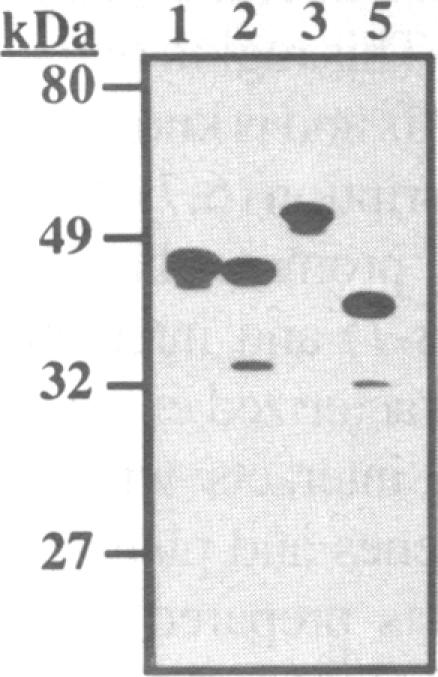
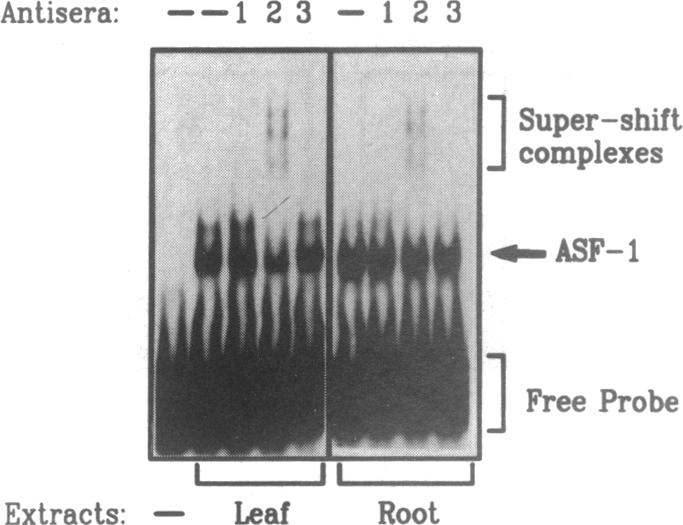
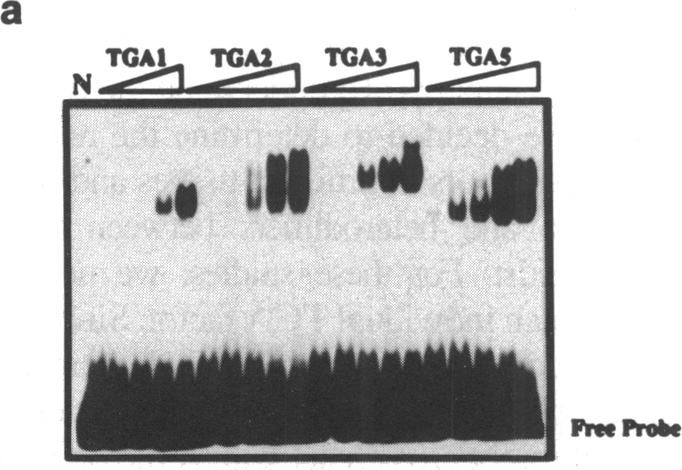
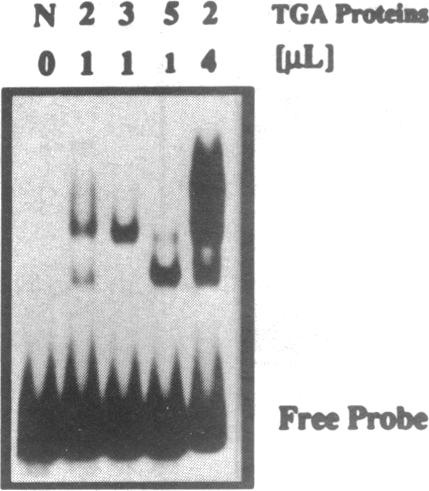
Activating sequence factor 1 (ASF-1) is a nuclear DNA-binding activity that is found in monocots and dicots. It interacts with several TGACG-containing elements that have been characterized from viral and T-DNA genes, the prototypes of which are the as-1 element of the CaMV 35S promoter and the ocs element from the octopine synthase promoter. This class of cis-acting elements can respond to auxin and salicylic acid treatments. Consistent with these observations, we have shown that ASF-1 can interact with promoter elements of an auxin-inducible tobacco gene GNT35, encoding a glutathione S-transferase. Characterization of the nuclear factors that make up ASF-1 activity in vivo will be an important step toward understanding this induction phenomenon. The TGA family of basic-leucine-zipper (bZIP) proteins are good candidates for the ASF-1 nuclear factor. However, there may be as many as seven distinct TGA genes in Arabidopsis, five of which have now been reported. In this study, we expressed the cDNAs that encode four of these five Arabidopsis TGA factors in vitro and compared their DNA-binding behavior using two types of TGACG-containing elements. With specific antisera prepared against three of the five known Arabidopsis TGA factors, we also investigated the relative abundance of these three proteins within the ASF-1 activities of root and leaf nuclear extracts. Our results indicate that these TGA factors bind to DNA with different degrees of cooperativity and their relative affinity toward as-1 also can differ significantly. The results of a supershift assay suggested that only one of the three TGA factors represented a significant component of nuclear ASF-1 activity. Arabidopsis TGA2 comprises approximately 33 and 50% of the ASF-1 activity detected in root and leaf nuclear extracts respectively. These results suggest that each member of the TGA factor family may be differentially regulated and that they may play different roles by virtue of their distinct DNA-binding characteristics. Furthermore, since transcripts for each of these factors can be detected in various plant tissues, post-transcriptional regulation may play an important part in determining their contribution to nuclear ASF-1 in a given cell type.
激活序列因子1(ASF-1)是一种在单子叶植物和双子叶植物中均存在的核DNA结合活性物质。它与多个含有TGACG的元件相互作用,这些元件已从病毒和T-DNA基因中得到鉴定,其原型是CaMV 35S启动子的as-1元件和章鱼碱合酶启动子的ocs元件。这类顺式作用元件能够对生长素和水杨酸处理作出反应。与这些观察结果一致,我们已经表明ASF-1可以与生长素诱导型烟草基因GNT35的启动子元件相互作用,该基因编码一种谷胱甘肽S-转移酶。鉴定在体内构成ASF-1活性的核因子将是理解这种诱导现象的重要一步。碱性亮氨酸拉链(bZIP)蛋白的TGA家族是ASF-1核因子的良好候选者。然而,拟南芥中可能有多达七个不同的TGA基因,目前已报道了其中五个。在本研究中,我们在体外表达了编码这五个拟南芥TGA因子中四个的cDNA,并使用两种含有TGACG的元件比较了它们的DNA结合行为。利用针对五个已知拟南芥TGA因子中的三个制备的特异性抗血清,我们还研究了这三种蛋白质在根和叶核提取物的ASF-1活性中的相对丰度。我们的结果表明,这些TGA因子以不同程度的协同性与DNA结合,并且它们对as-1的相对亲和力也可能有显著差异。超迁移分析的结果表明,这三个TGA因子中只有一个代表核ASF-1活性的重要组成部分。拟南芥TGA2分别约占根和叶核提取物中检测到的ASF-1活性的33%和50%。这些结果表明,TGA因子家族的每个成员可能受到不同的调控,并且由于它们独特的DNA结合特性,它们可能发挥不同的作用。此外,由于在各种植物组织中都能检测到这些因子的转录本,转录后调控可能在决定它们在给定细胞类型中对核ASF-1的贡献方面起重要作用。