Engineering Biology, Earlham Institute, Norwich Research Park, Norfolk NR4 7UZ, UK.
Nucleic Acids Res. 2020 Dec 2;48(21):11845-11856. doi: 10.1093/nar/gkaa682.
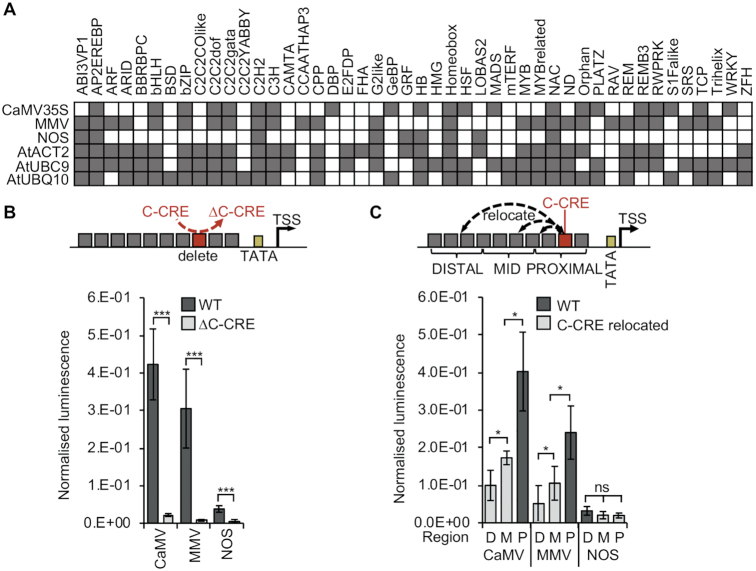
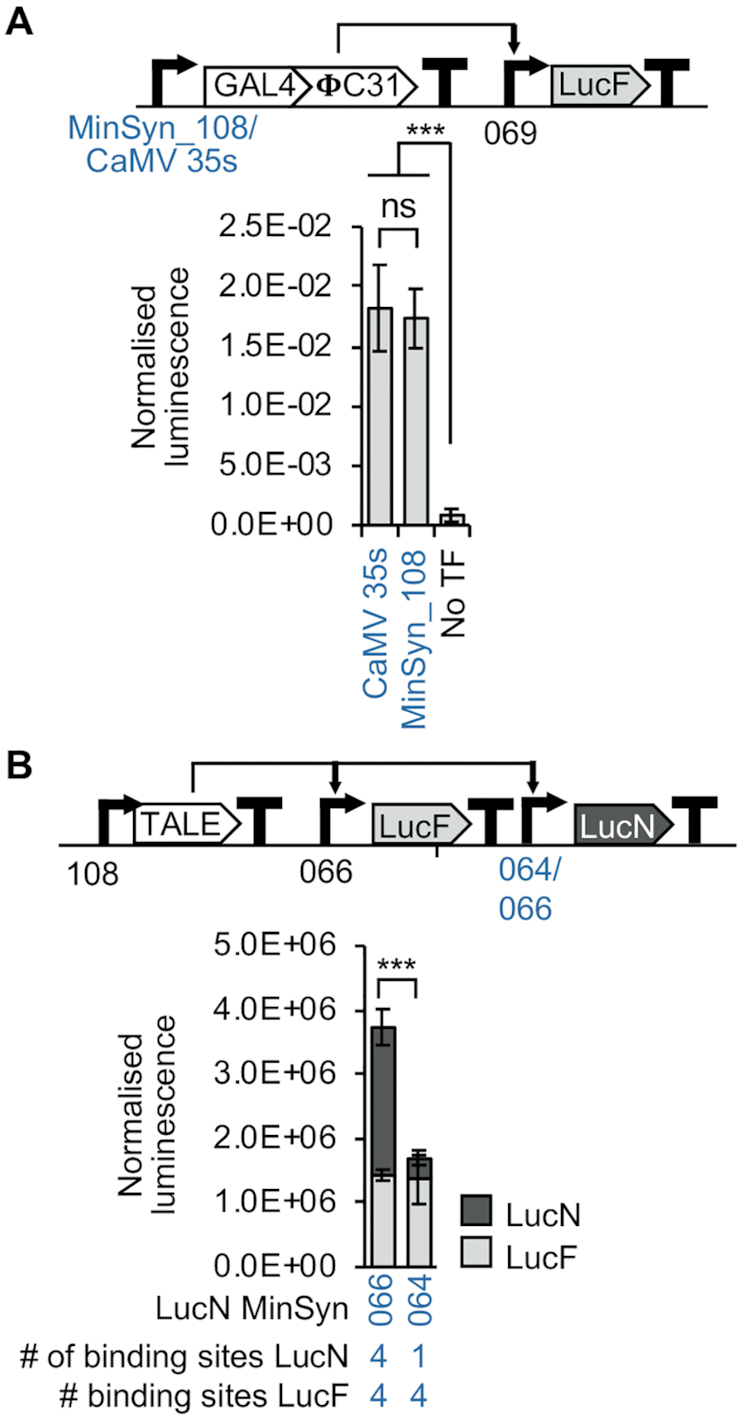
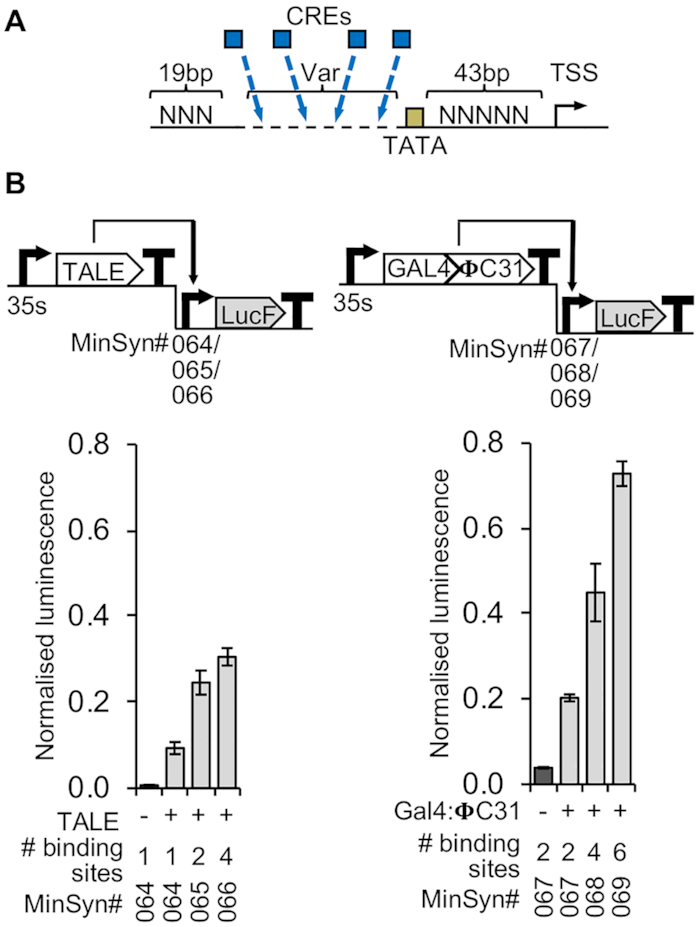
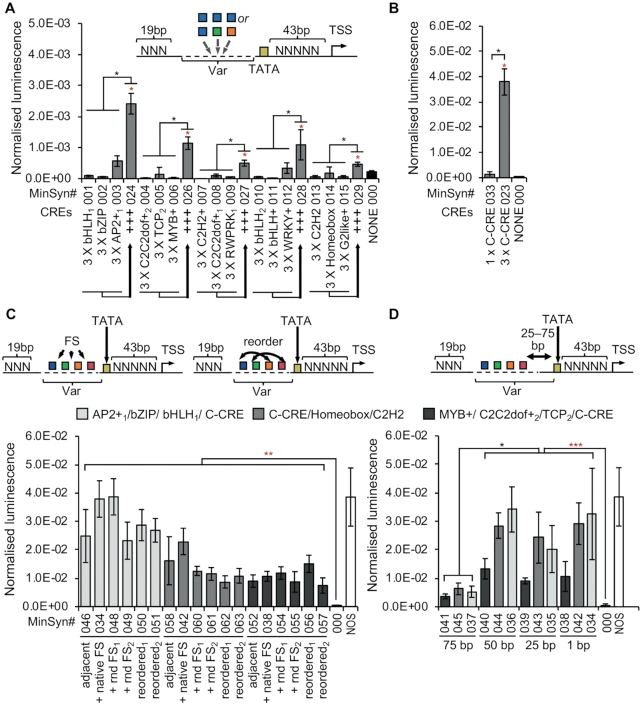
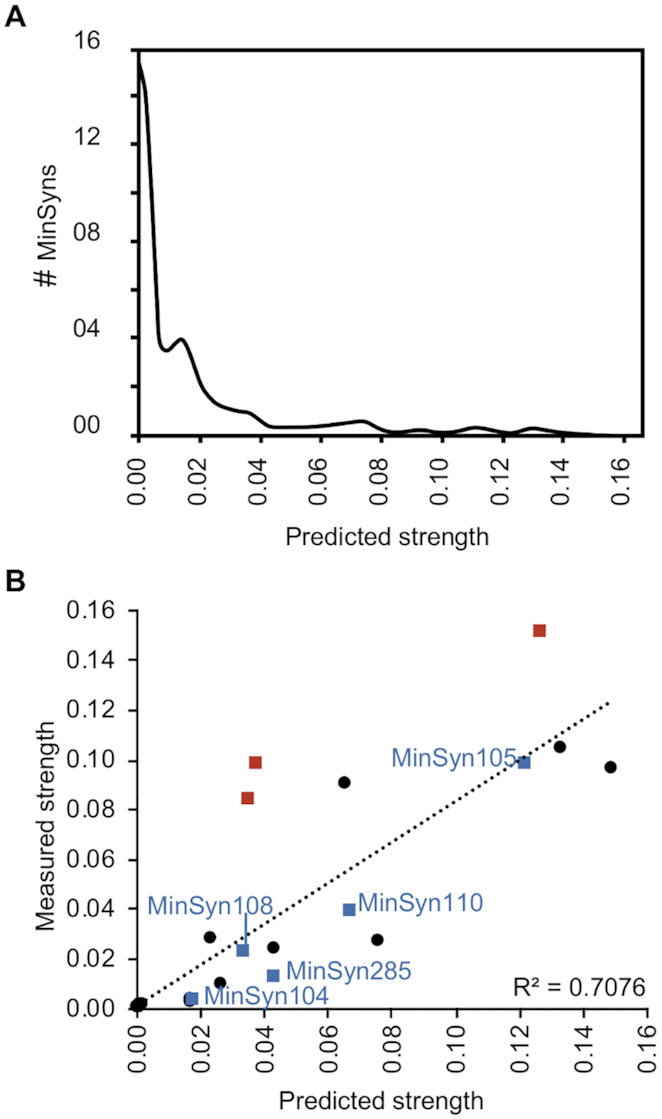
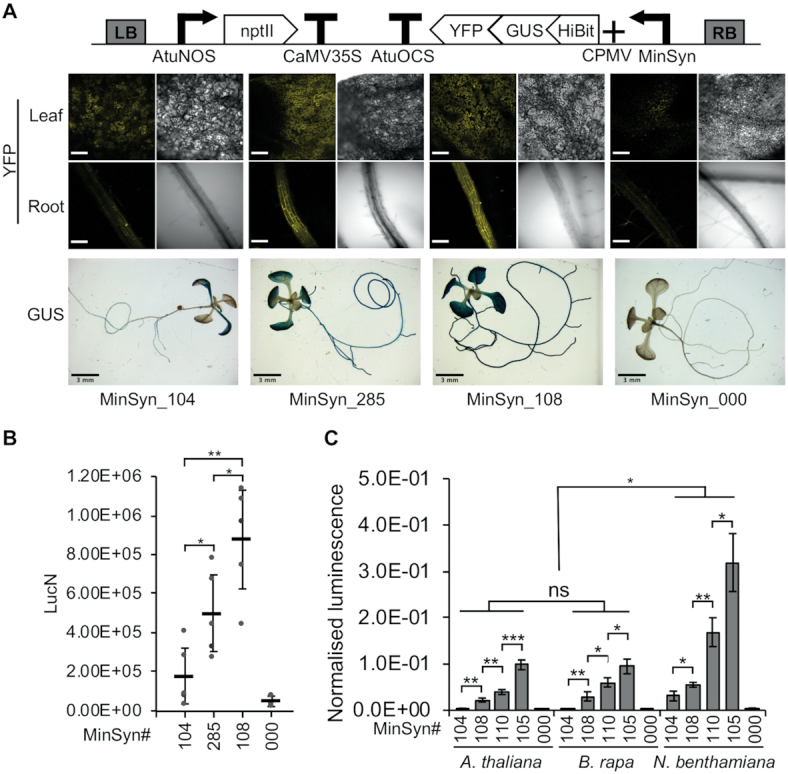
Promoters serve a critical role in establishing baseline transcriptional capacity through the recruitment of proteins, including transcription factors. Previously, a paucity of data for cis-regulatory elements in plants meant that it was challenging to determine which sequence elements in plant promoter sequences contributed to transcriptional function. In this study, we have identified functional elements in the promoters of plant genes and plant pathogens that utilize plant transcriptional machinery for gene expression. We have established a quantitative experimental system to investigate transcriptional function, investigating how identity, density and position contribute to regulatory function. We then identified permissive architectures for minimal synthetic plant promoters enabling the computational design of a suite of synthetic promoters of different strengths. These have been used to regulate the relative expression of output genes in simple genetic devices.
启动子通过招募蛋白质(包括转录因子)在建立基础转录能力方面起着关键作用。以前,由于植物顺式调控元件的数据不足,因此很难确定植物启动子序列中的哪些序列元件有助于转录功能。在这项研究中,我们已经鉴定了植物基因和植物病原体启动子中的功能元件,这些元件利用植物转录机制进行基因表达。我们建立了一个定量实验系统来研究转录功能,研究身份、密度和位置如何有助于调节功能。然后,我们确定了最小合成植物启动子的许可结构,从而能够对不同强度的一系列合成启动子进行计算设计。这些已被用于调节简单遗传装置中输出基因的相对表达。