Pandolfi P P, Sonati F, Rivi R, Mason P, Grosveld F, Luzzatto L
Department of Haematology, Royal Postgraduate Medical School, London, UK.
EMBO J. 1995 Nov 1;14(21):5209-15. doi: 10.1002/j.1460-2075.1995.tb00205.x.
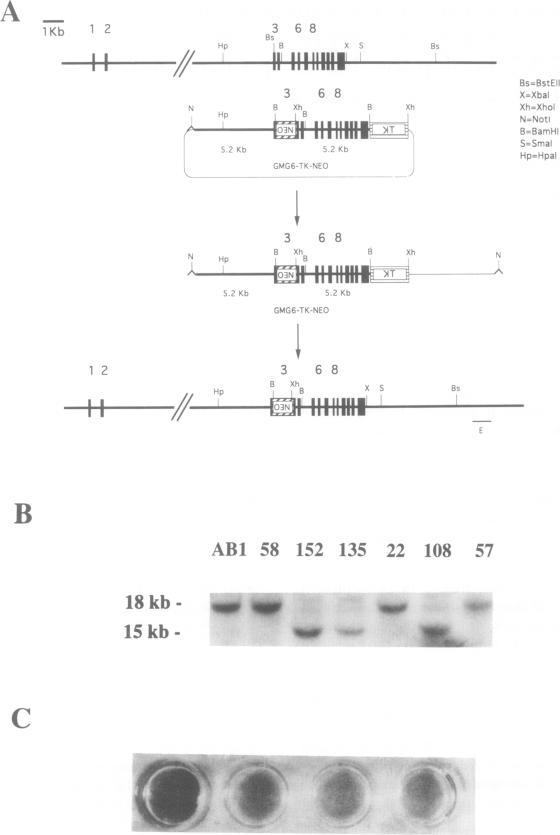
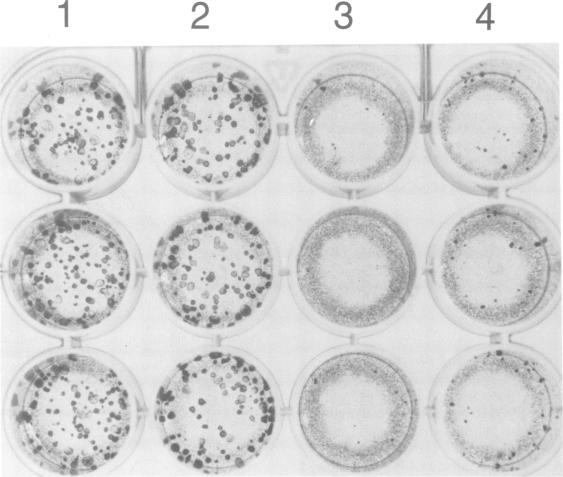
Glucose 6-phosphate dehydrogenase (G6PD) is a housekeeping enzyme encoded in mammals by an X-linked gene. It has important functions in intermediary metabolism because it catalyzes the first step in the pentose phosphate pathway and provides reductive potential in the form of NADPH. In human populations, many mutant G6PD alleles (some present at polymorphic frequencies) cause a partial loss of G6PD activity and a variety of hemolytic anemias, which vary from mild to severe. All these mutants have some residual enzyme activity, and no large deletions in the G6PD gene have ever been found. To test which, if any, function of G6PD is essential, we have disrupted the G6PD gene in male mouse embryonic stem cells by targeted homologous recombination. We have isolated numerous clones, shown to be recombinant by Southern blot analysis, in which G6PD activity is undetectable. We have extensively characterized individual clones and found that they are extremely sensitive to H2O2 and to the sulfydryl group oxidizing agent, diamide. Their markedly impaired cloning efficiency is restored by reducing the oxygen tension. We conclude that G6PD activity is dispensable for pentose synthesis, but is essential to protect cells against even mild oxidative stress.
葡萄糖-6-磷酸脱氢酶(G6PD)是一种管家酶,在哺乳动物中由X连锁基因编码。它在中间代谢中具有重要功能,因为它催化磷酸戊糖途径的第一步,并以NADPH的形式提供还原电位。在人类群体中,许多突变的G6PD等位基因(有些以多态频率存在)会导致G6PD活性部分丧失以及各种溶血性贫血,其严重程度各不相同。所有这些突变体都有一些残余的酶活性,并且从未发现G6PD基因有大的缺失。为了测试G6PD的哪些功能(如果有的话)是必不可少的,我们通过靶向同源重组在雄性小鼠胚胎干细胞中破坏了G6PD基因。我们分离出了许多通过Southern印迹分析显示为重组体的克隆,其中G6PD活性无法检测到。我们对单个克隆进行了广泛的表征,发现它们对H2O2和巯基氧化剂二酰胺极其敏感。通过降低氧张力可以恢复它们明显受损的克隆效率。我们得出结论,G6PD活性对于戊糖合成是可有可无的,但对于保护细胞免受即使是轻度的氧化应激至关重要。