Hazelbag H M, Fleuren G J, Cornelisse C J, van den Broek L J, Taminiau A H, Hogendoorn P C
Department of Pathology, University of Leiden, The Netherlands.
Am J Pathol. 1995 Dec;147(6):1770-9.
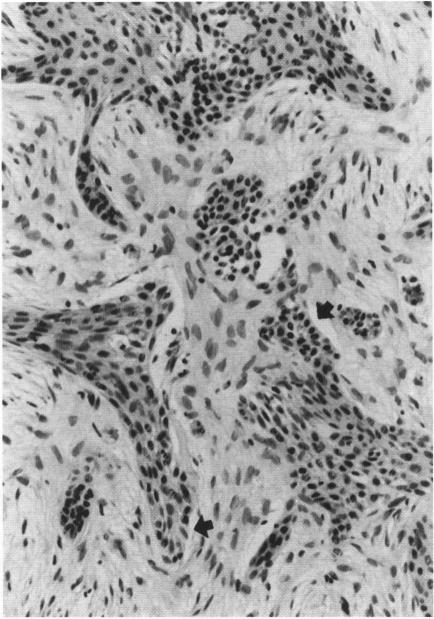
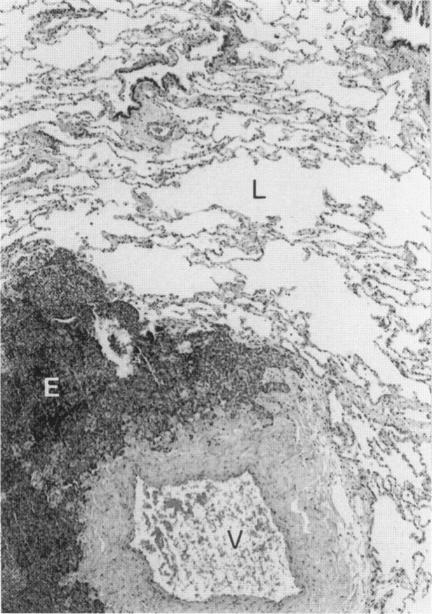
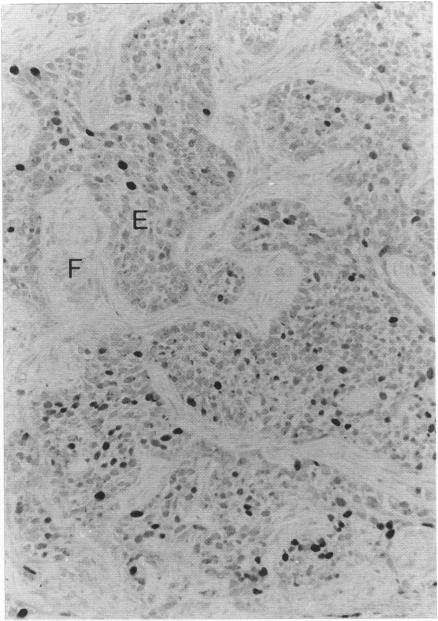
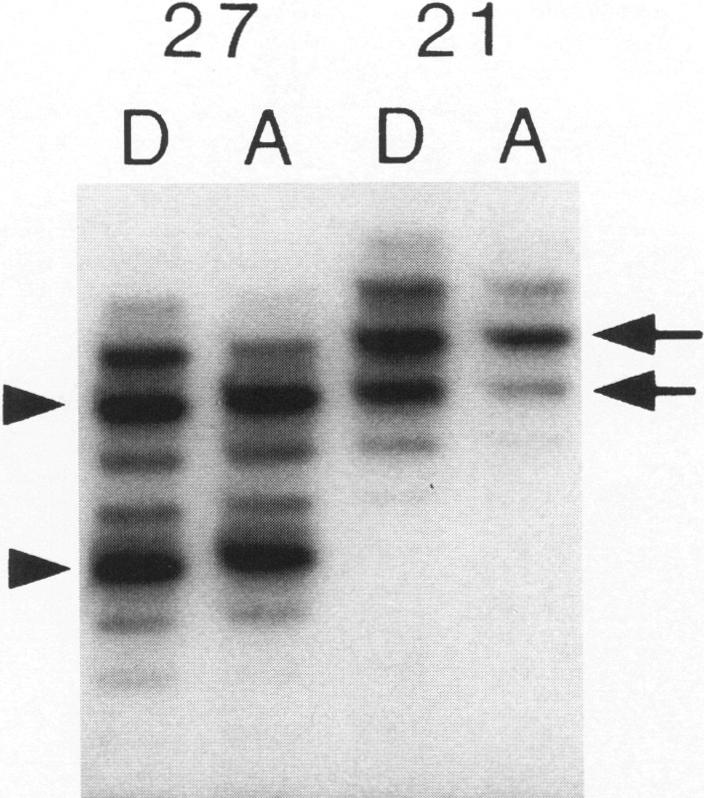
Adamantinoma of long bones is a rare malignant tumor composed of cells with epithelial characteristics in various differentiation patterns surrounded by fibrous cells. Evidence as to whether this neoplasm should be designated as an epithelial bone tumor or a biphasic sarcoma with both epithelial and mesenchymal features is lacking. In this study the nature of the mesenchymal and epithelial components of adamantinoma was investigated by DNA flow cytometry, DNA image cytometry, p53 immunohistochemistry, and polymerase chain reaction-based loss of heterozygosity detection at the p53 locus. Specimens from 6 of 15 patients (40%) analyzed by flow cytometry had an aneuploid DNA index. Image cytometry analysis of Feulgen-stained paraffin sections of 6 aneuploid and 2 diploid tumors revealed that aneuploid nuclei were detected in cells with an epithelial phenotype only, whereas all fibrous cells were diploid. Immunohistochemistry for p53 on specimens from 25 patients revealed moderate or strong immunoreactivity in 12 tumors (48%) restricted to the epithelial cells. Loss of heterozygosity at the p53 locus could be confirmed in the epithelial component of an immunohistochemically p53-positive tumor. Additionally, sections of 7 lung metastases were studied histologically. Only keratin-positive epithelial cells, predominantly in the spindle cell pattern, were present in these metastases, whereas the osteofibrous tissue present in the primary tumors was not detected. These results suggest that either adamantinoma consists of a malignant epithelial part with a reactive osteofibrous stroma or that the malignant epithelial cells develop next to a proliferating benign fibrous component. Additional analysis of common genetic abnormalities in the fibrous and epithelial cells of adamantinoma is therefore indicated.
长骨造釉细胞瘤是一种罕见的恶性肿瘤,由具有各种分化模式的上皮样细胞组成,周围环绕着纤维细胞。目前缺乏证据表明该肿瘤应被归类为上皮性骨肿瘤还是具有上皮和间充质特征的双相肉瘤。在本研究中,通过DNA流式细胞术、DNA图像细胞术、p53免疫组织化学以及基于聚合酶链反应的p53基因座杂合性缺失检测,对造釉细胞瘤的间充质和上皮成分的性质进行了研究。流式细胞术分析的15例患者中有6例(40%)的标本具有非整倍体DNA指数。对6例非整倍体肿瘤和2例二倍体肿瘤的Feulgen染色石蜡切片进行图像细胞术分析发现,仅在上皮表型的细胞中检测到非整倍体核,而所有纤维细胞均为二倍体。对25例患者标本进行的p53免疫组织化学检测显示,12例肿瘤(48%)中仅上皮细胞有中度或强免疫反应性。在免疫组织化学p53阳性肿瘤的上皮成分中可证实p53基因座杂合性缺失。此外,对7例肺转移灶切片进行了组织学研究。这些转移灶中仅存在角蛋白阳性上皮细胞,主要呈梭形细胞模式,而未检测到原发肿瘤中的骨纤维组织。这些结果表明,造釉细胞瘤要么由具有反应性骨纤维基质的恶性上皮部分组成,要么恶性上皮细胞在增殖的良性纤维成分旁发展。因此,需要对造釉细胞瘤的纤维和上皮细胞中的常见基因异常进行进一步分析。