Klaver B, Berkhout B
University of Amsterdam, Department of Virology, The Netherlands.
Nucleic Acids Res. 1994 Jan 25;22(2):137-44. doi: 10.1093/nar/22.2.137.
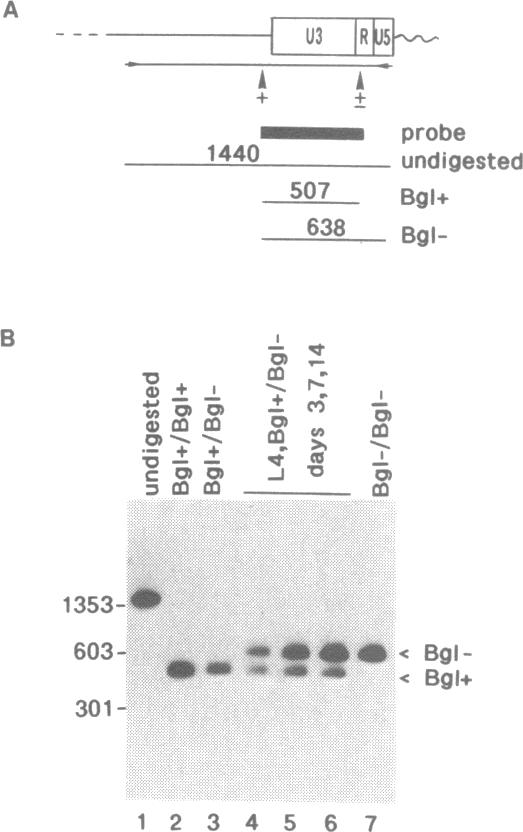
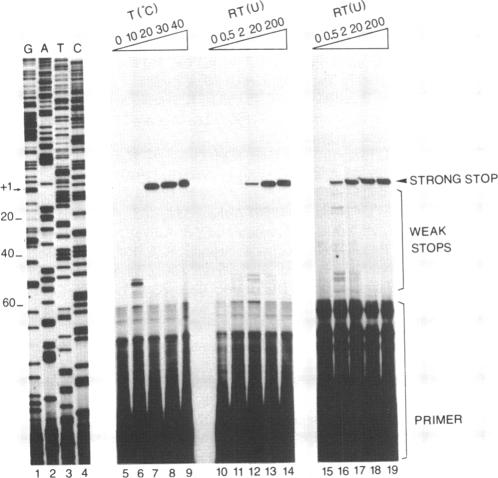
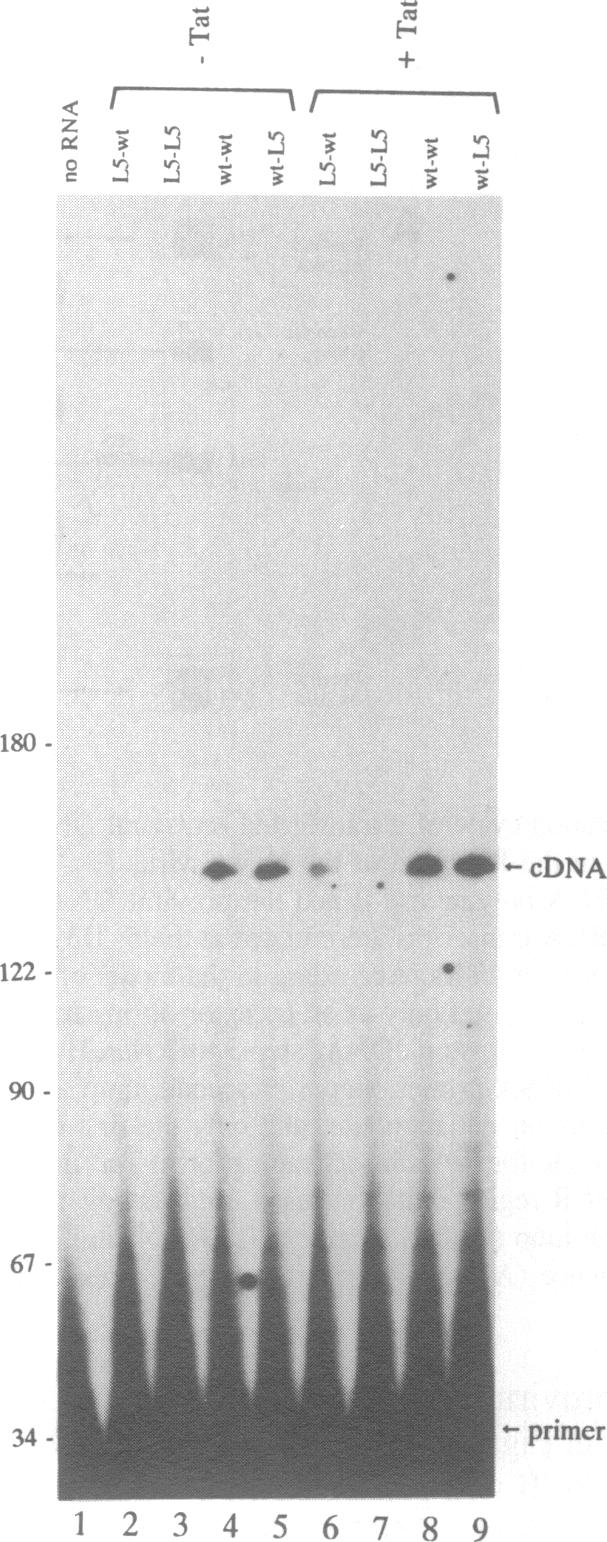
Reverse transcription of retroviral genomes starts near the 5' end of the viral RNA by use of an associated tRNA primer. According to the current model of reverse transcription, the initial cDNA product, termed minus-strand strong-stop DNA, 'jumps' to a repeated sequence (R region) at the 3' end of the RNA template. The human retroviruses have relatively long R regions (97-247 nucleotides) when compared to murine and avian viruses (16-68 nucleotides). This suggests that the full complement of the R region is not required for strand transfer and that partial cDNA copies of the 5' R can prematurely jump to the 3' R. To test this hypothesis, we generated mutants of the human immunodeficiency virus with R region changes and analyzed whether 5' or 3' R sequences were inherited by the progeny. We found that in most cases, 5' R-encoded sequences are dominant, which is consistent with the model of reverse transcription. Using a selection protocol, however, we were also able to identify progeny viruses with R sequences derived from the original 3' R element. These results suggest that partial strong stop cDNAs can be transferred with R region homologies much shorter than 97 nucleotides.
逆转录病毒基因组的逆转录通过使用相关的tRNA引物在病毒RNA的5'端附近开始。根据当前的逆转录模型,最初的cDNA产物,即负链强终止DNA,“跳跃”到RNA模板3'端的重复序列(R区)。与鼠类和禽类病毒(16 - 68个核苷酸)相比,人类逆转录病毒具有相对较长的R区(97 - 247个核苷酸)。这表明链转移并不需要R区的完整互补序列,并且5' R的部分cDNA拷贝可以过早地跳跃到3' R。为了验证这一假设,我们构建了R区发生变化的人类免疫缺陷病毒突变体,并分析子代是否继承了5'或3' R序列。我们发现,在大多数情况下,5' R编码的序列占主导,这与逆转录模型一致。然而,通过一种筛选方案,我们也能够鉴定出具有源自原始3' R元件的R序列的子代病毒。这些结果表明,部分强终止cDNA可以在R区同源性远短于97个核苷酸的情况下进行转移。