Schulze-Osthoff K, Krammer P H, Dröge W
Division of Immunochemistry, Deutsches Krebsforschungszentrum, D-69120 Heidelberg, Germany.
EMBO J. 1994 Oct 3;13(19):4587-96. doi: 10.1002/j.1460-2075.1994.tb06780.x.
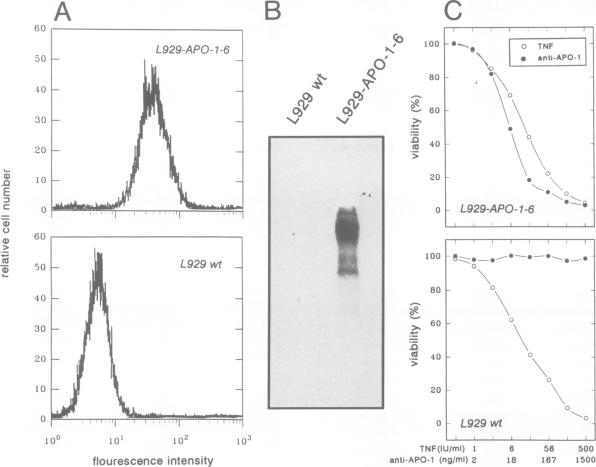
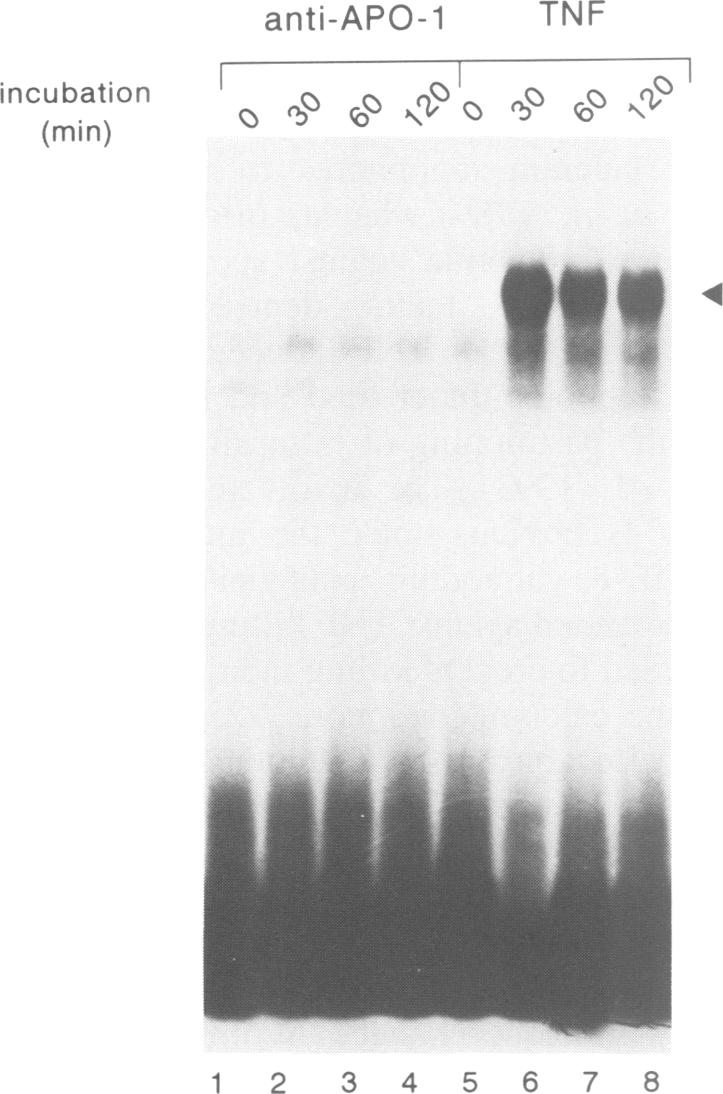
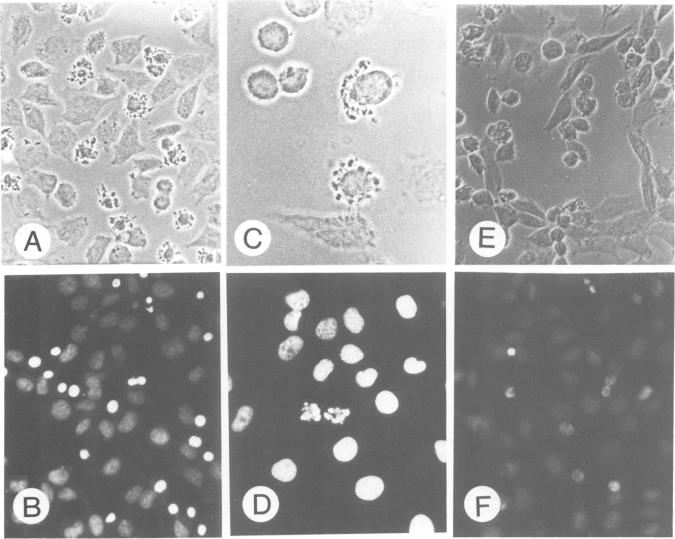
Tumor necrosis factor receptor (TNF-R) and APO-1/Fas (CD95) are members of the tumor necrosis factor/nerve growth factor receptor superfamily involved in various forms of physiological cell death. Due to the structural homology between these receptors and their ligands, it has been suggested that APO-1/Fas and TNF-R kill cells by similar mechanisms. Here, we compared the killing pathways mediated by each receptor molecule in TNF-sensitive L929 cells stably transfected with APO-1/Fas cDNA. Morphological analysis revealed that TNF-induced cell death resembles necrosis, while APO-1/Fas-mediated cell killing shows an apoptotic pattern, evident by the appearance of membrane blebbing, nuclear condensation and non-random DNA degradation. Studies with inhibitors of several intracellular pathways further demonstrate that the mechanisms of TNF- and APO-1/Fas-mediated cell killing are substantially different. TNF cytotoxicity is mediated by reactive oxygen intermediates generated during mitochondrial respiration. However, these mediators are not involved in APO-1/Fas-mediated cell death as neither mitochondrial inhibitors nor antioxidants exert a protecting effect. Moreover, several inhibitors of calcium metabolism, ADP ribosylation and phospholipase action suppress TNF cytotoxicity, but not APO-1/Fas-mediated apoptosis. Additional differences between the two molecules were observed at the transcriptional level. Whereas transcription factor NF-kappa B was readily activated by TNF, activation was not induced by triggering APO-1/Fas. These data suggest that the two molecules, though structurally related, utilize distinct signal transduction pathways, even in a single cell type. Hence, cells may undergo different programs of cell death depending on the activating stimulus.
肿瘤坏死因子受体(TNF-R)和APO-1/Fas(CD95)是肿瘤坏死因子/神经生长因子受体超家族的成员,参与多种形式的生理性细胞死亡。由于这些受体与其配体之间存在结构同源性,有人提出APO-1/Fas和TNF-R通过相似的机制杀伤细胞。在此,我们比较了稳定转染APO-1/Fas cDNA的TNF敏感型L929细胞中各受体分子介导的杀伤途径。形态学分析显示,TNF诱导的细胞死亡类似于坏死,而APO-1/Fas介导的细胞杀伤呈现凋亡模式,表现为细胞膜起泡、核浓缩和非随机性DNA降解。对几种细胞内途径抑制剂的研究进一步表明,TNF和APO-1/Fas介导的细胞杀伤机制存在显著差异。TNF的细胞毒性由线粒体呼吸过程中产生的活性氧中间体介导。然而,这些介质不参与APO-1/Fas介导的细胞死亡,因为线粒体抑制剂和抗氧化剂均未发挥保护作用。此外,几种钙代谢、ADP核糖基化和磷脂酶作用的抑制剂可抑制TNF的细胞毒性,但不影响APO-1/Fas介导的凋亡。在转录水平上也观察到了这两种分子之间的其他差异。转录因子NF-κB很容易被TNF激活,但触发APO-1/Fas不会诱导其激活。这些数据表明,这两种分子虽然在结构上相关,但即使在单一细胞类型中也利用不同的信号转导途径。因此,细胞可能根据激活刺激经历不同的细胞死亡程序。