Vercammen D, Brouckaert G, Denecker G, Van de Craen M, Declercq W, Fiers W, Vandenabeele P
Department of Molecular Biology, Flanders Interuniversity Institute for Biotechnology and University of Ghent, Belgium.
J Exp Med. 1998 Sep 7;188(5):919-30. doi: 10.1084/jem.188.5.919.
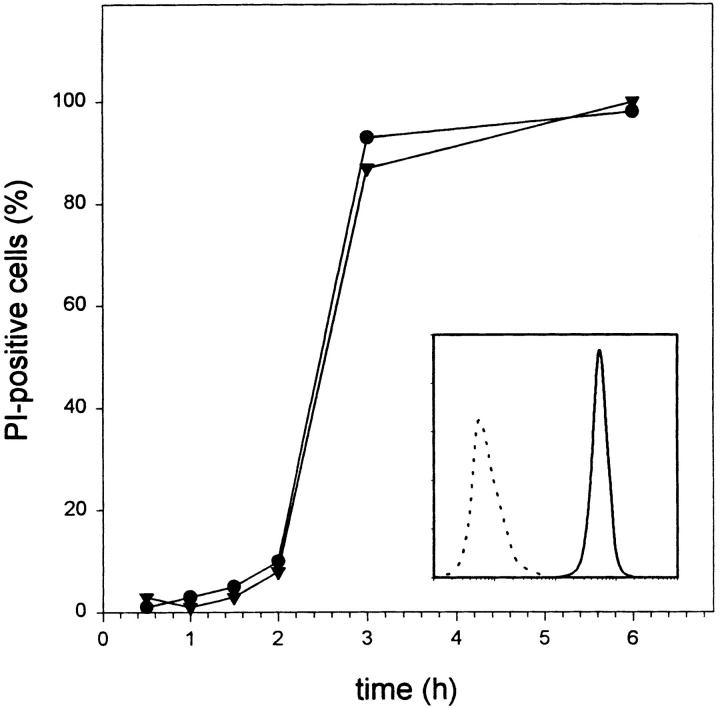
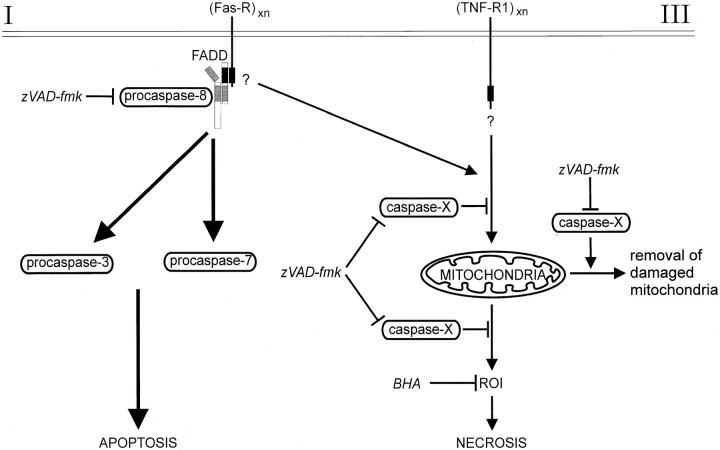
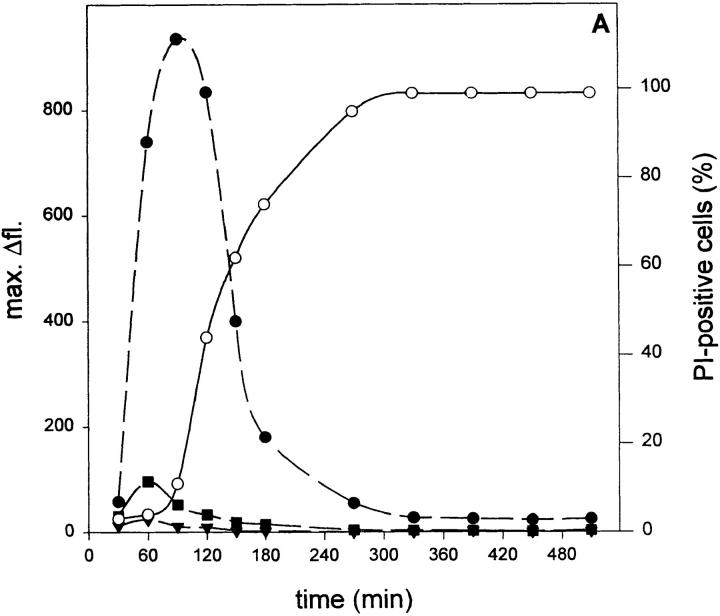
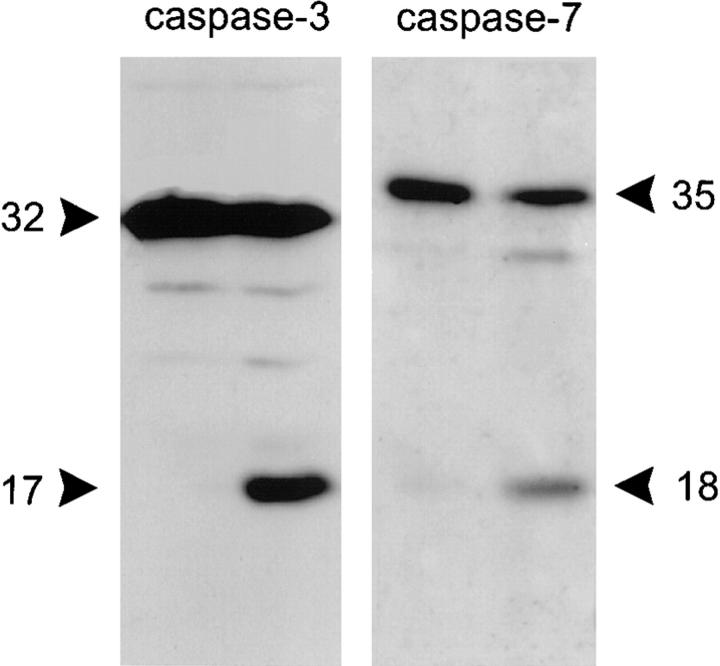
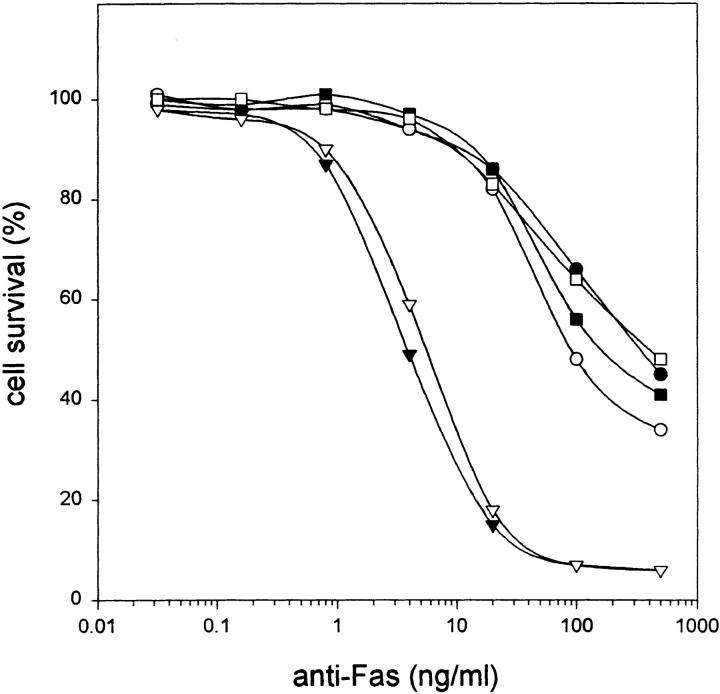
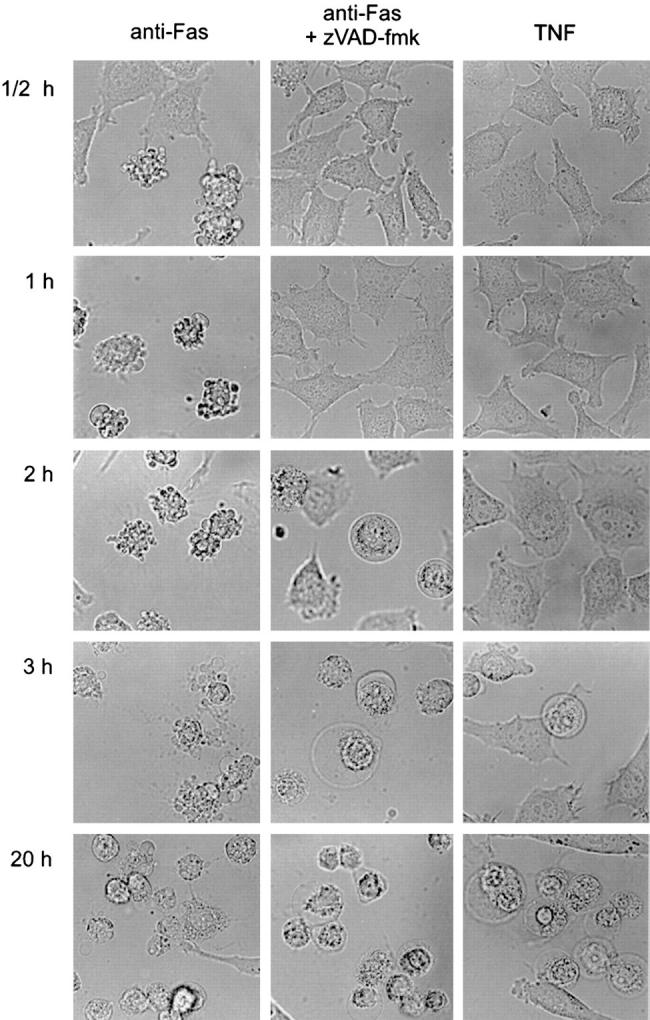
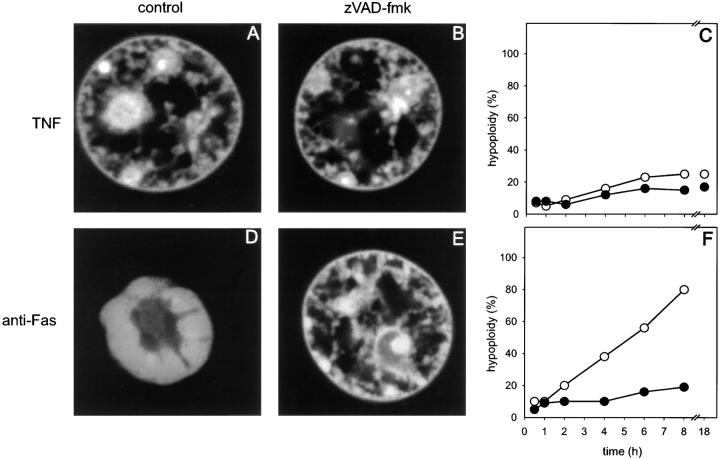
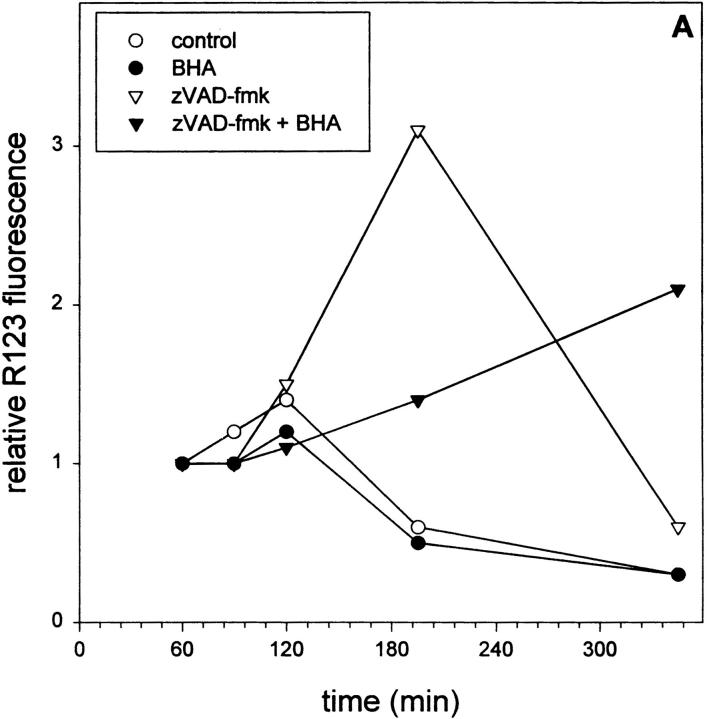
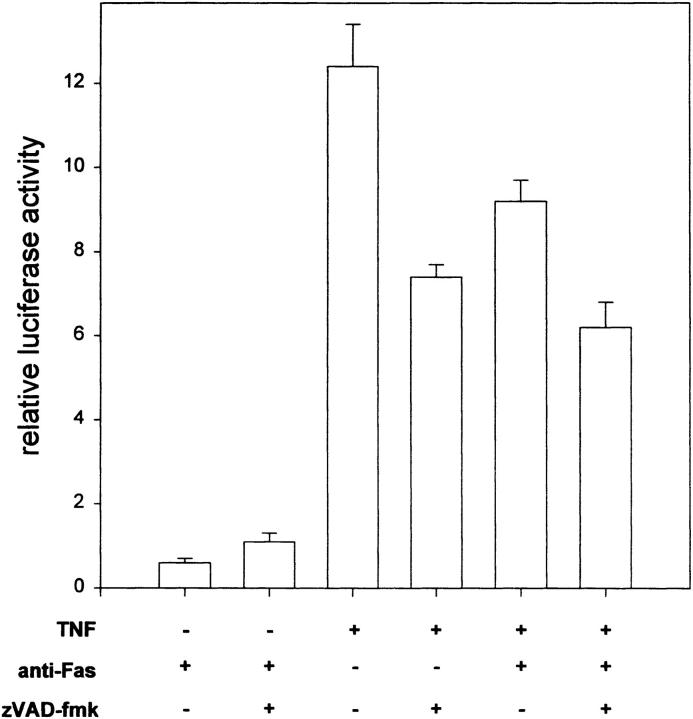
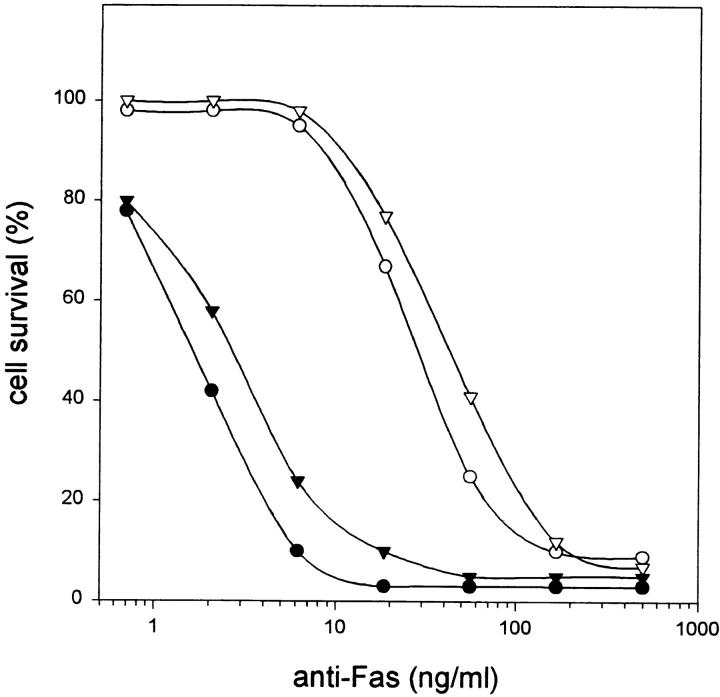
Murine L929 fibrosarcoma cells were transfected with the human Fas (APO-1/CD95) receptor, and the role of various caspases in Fas-mediated cell death was assessed. Proteolytic activation of procaspase-3 and -7 was shown by Western analysis. Acetyl-Tyr-Val-Ala-Asp-chloromethylketone and benzyloxycarbonyl-Asp(OMe)-Glu(OMe)-Val-Asp(OMe)-fluoromethylketone++ +, tetrapeptide inhibitors of caspase-1- and caspase-3-like proteases, respectively, failed to block Fas-induced apoptosis. Unexpectedly, the broad-spectrum caspase inhibitors benzyloxycarbonyl-Val-Ala-Asp(OMe)-fluoromethylketone and benzyloxycarbonyl-Asp(OMe)-fluoromethylketone rendered the cells even more sensitive to Fas-mediated cell death, as measured after 18 h incubation. However, when the process was followed microscopically, it became clear that anti-Fas-induced apoptosis of Fas-transfected L929 cells was blocked during the first 3 h, and subsequently the cells died by necrosis. As in tumor necrosis factor (TNF)-induced necrosis, Fas treatment led to accumulation of reactive oxygen radicals, and Fas-mediated necrosis was inhibited by the oxygen radical scavenger butylated hydroxyanisole. However, in contrast to TNF, anti-Fas did not activate the nuclear factor kappaB under these necrotic conditions. These results demonstrate the existence of two different pathways originating from the Fas receptor, one rapidly leading to apoptosis, and, if this apoptotic pathway is blocked by caspase inhibitors, a second directing the cells to necrosis and involving oxygen radical production.
将人Fas(APO-1/CD95)受体转染到小鼠L929纤维肉瘤细胞中,并评估各种半胱天冬酶在Fas介导的细胞死亡中的作用。通过蛋白质印迹分析显示了procaspase-3和-7的蛋白水解激活。乙酰基-Tyr-Val-Ala-Asp-氯甲基酮和苄氧羰基-Asp(OMe)-Glu(OMe)-Val-Asp(OMe)-氟甲基酮分别是caspase-1和caspase-3样蛋白酶的四肽抑制剂,未能阻断Fas诱导的细胞凋亡。出乎意料的是,广谱半胱天冬酶抑制剂苄氧羰基-Val-Ala-Asp(OMe)-氟甲基酮和苄氧羰基-Asp(OMe)-氟甲基酮使细胞对Fas介导的细胞死亡更加敏感,这是在孵育18小时后测量的。然而,当在显微镜下观察这个过程时,很明显抗Fas诱导的Fas转染L929细胞凋亡在最初3小时被阻断,随后细胞通过坏死死亡。与肿瘤坏死因子(TNF)诱导的坏死一样,Fas处理导致活性氧自由基积累,并且Fas介导的坏死被氧自由基清除剂丁基羟基茴香醚抑制。然而,与TNF不同的是,在这些坏死条件下抗Fas并未激活核因子κB。这些结果表明存在两条源自Fas受体的不同途径,一条迅速导致细胞凋亡,如果这条凋亡途径被半胱天冬酶抑制剂阻断,第二条途径则将细胞导向坏死并涉及氧自由基的产生。