Kong F M, Anscher M S, Murase T, Abbott B D, Iglehart J D, Jirtle R L
Department of Radiation Oncology, Duke University Medical Center, Durham, North Carolina, USA.
Ann Surg. 1995 Aug;222(2):155-62. doi: 10.1097/00000658-199508000-00007.
The authors determined whether untreated breast cancer patients have elevated plasma levels of transforming growth factor-beta 1 (TGF-beta 1).
Increased plasma TGF-beta 1 levels recently were found after chemotherapy in patients with advanced breast cancer. However, it currently is unknown whether this elevation in plasma TGF-beta 1 is caused by chemotherapy-induced normal tissue damage or whether it results from the presence of the tumor.
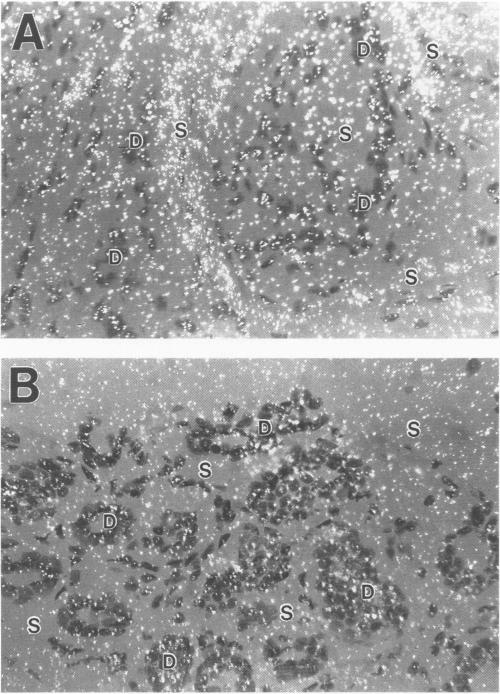
An enzyme-linked immunosorbent assay was used to measure plasma TGF-beta 1 levels in 26 newly diagnosed breast cancer patients before and after definitive surgery. Patients were grouped by postoperative tumor status: 1) negative lymph nodes (group 1); 2) positive lymph nodes (group 2); and 3) overt residual disease (group 3). The site of TGF-beta 1 production in the tumors was localized by immunohistochemistry and in situ hybridization.
Plasma TGF-beta 1 levels were elevated preoperatively in 81% of the patients; TGF-beta 2 and TGF-beta 3 were undetectable. The preoperative TGF-beta 1 levels in the three patient groups were similar; however, the postoperative plasma TGF-beta 1 levels differed by disease status. The mean plasma TGF-beta 1 level in group 1 (n = 12) normalized after surgery (19.3 +/- 3.2 vs. 5.5 +/- 1.0 ng/mL, p < 0.001). In contrast, the mean plasma TGF-beta 1 levels remained above normal in both group 2 (n = 9) and group 3 (n = 5) after surgery. Transforming growth factor-beta 1 expression was found to be preferentially increased in the tumor stroma.
Breast tumors result in increased plasma TGF-beta 1 levels in 81% of patients. After surgical removal of the primary tumor, the plasma TGF-beta 1 level normalizes in the majority of patients; persistently elevated levels correlate with the presence of lymph node metastases or overt residual tumor. These findings suggest that the usefulness of TGF-beta 1 as a potential plasma marker for breast tumors deserves further study.
作者们确定未经治疗的乳腺癌患者血浆中转化生长因子-β1(TGF-β1)水平是否升高。
最近发现晚期乳腺癌患者化疗后血浆TGF-β1水平升高。然而,目前尚不清楚血浆TGF-β1的这种升高是由化疗诱导的正常组织损伤引起的,还是由肿瘤的存在导致的。
采用酶联免疫吸附测定法测量26例新诊断乳腺癌患者在根治性手术前后的血浆TGF-β1水平。患者按术后肿瘤状态分组:1)淋巴结阴性(第1组);2)淋巴结阳性(第2组);3)明显残留疾病(第3组)。通过免疫组织化学和原位杂交对肿瘤中TGF-β1的产生部位进行定位。
81%的患者术前血浆TGF-β1水平升高;未检测到TGF-β2和TGF-β3。三组患者术前TGF-β1水平相似;然而,术后血浆TGF-β1水平因疾病状态而异。第1组(n = 12)患者术后血浆TGF-β1平均水平恢复正常(19.3±3.2对5.5±1.0 ng/mL,p < 0.001)。相比之下,第2组(n = 9)和第3组(n = 5)患者术后血浆TGF-β1平均水平仍高于正常。发现转化生长因子-β1表达在肿瘤基质中优先增加。
乳腺癌导致81%的患者血浆TGF-β1水平升高。手术切除原发性肿瘤后,大多数患者血浆TGF-β1水平恢复正常;持续升高的水平与淋巴结转移或明显残留肿瘤的存在相关。这些发现表明,TGF-β1作为乳腺癌潜在血浆标志物的有用性值得进一步研究。