Slattery Karen, Woods Elena, Zaiatz-Bittencourt Vanessa, Marks Sam, Chew Sonya, Conroy Michael, Goggin Caitriona, MacEochagain Colm, Kennedy John, Lucas Sophie, Finlay David K, Gardiner Clair M
School of Biochemistry and Immunology, Trinity College Dublin, Dublin, Ireland.
Medical Oncology Service, St. James's Hospital, Dublin, Ireland.
J Immunother Cancer. 2021 Feb;9(2). doi: 10.1136/jitc-2020-002044.
Natural killer (NK) cells provide important immune protection from cancer and are a key requirement for particular immunotherapies. There is accumulating evidence that NK cells become dysfunctional during cancer. Overcoming NK cell exhaustion would be an important step to allow them to function optimally in a range of NK cell therapies, including those that depend on autologos circulating NK cells. We have previously demonstrated that NK cells undergo a normal metabolic reprogramming in response to cytokine activation and that this is required for optimal function. The objective of this work was to investigate if cellular metabolism of circulating NK cells is dysregulated in patients with metastatic breast cancer and if so, to gain insights into potential mechanisms underpinning this. Such discoveries would provide important insights into how to unleash the full activity of NK cells for maximum immunotherapy output.
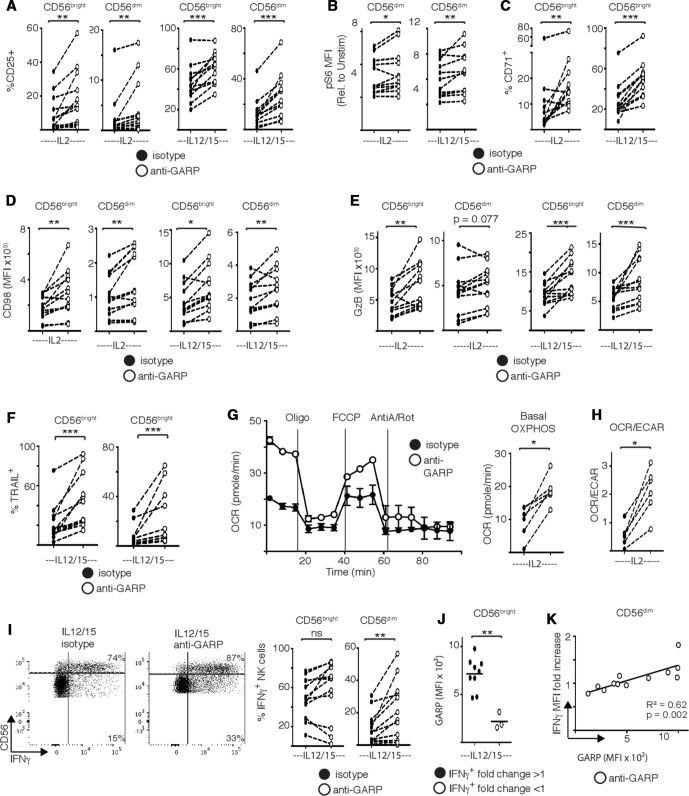
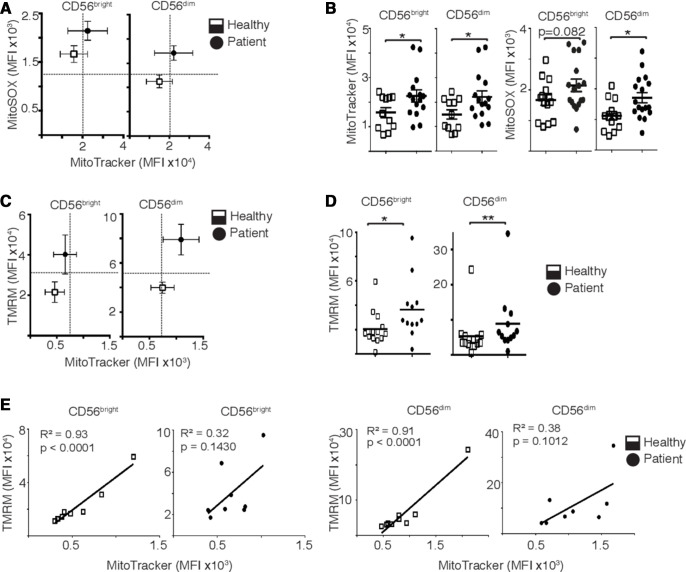
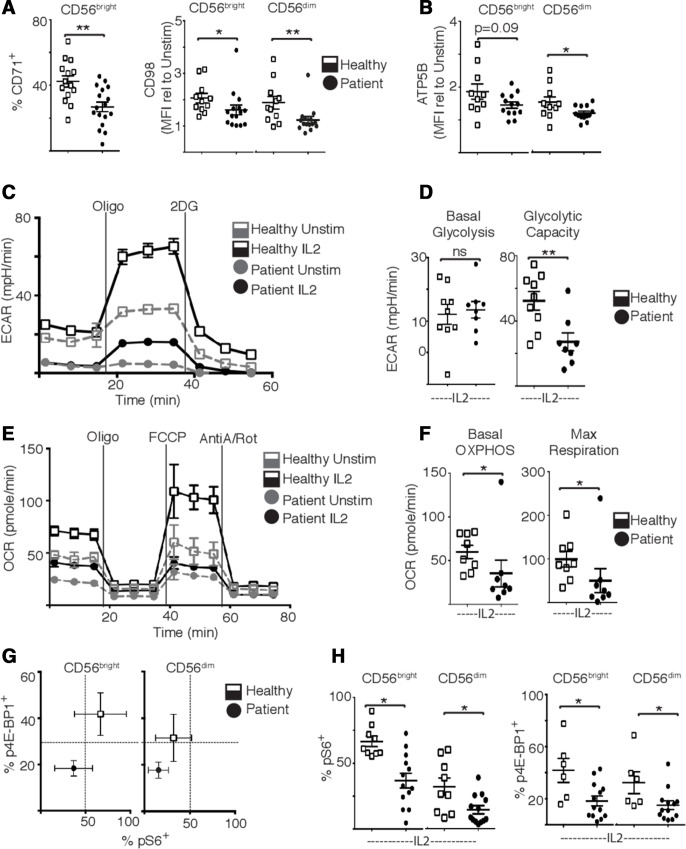
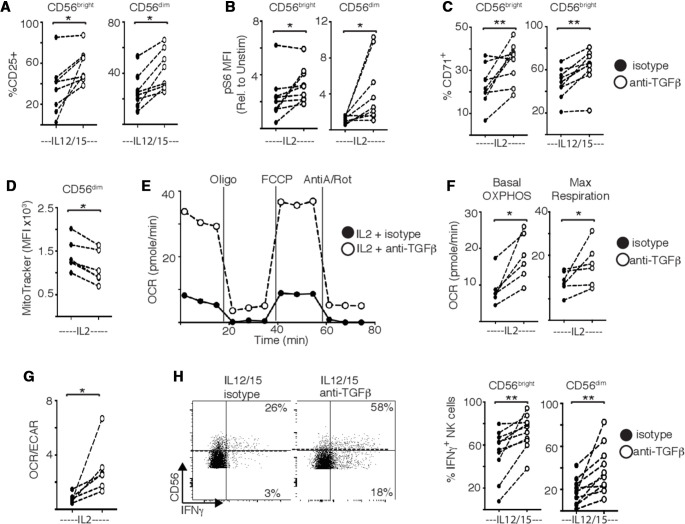
Single-cell analysis, metabolic flux and confocal analysis of NK cells from patients with metastatic breast cancer and healthy controls RESULTS: In addition to reduced interferon-γ production and cytotoxicity, peripheral blood NK cells from patients had clear metabolic deficits including reduced glycolysis and oxidative phosphorylation. There were also distinct morphologically alterations in the mitochondria with increased mitochondrial fragmentation observed. Transforminggrowth factor-β (TGFβ) was identified as a key driver of this phenotype as blocking its activity reversed many metabolic and functional readouts. Expression of glycoprotein-A repetitions predominant (GARP) and latency associated peptide (LAP), which are involved with a novel TGFβ processing pathway, was increased on NK cells from some patients. Blocking the GARP-TGFβ axis recapitulated the effects of TGFβ neutralization, highlighting GARP as a novel NK cell immunotherapy target for the first time.
TGFβ contributes to metabolic dysfunction of circulating NK cells in patients with metastatic breast cancer. Blocking TGFβ and/or GARP can restore NK cell metabolism and function and is an important target for improving NK cell-based immunotherapies.
自然杀伤(NK)细胞为抵御癌症提供重要的免疫保护,是特定免疫疗法的关键要素。越来越多的证据表明,NK细胞在癌症发生过程中会功能失调。克服NK细胞耗竭对于使其在一系列NK细胞疗法(包括那些依赖自体循环NK细胞的疗法)中发挥最佳功能而言,将是重要的一步。我们之前已经证明,NK细胞会因细胞因子激活而经历正常的代谢重编程,而这是其最佳功能所必需的。这项研究的目的是调查转移性乳腺癌患者循环NK细胞的细胞代谢是否失调,如果失调,深入了解其潜在机制。此类发现将为如何释放NK细胞的全部活性以实现最大免疫治疗效果提供重要见解。
对转移性乳腺癌患者和健康对照者的NK细胞进行单细胞分析、代谢通量分析和共聚焦分析
除了干扰素-γ产生减少和细胞毒性降低外,患者外周血NK细胞存在明显的代谢缺陷,包括糖酵解和氧化磷酸化减少。线粒体也有明显的形态学改变,观察到线粒体碎片化增加。转化生长因子-β(TGFβ)被确定为这种表型的关键驱动因素,因为阻断其活性可逆转许多代谢和功能指标。一些患者的NK细胞上,参与一种新型TGFβ加工途径的糖蛋白A重复序列优势表达(GARP)和潜伏相关肽(LAP)的表达增加。阻断GARP-TGFβ轴可重现TGFβ中和的效果,首次将GARP突显为新型NK细胞免疫治疗靶点。
TGFβ导致转移性乳腺癌患者循环NK细胞代谢功能障碍。阻断TGFβ和/或GARP可恢复NK细胞代谢和功能,是改善基于NK细胞的免疫疗法的重要靶点。