Saftig P, Hetman M, Schmahl W, Weber K, Heine L, Mossmann H, Köster A, Hess B, Evers M, von Figura K
Abt. Biochemie II, Universität Göttingen, Germany.
EMBO J. 1995 Aug 1;14(15):3599-608. doi: 10.1002/j.1460-2075.1995.tb00029.x.
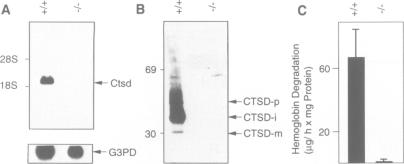
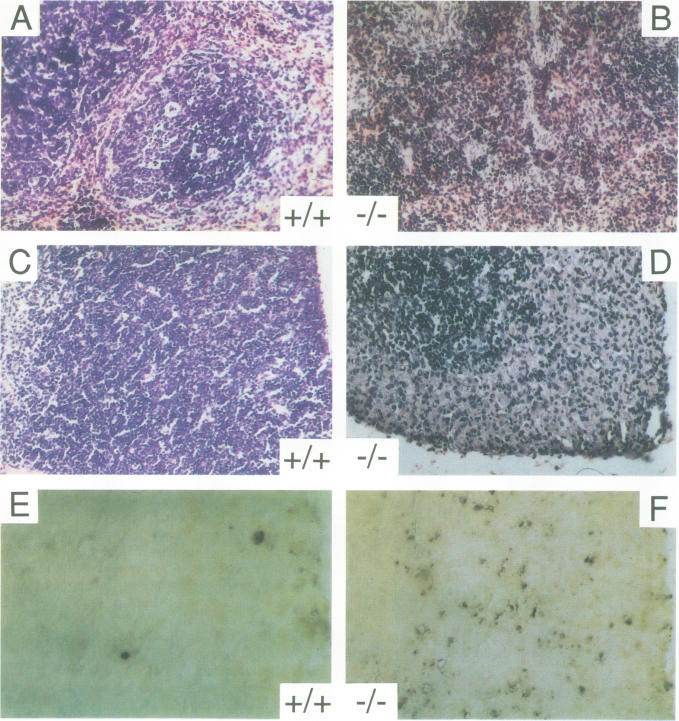
Mice deficient for the major lysosomal aspartic proteinase cathepsin D, generated by gene targeting, develop normally during the first 2 weeks, stop thriving in the third week and die in a state of anorexia at day 26 +/- 1. An atrophy of the ileal mucosa first observed in the third week progresses towards widespread intestinal necroses accompanied by thromboemboli. Thymus and spleen undergo massive destruction with fulminant loss of T and B cells. Lysosomal bulk proteolysis is maintained. These results suggest, that vital functions of cathepsin D are exerted by limited proteolysis of proteins regulating cell growth and/or tissue homeostasis, while its contribution to bulk proteolysis in lysosomes appears to be non-critical.
通过基因靶向技术产生的主要溶酶体天冬氨酸蛋白酶组织蛋白酶D缺陷型小鼠,在最初2周内正常发育,在第3周停止茁壮成长,并在第26±1天死于厌食状态。在第3周首次观察到的回肠粘膜萎缩发展为广泛的肠道坏死,并伴有血栓栓塞。胸腺和脾脏遭受大规模破坏,T细胞和B细胞急剧减少。溶酶体的大量蛋白质水解得以维持。这些结果表明,组织蛋白酶D的重要功能是通过对调节细胞生长和/或组织稳态的蛋白质进行有限的蛋白水解来实现的,而其对溶酶体中大量蛋白质水解的贡献似乎并不关键。