Wallace D L, Beverley P C
ICRF Human Tumour Immunology Group, Courtauld Institute of Biochemistry, London, U.K.
Immunology. 1993 Apr;78(4):623-8.
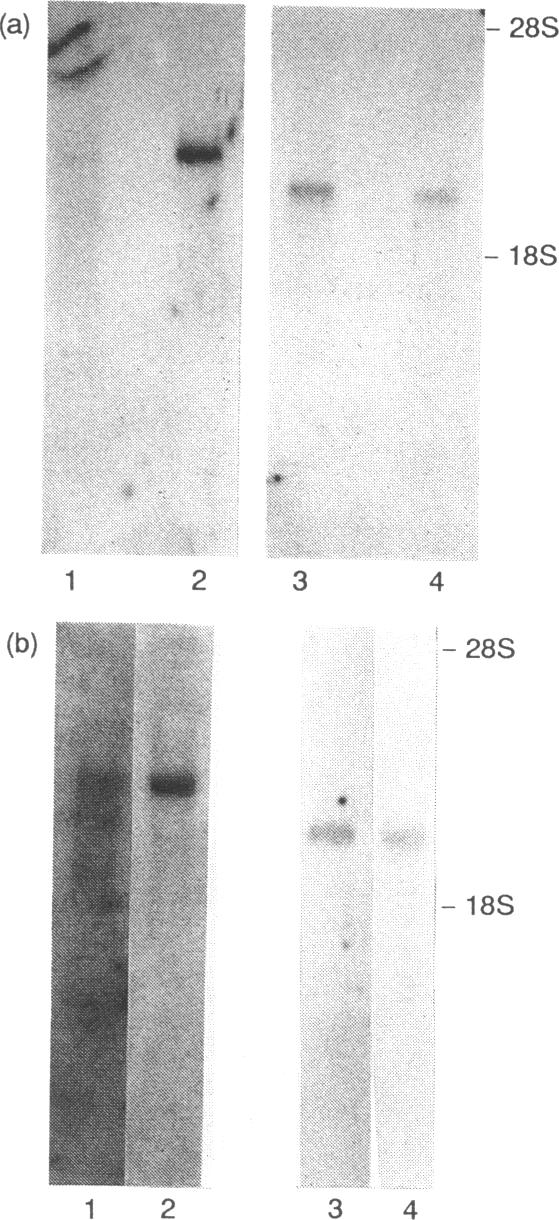
Human L-selection (LAM-1, Leu-8, TQ1, DREG 56) is a member of the 'selection' family of adhesion molecules. Antibodies to L-selectin have been shown to block the binding of T cells to peripheral lymph node high endothelial venules (HEV). Most unstimulated peripheral blood T cells express high levels of L-selectin whilst it is only weakly expressed on the majority of T cells from secondary lymphoid organs. We show here (a) that T cells from tonsil and lymph node up-regulate L-selectin when released from their microenvironment, (b) that in contrast, spleen contains a stable L-selectin negative subset, (c) that this subset remains surface L-selection negative after stimulation even though the T cells can respond by proliferation, (d) that this subset expresses minimal levels of LAM-1 mRNA and (e) that mucosal lymphocyte antigen (MLA) positive and T-cell receptor (TcR) gamma delta positive T cells found within the L-selectin negative population are similar to subsets of T cells found amongst lamina propria (LP) and intraepithelial lymphocytes (IEL) of the gut.
人L-选择素(LAM-1、Leu-8、TQ1、DREG 56)是黏附分子“选择素”家族的成员。已证实抗L-选择素抗体可阻断T细胞与外周淋巴结高内皮微静脉(HEV)的结合。大多数未受刺激的外周血T细胞高水平表达L-选择素,而在大多数来自二级淋巴器官的T细胞上仅弱表达。我们在此表明:(a)扁桃体和淋巴结中的T细胞从其微环境中释放时会上调L-选择素;(b)相反,脾脏含有一个稳定的L-选择素阴性亚群;(c)该亚群在刺激后仍保持表面L-选择素阴性,尽管T细胞可通过增殖做出反应;(d)该亚群表达极低水平的LAM-1 mRNA;(e)在L-选择素阴性群体中发现的黏膜淋巴细胞抗原(MLA)阳性和T细胞受体(TcR)γδ阳性T细胞类似于在肠道固有层(LP)和上皮内淋巴细胞(IEL)中发现的T细胞亚群。