
碱性成纤维细胞生长因子参与苏拉明诱导的V79/AP4成纤维细胞增殖抑制作用。
Involvement of basic fibroblast growth factor in suramin-induced inhibition of V79/AP4 fibroblast cell proliferation.
作者信息
Bernardini N, Giannessi F, Bianchi F, Dolfi A, Lupetti M, Citti L, Danesi R, Del Tacca M
机构信息
Istituto di Anatomia Umana Normale, Università degli Studi di Pisa, Italy.
出版信息
Br J Cancer. 1993 Jun;67(6):1209-16. doi: 10.1038/bjc.1993.227.
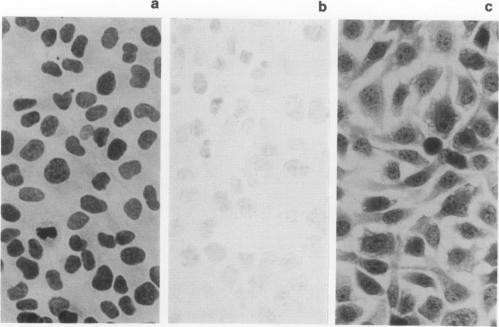
The V79/AP4 Chinese hamster fibroblasts were densely stained with the anti-basic fibroblast growth factor (bFGF) antibody demonstrating an endogenous production of the peptide. The in vitro proliferation of these cells was stimulated by exogenous bFGF and the maximum growth (259% increase in 3H-thymidine incorporation into DNA) was reached with bFGF 10 ng ml-1. Inhibition of bFGF-mediated mitogenic pathway was obtained with a 15-mer antisense oligodeoxynucleotide targeted against bFGF mRNA and with suramin, a drug which blocks the biological activity of heparin-binding growth factors. bFGF antisense oligomer reduced the synthesis of DNA by 79.5 and 89.5% at 20 and 60 microM, respectively; this effect was reversed by the addition of exogenous bFGF to the culture medium. A short-term exposure to suramin 300 micrograms ml-1 produced a modest reduction in 3H-thymidine incorporation but suppressed the mitogenic effect of bFGF on V79/AP4 cells. In cells treated with suramin 300 micrograms ml-1 the drug concentration increased linearly over 3 days, reaching 13.15 micrograms mg-1 of protein; cell proliferation was inhibited in a dose-related manner as evaluated by the colony formation assay (IC50: 344.22 micrograms ml-1) and by the number of mitoses observed in culture. Furthermore, the drug induced ultrastructural alterations, consisting of perinuclear cisternae swelling, chromatin condensation, nucleolar segregation and cytoplasmic vacuolations. These findings demonstrated that the endogenous production of bFGF plays an important role in V79/AP4 fibroblasts proliferation, and the inhibition of bFGF-mediated mitogenic signalling with bFGF antisense oligomer or suramin is an effective mean of reducing cell growth.
V79/AP4中国仓鼠成纤维细胞被抗碱性成纤维细胞生长因子(bFGF)抗体密集染色,表明该肽有内源性产生。这些细胞的体外增殖受到外源性bFGF的刺激,bFGF浓度为10 ng/ml时达到最大生长(3H-胸腺嘧啶核苷掺入DNA增加259%)。用针对bFGF mRNA的15聚体反义寡脱氧核苷酸和苏拉明(一种阻断肝素结合生长因子生物活性的药物)可抑制bFGF介导的有丝分裂途径。bFGF反义寡聚物在20 μM和60 μM时分别使DNA合成减少79.5%和89.5%;向培养基中添加外源性bFGF可逆转此效应。短期暴露于300 μg/ml的苏拉明会使3H-胸腺嘧啶核苷掺入略有减少,但抑制了bFGF对V79/AP4细胞的促有丝分裂作用。在用300 μg/ml苏拉明处理的细胞中,药物浓度在3天内呈线性增加,达到13.15 μg/mg蛋白质;通过集落形成试验(IC50:344.22 μg/ml)和培养中观察到的有丝分裂数量评估,细胞增殖以剂量相关方式受到抑制。此外,该药物引起超微结构改变,包括核周池肿胀、染色质凝聚、核仁分离和细胞质空泡化。这些发现表明bFGF的内源性产生在V79/AP4成纤维细胞增殖中起重要作用,用bFGF反义寡聚物或苏拉明抑制bFGF介导的有丝分裂信号是减少细胞生长的有效手段。


 Zotero 插件