Lukacs N W, Kunkel S L, Burdick M D, Strieter R M
Department of Pathology, University of Michigan Medical School, Ann Arbor 48109-0360.
Am J Pathol. 1993 Oct;143(4):1179-88.
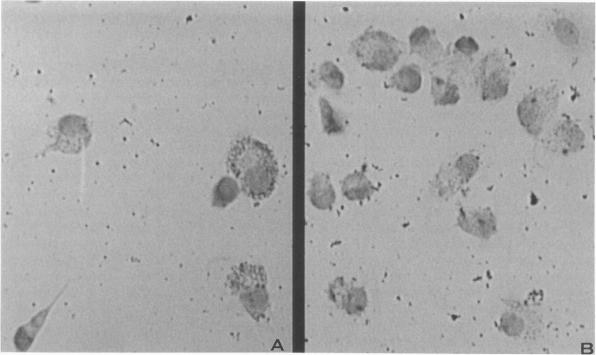
The in vitro mixed lymphocyte reaction (MLR) is regarded as a model of responsiveness to allogeneic major histocompatibility complex antigens and has historically been used to elucidate the pathway of T lymphocyte proliferation. In addition, the MLR response may reflect activation pathways relevant in acute allograft rejection. In the present study, we have applied the MLR to examine the role of adhesion molecules intercellular adhesion molecule-1 and lymphocyte function-associated antigen-3 in the induction of tumor necrosis factor-alpha (TNF-alpha) as well as chemotactic cytokines, interleukin-8 (IL-8), monocyte chemotactic protein-1 (MCP-1) and macrophage inflammatory protein-1 alpha (MIP-1 alpha). Monoclonal antibodies to the adhesion molecules (5 micrograms/ml) were added to one-way human MLR cultures and supernatants collected at various time points. The monoclonal antibodies to the adhesion molecules significantly suppressed the proliferative response by 50 to 80%. Cytokine production, TNF-alpha (3.2 +/- 0.5 ng/ml), MIP-1 alpha (12.9 +/- 3.3 ng/ml), MCP-1 (18.8 +/- 3.4 ng/ml), and IL-8 (57 +/- 18 ng/ml) peaked on day 5 of the assay. The addition of anti-intercellular adhesion molecule-1 to the cultures suppressed TNF-alpha, MIP-1 alpha, MCP-1, and IL-8 production by 68% (1.05 +/- 0.29 ng/ml), 85% (2.0 +/- 1.2 ng/ml), 63% (6.8 +/- 2.9 ng/ml), and 47% (30.3 +/- 3.7 ng/ml), respectively. Likewise, the addition of anti-lymphocyte function-associated antigen-3 monoclonal antibody suppressed the cytokines by 78% (0.71 +/- 0.34 ng/ml), 66% (4.5 +/- 2.2 ng/ml), 52% (8.8 +/- 2.2 ng/ml), and 73% (15.7 +/- 4.4 ng/ml), respectively. Immunohistochemical staining indicated that monocytes were the primary source of the chemokines IL-8, MCP-1, and MIP-1 alpha. The addition of exogenous recombinant TNF-alpha (5 ng/ml) or recombinant IL-2 (5 units/ml) to the anti-intercellular adhesion molecule-1-treated cultures allowed the recovery of the proliferative response as well as restoration of IL-2, TNF-alpha, and IL-8, but not MCP-1 or MIP-1 alpha, indicating that both soluble and adhesion molecule signals are required for the production of the C-C family of chemokines in allogeneic responses. Thus, the events resulting in cellular proliferation and chemokine production were dependent on adhesion molecule interactions.
体外混合淋巴细胞反应(MLR)被视为对同种异体主要组织相容性复合体抗原反应性的模型,并且在历史上一直被用于阐明T淋巴细胞增殖的途径。此外,MLR反应可能反映了与急性同种异体移植排斥相关的激活途径。在本研究中,我们应用MLR来检测细胞间黏附分子-1和淋巴细胞功能相关抗原-3这两种黏附分子在诱导肿瘤坏死因子-α(TNF-α)以及趋化细胞因子白细胞介素-8(IL-8)、单核细胞趋化蛋白-1(MCP-1)和巨噬细胞炎性蛋白-1α(MIP-1α)中的作用。将针对黏附分子的单克隆抗体(5微克/毫升)添加到单向人MLR培养物中,并在不同时间点收集上清液。针对黏附分子的单克隆抗体显著抑制了增殖反应,抑制率为50%至80%。细胞因子产生方面,TNF-α(3.2±0.5纳克/毫升)、MIP-1α(12.9±3.3纳克/毫升)、MCP-1(18.8±3.4纳克/毫升)和IL-8(57±18纳克/毫升)在检测的第5天达到峰值。向培养物中添加抗细胞间黏附分子-1可分别抑制TNF-α、MIP-1α、MCP-1和IL-8的产生,抑制率分别为68%(1.05±0.29纳克/毫升)、85%(2.0±1.2纳克/毫升)、63%(6.8±2.9纳克/毫升)和47%(30.3±3.7纳克/毫升)。同样,添加抗淋巴细胞功能相关抗原-3单克隆抗体分别抑制细胞因子的产生,抑制率为78%(0.71±0.34纳克/毫升)、66%(4.5±2.2纳克/毫升)、52%(8.8±2.2纳克/毫升)和73%(15.7±4.4纳克/毫升)。免疫组织化学染色表明,单核细胞是趋化因子IL-8、MCP-1和MIP-