Lawson N D, Stillman E A, Whitt M A, Rose J K
Department of Pathology, Yale University School of Medicine, New Haven, CT 06510, USA.
Proc Natl Acad Sci U S A. 1995 May 9;92(10):4477-81. doi: 10.1073/pnas.92.10.4477.
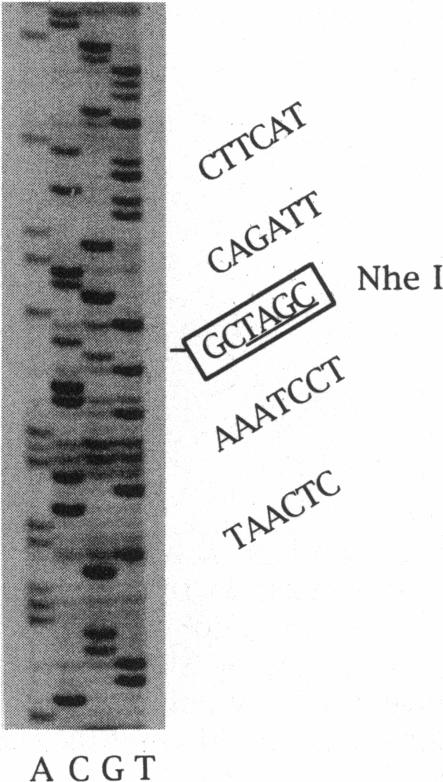
We assembled a DNA clone containing the 11,161-nt sequence of the prototype rhabdovirus, vesicular stomatitis virus (VSV), such that it could be transcribed by the bacteriophage T7 RNA polymerase to yield a full-length positive-strand RNA complementary to the VSV genome. Expression of this RNA in cells also expressing the VSV nucleocapsid protein and the two VSV polymerase subunits resulted in production of VSV with the growth characteristics of wild-type VSV. Recovery of virus from DNA was verified by (i) the presence of two genetic tags generating restriction sites in DNA derived from the genome, (ii) direct sequencing of the genomic RNA of the recovered virus, and (iii) production of a VSV recombinant in which the glycoprotein was derived from a second serotype. The ability to generate VSV from DNA opens numerous possibilities for the genetic analysis of VSV replication. In addition, because VSV can be grown to very high titers and in large quantities with relative ease, it may be possible to genetically engineer recombinant VSVs displaying foreign antigens. Such modified viruses could be useful as vaccines conferring protection against other viruses.
我们构建了一个包含原型弹状病毒——水疱性口炎病毒(VSV)11,161个核苷酸序列的DNA克隆,使其能够由噬菌体T7 RNA聚合酶转录,产生与VSV基因组互补的全长正链RNA。在同时表达VSV核衣壳蛋白和两个VSV聚合酶亚基的细胞中表达这种RNA,可产生具有野生型VSV生长特性的VSV。从DNA中回收病毒通过以下方式得到验证:(i)存在两个在源自基因组的DNA中产生限制性位点的遗传标签;(ii)对回收病毒的基因组RNA进行直接测序;(iii)产生一种VSV重组体,其中糖蛋白源自第二种血清型。从DNA产生VSV的能力为VSV复制的遗传分析开辟了众多可能性。此外,由于VSV能够相对容易地生长到非常高的滴度并大量繁殖,有可能对展示外源抗原的重组VSV进行基因工程改造。这种经过修饰的病毒可用作预防其他病毒的疫苗。