Cherian M G
Department of Pathology, University of Western Ontario, London, Canada.
Environ Health Perspect. 1994 Sep;102 Suppl 3(Suppl 3):131-5. doi: 10.1289/ehp.94102s3131.
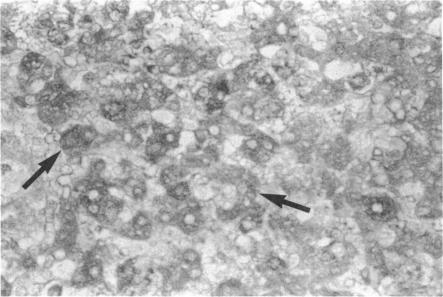
Metallothioneins are a group of low-molecular-weight intracellular proteins present in high levels in fetal mammalian livers, bound to zinc and copper. They are also present in two major isoforms in low basal levels in various organs of adults in several species. Although a number of functions have been proposed for metallothioneins, their major biological roles may be in the storage of zinc and copper during rapid growth and development, and also in the detoxification of certain toxic metals. In adult liver, metallothionein is mainly localized in the cytoplasm, it is localized also in the hepatocyte nuclei in human fetal liver and fetal and neonatal rat liver, as determined by immunohistochemical staining with a specific metallothionein antibody. Because of its high expression in fetal development, the potential role of metallothioneins in human tumors was investigated. The cellular localization of metallothionein was demonstrated in various human tumors such as thyroid tumors, testicular germ cell carcinoma, bladder transitional cell carcinomas, and salivary gland tumors. In most of these tumor tissues, metallothioneins were found in high levels in nucleus and cytoplasm in both benign and malignant tumors, although the proliferating edge of the malignant tumors showed most intense metallothionein staining. The expression of metallothionein is not universal to all tumor growth; its presence may depend on various factors, such as the type of tumor, cellular origin, morphological heterogeneity, or stage of growth. Human testicular seminomas, which are well differentiated, showed little expression of metallothionein irrespective of the staging, as compared to less well-differentiated embryonal carcinomas.(ABSTRACT TRUNCATED AT 250 WORDS)
金属硫蛋白是一类低分子量的细胞内蛋白质,在胎儿哺乳动物肝脏中含量很高,与锌和铜结合。在几种物种的成年个体的各种器官中,它们也以两种主要的亚型形式存在,基础水平较低。尽管人们提出了金属硫蛋白的多种功能,但它们的主要生物学作用可能是在快速生长和发育过程中储存锌和铜,以及对某些有毒金属进行解毒。在成人肝脏中,金属硫蛋白主要定位于细胞质中,而在人类胎儿肝脏以及胎儿和新生大鼠肝脏的肝细胞核中也有定位,这是通过用特异性金属硫蛋白抗体进行免疫组织化学染色确定的。由于其在胎儿发育中的高表达,人们对金属硫蛋白在人类肿瘤中的潜在作用进行了研究。在各种人类肿瘤中,如甲状腺肿瘤、睾丸生殖细胞癌、膀胱移行细胞癌和唾液腺肿瘤中,都证实了金属硫蛋白的细胞定位。在大多数这些肿瘤组织中,在良性和恶性肿瘤的细胞核和细胞质中都发现金属硫蛋白含量很高,尽管恶性肿瘤的增殖边缘显示出最强的金属硫蛋白染色。金属硫蛋白的表达并非在所有肿瘤生长中都普遍存在;其存在可能取决于多种因素,如肿瘤类型、细胞起源、形态异质性或生长阶段。与分化程度较低的胚胎癌相比,分化良好的人类睾丸精原细胞瘤无论分期如何都几乎不表达金属硫蛋白。(摘要截短于250字)