Brown M B, Schumacher I M, Klein P A, Harris K, Correll T, Jacobson E R
Department of Infectious Diseases, College of Veterinary Medicine, University of Florida, Gainesville 32610.
Infect Immun. 1994 Oct;62(10):4580-6. doi: 10.1128/iai.62.10.4580-4586.1994.
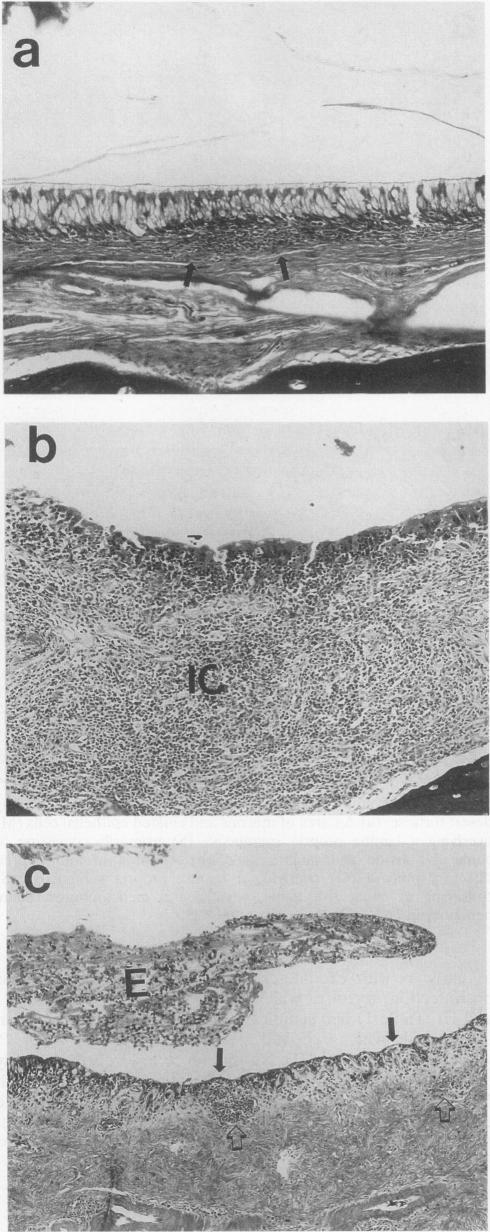
The desert tortoise is listed by the United States government as a threatened species in part of its range. A major contributing factor in the decline of this animal has been the presence of an upper respiratory tract disease (URTD) which is characterized by a chronic disease which eventually leads to severe occlusion of the nares with viscous exudate and destruction of the respiratory epithelium. Electron microscopy of infected tissues demonstrated the presence of a mycoplasma-like organism attached to the respiratory surfaces. The mycoplasma was isolated and designated as a new species, with the proposed name Mycoplasma agassizii. The current study was designed to fulfill Koch's postulates and determine if M. agassizii was the etiologic agent of URTD. Clinically healthy animals with known antibody status were infused intranasally with pooled exudate (n = 8) from ill donor animals, with M. agassizii alone (n = 9) or in combination with Pasteurella testudinis (n = 8), with P. testudinis alone (n = 9), or with sterile broth (n = 12). The pooled exudate was culture positive for M. agassizii. Tortoises which received exudate or M. agassizii alone or in conjunction with P. testudinis were significantly more likely to develop clinical disease (P < 0.0004) than animals which received P. testudinis alone or the broth controls. Tortoises demonstrated a strong immune response to M. agassizii, and seroconversion was seen in all groups with clinical disease. M. agassizii was isolated from the upper respiratory tracts of clinically ill animals up to 6 months postinfection. On the basis of the results of these transmission studies, we conclude that M. agassizii is an etiologic agent of URTD in the desert tortoise.
沙漠龟被美国政府列为其部分分布区域内的濒危物种。这种动物数量减少的一个主要促成因素是上呼吸道疾病(URTD)的存在,该疾病的特征是一种慢性疾病,最终会导致鼻孔被粘性渗出物严重堵塞以及呼吸上皮组织遭到破坏。对受感染组织进行电子显微镜检查发现,在呼吸表面存在一种类似支原体的生物体。该支原体被分离出来并被指定为一个新物种,提议命名为阿加西支原体(Mycoplasma agassizii)。当前的研究旨在满足科赫法则,并确定阿加西支原体是否为URTD的病原体。将已知抗体状态的临床健康动物通过鼻腔注入患病供体动物的混合渗出物(n = 8)、单独的阿加西支原体(n = 9)或与乌龟巴斯德氏菌(Pasteurella testudinis)联合使用(n = 8)、单独的乌龟巴斯德氏菌(n = 9)或无菌肉汤(n = 12)。混合渗出物对阿加西支原体培养呈阳性。与单独接受乌龟巴斯德氏菌或肉汤对照的动物相比,接受渗出物或单独的阿加西支原体或与乌龟巴斯德氏菌联合使用的乌龟出现临床疾病的可能性显著更高(P < 0.0004)。乌龟对阿加西支原体表现出强烈的免疫反应,并且在所有出现临床疾病的组中都观察到了血清转化。在感染后长达6个月的时间里,从临床患病动物的上呼吸道中分离出了阿加西支原体。基于这些传播研究的结果,我们得出结论,阿加西支原体是沙漠龟URTD的病原体。